Emergency?
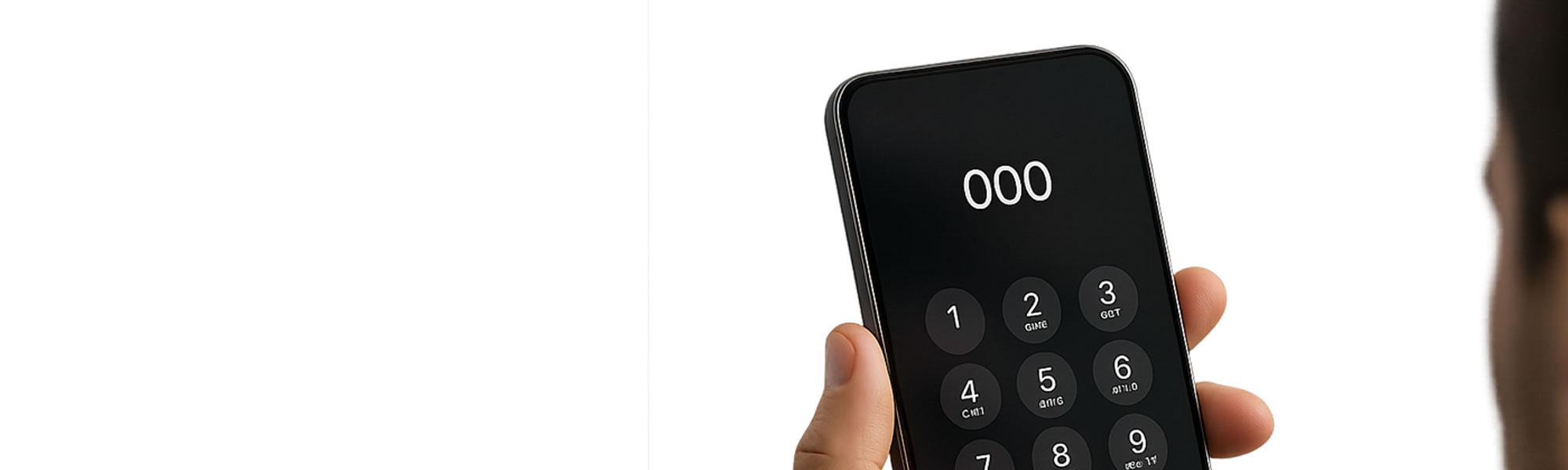
In Australia, dial 000 immediately for Police, Fire or Ambulance.
For hearing or speech impaired users, use TTY 106 from a teletypewriter (TTY). Do not text from a mobile phone.
Moving to Australia or raising kids here means learning one simple but vital number: Triple Zero - 000. It's the national emergency line, connecting you straight to police, fire, or ambulance. For adults who have moved from overseas, the number may feel different to what you're used to. For children, it can be completely new. In both cases, a little teaching goes a long way.
Why It Matters
Emergencies are rare, but when they happen, knowing how to call for help can save lives. Australia's Triple Zero (000) system is designed to be simple - anyone can dial it from any phone, even a locked mobile. Teaching children how to use it, and reminding newcomers that it's the one universal number, ensures nobody hesitates in a crisis.
How the Call Works
When you dial 000, an operator will answer: "Emergency. Police, Fire or Ambulance?"
If you're teaching kids, explain that they'll be asked to pick one. If they're not sure, "Ambulance" is usually safest, and the operator can help redirect.
Adults new to Australia should know that 000 is free from all phones, including payphones and mobiles without credit.
Calls are prioritised, so even in a busy situation, operators get through quickly.
Teach Kids With Practice - A Sample 000 Script
The simplest way for kids to learn 000 is to practise through role-play. Parents can pretend to be the operator and let the child answer. Give your child a cardboard "phone" with a drawn-on keypad (or use a locked phone with supervision) and let them play the part of the caller.
A Sample Ambulance Script:
CHILD: [Dials 000]
OPERATOR: "Emergency. Police, Fire or Ambulance?"
CHILD: "Ambulance, please."
OPERATOR: "Connecting you now." (short pause)
OPERATOR: "Ambulance. What is the exact address of the emergency?"
CHILD: [State your home address]
OPERATOR: "What's the nearest cross street?"
CHILD: [Describe the Nearest Crossing Street)
OPERATOR: "Okay. Tell me exactly what happened."
CHILD: [Explains simply: e.g. "My brother is hurt."]
OPERATOR: "Is the person breathing?"
CHILD: [Answers yes or no.]
OPERATOR: "Help is on the way. Stay on the line."
Realistically, at this point the call-taker then follows a structured workflow. Depending on the type of emergency, they use a specialised questioning system that "intelligently" narrows down what is happening through simple, targeted questions. For ambulance calls, this process helps them identify the likely health condition quickly and give relevant, step-by-step advice - whether that's how to start CPR, place someone in the recovery position, or keep them safe until paramedics arrive.
In many situations, the operator may also arrange for other emergency services to be dispatched automatically, such as police or fire, if the circumstances require it. The caller doesn't need to know who else should be involved - they just need to respond to any questions asked.
Calling 000 on a Locked Mobile Phone
Teach kids how to call even if a phone is locked. Most mobiles have an "Emergency Call" button on the lock screen that opens a simple dial pad where 000 can be entered, or the call initiated, without unlocking the device. Practise this step together so they know exactly which button to press and how to enter the three zeros. Reassure them that it works even if there's no credit, no data, or the phone is locked - and that it should only ever be used in a real emergency.
A Further Protective Layer: Advanced Mobile Location (AML)
Another layer of reassurance for families is that Australia uses Advanced Mobile Location (AML). If a call is made from a modern mobile phone, AML automatically tries to send the device's precise location to emergency services - often down to a few metres. This happens in the background, even if the caller doesn't know exactly where they are or can't describe their location clearly.
It's not just helpful for emergency responders. For parents, this gives further reassurance that if a child make a mistake, they can still be located quickly. For newcomers, it means you can feel confident that help is being directed accurately, even if you're in an unfamiliar area. For emergencies in large areas like a shopping centre carpark with few useful landmarks, it means a more targeted response. AML isn't a replacement for giving your address out loud, and can't be 100% relied upon - and you'll always be asked the address regardless - but it's a powerful backup that makes the whole system safer.
For Newcomers to Australia
If you've come from overseas, remember that 000 replaces 911, 112, or other emergency numbers. The international 112 emergency number also calls to 000, but the safest habit is to learn and use Triple Zero from the onset. It's also worth teaching children early - especially if they've grown up with a different emergency number in mind, or are exposed to other emergency numbers through TV shows (like the United State's 911 number often referred to in US shows).
Peace of Mind for Families
Emergencies are stressful, but confidence makes all the difference. By teaching kids how Triple Zero works, or by resetting your own habits if you've moved to Australia, you take away the panic of "what do I do?" The number is simple, the system is clear, and help is only three digits away.
For Hearing or Speech Impaired Callers: The TTY 106 Service
106 is not a number you can call or text on a normal phone. It's a dedicated emergency service for people who are deaf, hard of hearing, or have a speech impairment, and it only works through a TTY (text telephone) or the National Relay Service.
When someone dials 106 from a compatible device, they connect to a relay officer who types directly with them and relays the information to police, fire, or ambulance. This makes sure that people who can't use a standard voice call can still reach emergency help quickly.
You might also like





Disclaimer: Every effort has been made to ensure the accuracy of the information provided, but we make no guarantees regarding its completeness or reliability. The data is presented for general informational purposes only and does not constitute financial, investment, or legal advice. We are not liable for any errors, omissions, or consequences arising from its use. Users should verify details with relevant sources and seek professional advice where appropriate for the most accurate and up-to-date guidance.