

On the Gold Coast, going barefoot is not a statement or a shortcut taken only on the way to the beach. For many people, it is simply how life is lived. Shoes come off at front doors, stay off through quick errands, and are often forgotten entirely during ordinary days. Friends arrive barefoot, leave barefoot, and think nothing of it. Feet on tiles, concrete, grass, and driveways are part of the everyday visual language of coastal living.
This normality creates social situations that look unusual to outsiders. Groups of friends sitting on floors. Bare feet tucked under couches. Cars filled with passengers who never bothered to put shoes back on. Moving days where boxes are crushed underfoot and carried out by others without a second thought. These scenes can trigger hygiene questions, especially from people raised to associate bare feet with dirt or carelessness.
Yet for those who live this way, the questions rarely come up. Experience fills the gap that theory leaves open. People learn quickly that shared barefoot space does not translate into shared illness, that clean feet are not a contamination source, and that everyday hygiene is governed by far more practical factors than footwear.
Understanding why this works requires stepping back from instinct and looking at what actually happens in homes, cars, and shared tasks when people live barefoot together.
Barefoot Proximity and Everyday Contact
Barefoot social life looks intimate from the outside. Feet are visible, close to shared surfaces, occasionally touching furniture, people, or objects that others then handle. For anyone raised with strict ideas about shoes, floors, and personal space, that closeness can trigger unease. Yet in places where barefoot living is normal, those concerns fade quickly because daily experience does not support them.
What replaces anxiety is something quieter and more practical. People learn what actually matters for hygiene and what does not. They discover that bare feet are not automatically dirty, that shared space does not equal shared illness, and that everyday life already involves far more microbial exchange than most realise.
This becomes clearest not in theory, but during ordinary moments. Friends hanging out on the floor. Car trips home after the beach. Helping someone move house. A group of girlfriends laughing, stomping cardboard boxes flat with bare feet while others carry them out to the bins. These are the moments that look questionable on paper but feel entirely unremarkable in practice.
Feet as Normal Skin, Not a Special Category
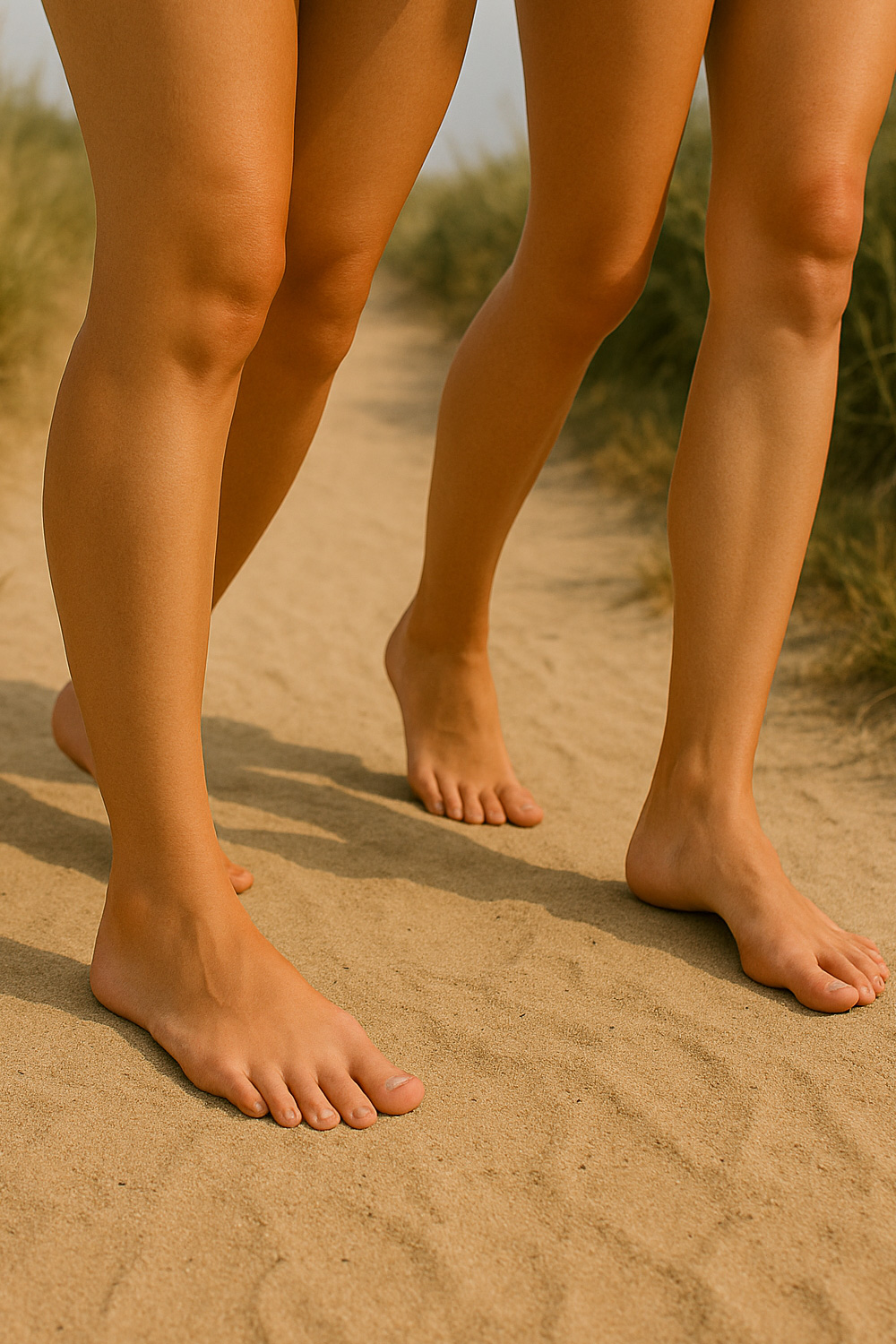
The biggest misunderstanding around barefoot hygiene is the idea that feet are somehow biologically different from the rest of the body. They are not. Healthy feet are covered in the same type of skin as elsewhere, hosting normal skin bacteria that already live on hands, arms, faces, and legs.
The difference is exposure. Feet touch the ground, so they are socially labelled as dirty even when they are clean. Hands, meanwhile, touch door handles, phones, money, keyboards, steering wheels, and faces all day long, yet are rarely treated with the same suspicion unless they are visibly soiled.
In barefoot social groups, this mental imbalance becomes obvious. People are alert to feet but largely ignore the far more active transfer points around them. Once that realisation sets in, hygiene starts to look less like avoidance and more like sensible management.
Shared Houses and Everyday Barefoot Contact
Inside houses, barefoot contact is constant. Friends sit on the floor leaning against couches. Feet rest against chair legs or coffee tables. Someone curls up on a rug while others step past. None of this creates a hygiene problem in a normal household.
Indoor floors are already shared surfaces. They accumulate dust, skin cells, and microbes regardless of whether people wear shoes, socks, or nothing at all. In fact, houses where shoes are left at the door often have cleaner floors overall, precisely because people are aware that bare skin will touch them.
Feet touching floors does not contaminate the home in any meaningful way. Floors touching feet does not contaminate people either. What matters is basic cleanliness, not footwear. Regular sweeping, mopping, and general upkeep matter far more than whether someone walked through the kitchen barefoot.
Cars, Close Quarters, and Bare Feet in Motion
Cars intensify everything. Space is limited, legs cross, feet stretch out, and bodies lean closer together. After a beach trip or a long day out, people pile in barefoot without a second thought.
From a hygiene perspective, this closeness still does not change the fundamentals. The interior of a car already hosts a dense microbial environment. Steering wheels, seat belts, gear selectors, door handles, and touch screens carry far more bacteria than footwells ever will.
Bare feet resting on mats or briefly brushing upholstery do not introduce anything unusual. As long as feet are dry and uninjured, they are no more problematic than bare arms against seat fabric. The concern people feel in cars is about intimacy, not cleanliness.
Social Touching and Relaxed Physical Space
In close friendships, feet sometimes drift into social contact. People sit cross-legged facing each other. Someone rests their legs across a friend's lap. Feet touch calves, ankles, or cushions shared by others.
Biologically, this contact is no different from arms touching arms or shoulders brushing shoulders. Healthy skin does not transmit disease through casual contact. Problems only arise when there are open wounds, untreated infections, or prolonged damp conditions that allow microbes to thrive.
Most barefoot social groups intuitively understand this. They notice when someone has a cut, a blister, or irritation and adjust naturally. Hygiene is handled through awareness rather than avoidance.
Moving Day and the Cardboard Crushing Scene
Nowhere does barefoot hygiene get more scrutinised than during practical tasks. Moving house is a perfect example.

Picture a group of girlfriends helping one of their own move out of a unit. Boxes are everywhere. Some are stacked, others half-packed, others already emptied and waiting to be flattened. Shoes have been kicked off without discussion. It is hot, everyone is in casual clothes, and the pace is unhurried but constant.
One friend drags a box onto the grass or driveway and steps on it, using her weight to fold it down cleanly. Another follows, pressing the corners flat with her feet. Someone else gathers the flattened boxes into a stack and carries them out to the bins. Laughter cuts through the work. It is efficient, cooperative, and ordinary.
This scene often triggers questions from people watching from the outside. Are bacteria from her feet getting onto the boxes? Will the person carrying them pick something up? Is this unhygienic?
The technical answer is yes, bacteria transfers. The practical answer is that it does not matter.
Cardboard is already a biologically busy material. It has passed through factories, warehouses, trucks, shops, and homes. It has been handled by hands repeatedly. The additional transfer of normal skin bacteria from clean feet does not meaningfully change its hygiene profile.
When someone carries those boxes, they are not exposing themselves to anything unusual. The risk is no greater than if the boxes had been handled by hands, leaned against clothes, or dragged along the ground. Once the task is finished, normal hand washing resets everything.
Why Feet Feel Riskier Than Hands During Tasks
There is a psychological mismatch during shared chores. People are comfortable grabbing something that someone else touched with their hands, but hesitate when feet are involved. This is cultural conditioning, not science.
Feet are associated with dirt because they touch the ground, but during moving tasks, the ground itself is already part of the workflow. Boxes scrape across floors, grass, concrete, and driveways. Shoes or feet make little difference to the outcome.
What keeps moving days hygienic is not avoiding feet. It is managing moisture, wounds, and visible contamination. Dry, healthy feet on cardboard are inconsequential. Wet, muddy shoes would be far worse.
Group Dynamics and Shared Awareness
One of the strengths of barefoot social groups is that hygiene becomes communal rather than individualised. People look out for each other. Someone notices a cut and suggests a bandage. Someone else wipes down a surface without fuss. There is no panic, just adjustment.
During group tasks like moving, this shared awareness matters more than rigid rules. It allows people to work comfortably, efficiently, and safely without turning everyday contact into a problem.
When Barefoot Hygiene Actually Needs Attention
There are situations where extra care is sensible. Untreated fungal infections can spread in damp communal areas. Open wounds should be covered. Wet feet should be dried before prolonged contact with soft furnishings. These are not barefoot-specific issues. They apply equally to hands, clothing, and shoes.
What barefoot living does is make these factors more visible. That visibility often leads to better hygiene, not worse.
The Reality Behind Social Barefoot Living
Barefoot social life brings bodies closer together, but it does not collapse hygiene boundaries. It simply strips away unnecessary ones. People discover that normal skin contact, shared space, and cooperative tasks are not threats in themselves.
The image of girlfriends stamping cardboard boxes flat while others carry them out looks intimate, informal, and maybe chaotic. In reality, it is no more hygienically risky than any other shared household task. It is just more honest about how bodies actually move through space together.
Understanding barefoot hygiene is not about defending a lifestyle. It is about replacing instinctive discomfort with accurate expectations. When people understand what actually spreads illness and what does not, they stop policing harmless contact and focus on what truly matters.
In barefoot homes, cars, friendships, and moving days, hygiene is maintained through awareness, cleanliness, and common sense. Feet are simply part of the picture, not the problem.
You might also like




Disclaimer: Every effort has been made to ensure the accuracy of the information provided, but we make no guarantees regarding its completeness or reliability. The data is presented for general informational purposes only and does not constitute financial, investment, or legal advice. We are not liable for any errors, omissions, or consequences arising from its use. Users should verify details with relevant sources and seek professional advice where appropriate for the most accurate and up-to-date guidance.