Most homeowners don't think twice about toilets until they suddenly have to choose one. Renovations, new builds, upgrades of tired old bathrooms, replacing cracked ceramic, or fixing a noisy, inefficient system all open the door to an unexpectedly complex decision. Australian homes have their own mix of plumbing standards, water-efficiency targets, installation quirks and lifestyle expectations, and a toilet that works beautifully in one household may be a daily frustration in another. Selecting the right model becomes much easier when you understand how the design, configuration and technology behind modern toilets have evolved, and how each feature shapes comfort, cleanliness and long-term value.
What used to be a straightforward pick between a close-coupled suite and an older-style link suite has expanded into an entire universe of modern choices. Australian bathrooms today are streamlined, compact and architectural, and the toilet must sit comfortably within that visual language. Soft-square edges, concealed plumbing, rimless bowls, whisper-quiet flush valves and subtle curves are the norm. Yet a toilet still needs to feel practical every single day, from the way the seat lowers to how easily the bowl can be cleaned after a Queensland summer of high humidity and constant use.
Understanding the Main Toilet Types
Walking into a showroom reveals just how varied toilet designs have become. Three main styles dominate contemporary Australian builds, each offering their own balance of aesthetics, space efficiency and ease of installation.
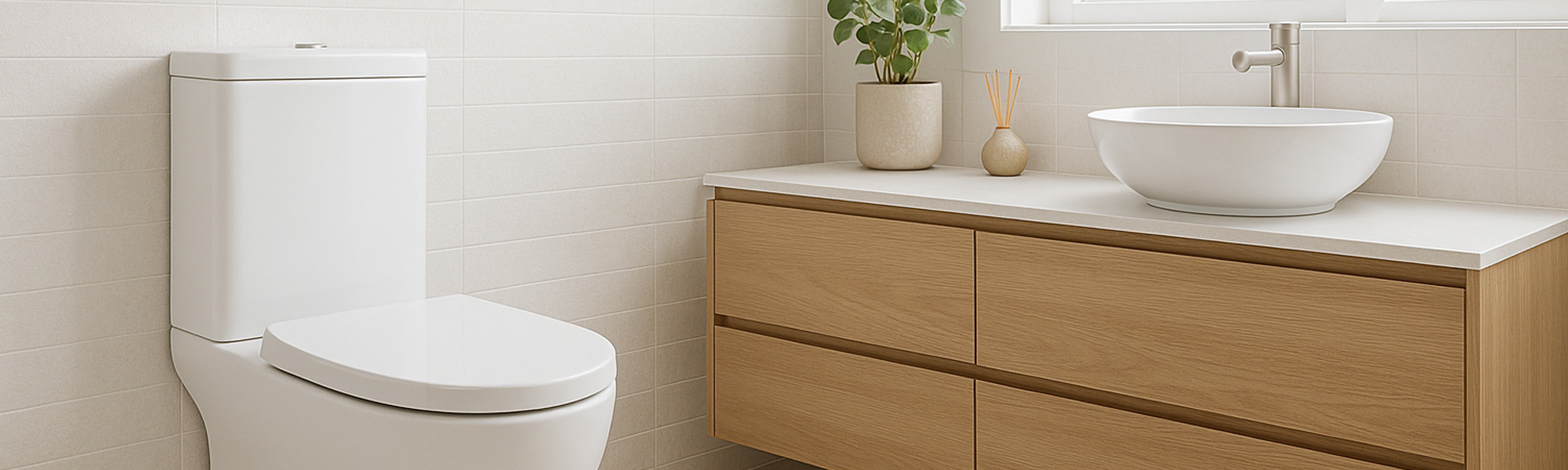
The back-to-wall suite is the most popular choice across new homes and modern renovations. The cistern sits cleanly against the wall, eliminating awkward dust-collecting gaps and giving the entire bathroom a polished, fitted look. These suites are easy for plumbers to install because the cistern and pan form a single integrated unit, yet they also cater for the back-inlet water supply common in Australian homes. Many families choose back-to-wall designs because they offer the right blend of affordability, water efficiency and everyday practicality.
A wall-hung toilet moves in a different direction altogether. The bowl is suspended above the floor and the cistern hides inside the wall cavity within a steel support frame. The result is a bathroom that feels more spacious, lighter and easier to clean. With the floor fully exposed, mopping takes seconds and visually the room lifts into a more contemporary style. These suites require more planning during construction due to the in-wall frame and cavity depth, and retrofitting them into existing homes can be costly, but for many homeowners the streamlined, floating effect is worth it.
The classic close-coupled suite remains a solid choice for those updating older homes or keeping within a tight budget. The cistern sits directly on the pan, providing a familiar silhouette and straightforward installation. Many close-coupled suites now feature modern rimless designs and efficient dual-flush mechanisms, which makes them a dependable option for rental properties and modest renovations.
Rimless, Skirted and Other Design Details That Matter
Beyond the main style, the real performance of a toilet comes down to its bowl and flush design. Rimless bowls have become the Australian standard because they eliminate the hidden underside of the rim where old-style models trapped grime. A rimless bowl channels water around in a controlled cascade, making cleaning easier and improving hygiene. For busy Gold Coast families dealing with humidity, sandy feet and heavy foot traffic through the bathroom, a rimless bowl cuts down on maintenance.
Many modern suites also feature skirted pans, where the sides of the toilet are enclosed in smooth ceramic rather than the stepped design of older pans. This creates a clean architectural line and removes places for dust and moisture to accumulate.
Seat technology has also come a long way. Soft-close hinges prevent slamming noises at night and reduce stress on the ceramic. Quick-release seats allow you to lift the seat off with a simple button press, making it far easier to clean behind the hinges. Families with small children often appreciate these details more than they expect.
Water Efficiency and the Australian Standard
Water efficiency should always be part of the decision, not only for environmental reasons but also for daily running costs. Australia's WELS rating system is strict for good reason. A well-designed dual-flush toilet can save thousands of litres of water every year.
Most high-quality toilets feature a 4-star or 4.5-star WELS rating, meaning a full flush of around 4.5 litres and a half flush of 3 litres or less. Look for models that pair these volumes with strong bowl wash performance. A water-efficient toilet should still clear the bowl cleanly without requiring a second flush, otherwise any water savings disappear. Reputable brands test their suites extensively to meet both flush performance and efficiency targets.
Plumbing Compatibility and Installation Practicalities
Choosing a toilet also means choosing a model that will physically work with your existing plumbing layout. Australian homes typically use either S-trap installations where the waste pipe goes through the floor, or P-trap installations where waste exits through the wall. A universal trap design offers flexibility, which is invaluable in older Gold Coast houses where past renovations may have shifted plumbing locations.
Set-out distance is another critical detail. This measurement shows how far the waste outlet is from the wall and needs to match your existing pipe location. While many back-to-wall suites come with adjustable connectors, allowing plumbers some leeway, wall-hung suites require precise alignment during construction.
Homeowners should also consider access to the cistern. Concealed cisterns look beautiful, but maintenance must always be possible through the flush plate opening. Reputable in-wall frame systems are designed with this in mind, but very cheap systems can cause headaches later.
Comfort, Height and Everyday Use
Comfort isn't often discussed, yet it quietly defines how content you feel with your toilet choice. Slightly higher pans are becoming more popular because they make sitting and standing easier, especially for older residents or tall adults. On the other hand, families with younger children sometimes prefer standard-height pans to make access easier.
Seat shape contributes to comfort as well. Many suites offer soft-square seats that feel more natural to sit on, while others maintain a classic oval shape. Gloss finishes remain most common, but premium matt ceramics have started appearing in architectural homes. The surface finish does not affect hygiene when the toilet is well designed, but it certainly changes the look of the room.
Noise also matters. Modern cistern valves are far quieter than older models, and the difference becomes obvious during the night. Quality brands pride themselves on silent refilling and smooth, even flushing that doesn't roar through the house.
Choosing a Toilet That Suits Your Home's Style
A toilet might be a functional fixture, but it still plays a major role in the overall look of your bathroom. Minimalist bathrooms often lean toward wall-hung or back-to-wall suites with concealed plumbing. Coastal homes across Queensland tend to favour soft-square ceramic lines paired with matt tapware and pale timber vanities. For classic federation or Queenslander homes, a close-coupled or subtly detailed back-to-wall suite can blend tradition with modern efficiency.
Colour is another emerging trend. Most homes still choose white ceramic, but matt black and soft grey finishes have started appearing in boutique builds. These should be paired carefully with other features in the bathroom to avoid looking mismatched over time. White remains the safest and most timeless choice for rental properties and long-term investments.
What to Look for in a Quality Brand
Australian suppliers vary widely, and not all toilets are created equal. Higher-end brands undergo more rigorous testing, use stronger ceramic glazes and produce longer-lasting seats and hinges. Spare parts availability is also crucial. Choosing a well-established brand means that ten years from now you can still replace a seat hinge or inlet valve without hunting for discontinued components.
Warranty support matters as well. Reputable brands offer multi-year coverage on ceramic and mechanical parts, and installers across Australia are familiar with their products.
Selecting a toilet isn't glamorous, but a thoughtful choice will reward you every day. The right suite blends efficiency with comfort, reliability with style and quiet performance with a design that complements your bathroom. Whether you choose a streamlined back-to-wall suite, a floating wall-hung bowl or a classic close-coupled design, the best toilet is the one that works effortlessly and fits naturally into the life of your home.
You might also like





Disclaimer: Every effort has been made to ensure the accuracy of the information provided, but we make no guarantees regarding its completeness or reliability. The data is presented for general informational purposes only and does not constitute financial, investment, or legal advice. We are not liable for any errors, omissions, or consequences arising from its use. Users should verify details with relevant sources and seek professional advice where appropriate for the most accurate and up-to-date guidance.