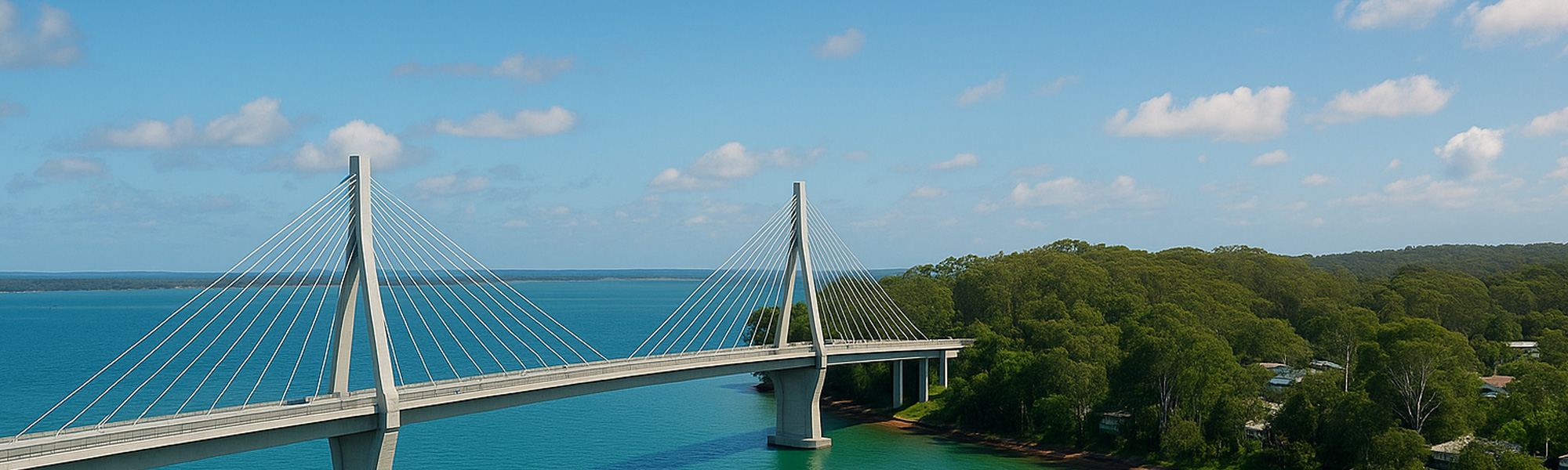
For decades, the idea of driving onto Russell Island has hovered over Southern Moreton Bay like a heat-haze. It flickers into view during election campaigns, in community meetings, in Facebook debates, even in quiet conversations between tired commuters waiting for the last ferry home. Then, just as quickly, it fades again, replaced by yet another ferry terminal upgrade, a revised timetable or another attempt at solving the mainland parking squeeze.
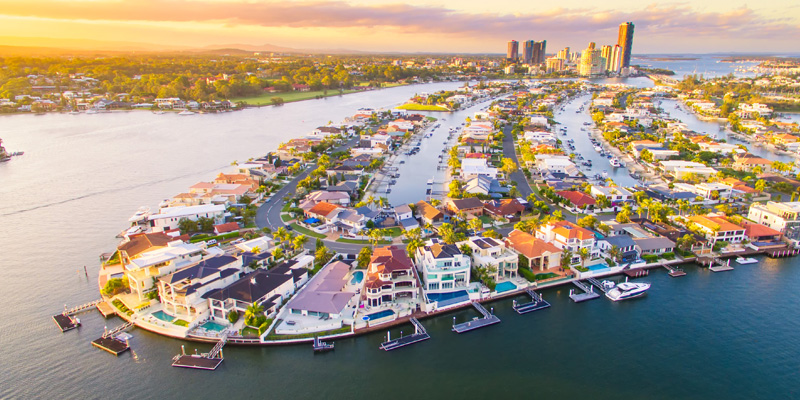
Although the island sits within the Redlands and not the Gold Coast, it lies close enough that its property discussions and growth pressures often spill into the same regional conversation. Buyers looking across the southern coastal corridor frequently include Russell Island in their search, and the bridge debate has become part of that wider narrative about how South East Queensland should grow.
For owners and buyers watching the island's property market, the bridge question has never been academic. A direct road connection would instantly transform the island's value, density, planning future and daily life. Yet every time momentum builds, politics and cost realities pull the idea back to shore.
So where do things stand now? What is the real likelihood of a bridge? And what does that mean for the market?
A dream with a surprisingly long history
The bridge debate is not new. It stretches back to the 1980s, when early planning schemes floated a Stradbroke Island bridge via Russell as part of a larger coastal development program. Environmental concerns, community pushback and ballooning cost estimates halted that vision before it reached serious planning.
The following decades brought more variations on the same theme. Some proposals pushed for a crossing from the south of Russell Island to the mainland near the Logan River. Others outlined longer multi-span bridge ideas threading across the bay islands. Each time, the pattern repeated. Enthusiasm built. Concept diagrams surfaced. Engineers highlighted the structural challenges of deep-water footings and clearance for marine traffic. Costs grew into the hundreds of millions and later into the billion-dollar range. Governments quietly backed away.
The cycle became familiar enough that long-time residents can recount every version, every promise and every moment of disappointment. And yet, the idea never quite dies. Even today, you cannot spend a week on the island without hearing someone say the same line: one day, they'll have to build it.
The modern political landscape: optimism colliding with arithmetic
Today, despite intense community interest, there is no active government planning underway. No business case. No engineering study. No line item in Queensland's capital works program. No parliamentary committee working on it. The official position is simply that the bridge is not on the current agenda.
The primary reason is scale. A bridge high enough for commercial vessels, long enough to cross the channel, and strong enough to last in a corrosive marine environment is a major engineering undertaking. Even conservative estimates push the project into billion-dollar territory before roadworks, land resumptions or environmental offsets are considered. In a region where demand for hospitals, highway upgrades, new train lines and flood-resilient infrastructure constantly outpaces budgets, a bridge serving a relatively small population is difficult to justify.
The absence of political momentum is not for lack of advocacy. Community groups continue to lobby. Petition numbers have surged. Residents' associations argue that the island's growing population warrants serious consideration. Some private groups have even floated the idea of a toll bridge under a public-private partnership model, hoping to bypass the funding bottleneck altogether. But none of these efforts has shifted the government's stance.
Even local representatives who are sympathetic to island concerns acknowledge the reality: until the state commits to even a preliminary study, the bridge remains an aspiration rather than a project.
Why the idea is so challenging to make real
To understand why governments hesitate, it helps to look at the challenges that sit beneath the political surface.
One is environmental. The waterway between the mainland and the islands includes wetlands, seagrass beds, navigation channels and sensitive marine habitat. Any bridge project would undergo an intense approval process. That process alone could take years before a single borehole is drilled.
Another is engineering. The required height clearance for marine vessels drives up the scale and cost of the supporting structures. The bay's depth and soft sediment layers complicate piling. Storm exposure, tidal forces and long-term corrosion protection add further complexity.
A third is strategic planning. A bridge would unlock significant new development potential. That would require upgrades to roads, water, sewerage, emergency services and community infrastructure across the island. The financial modelling for those upgrades would have to show regional benefit, not just local convenience.
And finally, there is the question of equity. Governments face pressure to direct major funding to high-use corridors and rapidly growing urban areas. When comparing a billion-dollar bridge for a few thousand residents to equivalent investments serving far greater populations, the decision becomes difficult to defend politically.
Life without a bridge: ferries shaping lifestyle and property
While the bridge discussion circulates endlessly, the practical reality of island life continues to revolve around ferries, barges and the notorious parking squeeze at Weinam Creek. The recently rebuilt ferry terminal has improved safety, accessibility and weather protection, and Translink integration has made commuting slightly more predictable. But the inherent limitations remain.
This rhythm shapes the market in powerful ways. The lack of a bridge keeps price points relatively low compared with the mainland. This affordability is, in fact, a core part of Russell Island's appeal. Buyers who feel locked out of Brisbane, Logan or Gold Coast prices are drawn to the island's mix of space, water views and entry-level pricing.
At the same time, the ferry reliance effectively caps demand from buyers who need daily mainland access. Parents juggling school routines, shift workers needing time-critical commutes, or people with mainland-based trades businesses often exclude the island from their search entirely. Investors also consider ferry dependency a risk factor, particularly when vacancy rates rise or when weather events temporarily disrupt transport.
This dynamic keeps the island in a unique space within the South East Queensland property landscape. Affordable. Distinctive. Attractive for lifestyle-driven buyers. Less attractive for commuters. Full of opportunity, but not without its complications.
The census offers only a partial snapshot of Russell Island today. At the 2021 count, the island recorded just under four thousand permanent residents, but that figure already feels outdated. The demographic shift since then has been so strong – driven by affordability pressures across South East Queensland, remote-friendly work patterns and a steady stream of mainland buyers seeking coastal space at mainland-defying prices – that the real population is now widely understood to be significantly higher than the official number suggests. Every ferry, barge queue and new house frame going up on the island reinforces the same point: Russell Island is no longer the quiet, lightly populated community it once was, and its growth curve is far steeper than the census can capture in real time.
If the bridge were ever approved, everything would change
Nothing in the island's modern history would match the market impact of an announced bridge. Values would shift quickly. Development appetite would surge. Builders would mobilise. Mainland buyers who previously ignored the island would suddenly run the numbers again. Any landholding would become more valuable simply because of the future road access baked into its potential.
But that hypothetical future only matters if the approval ever comes. And the reality is that a bridge announcement would arrive only after a long chain of decisions: a political commitment, a business case, a draft alignment, environmental approval, community consultation and actual funding. None of those steps have begun.
Which leads to the practical conclusion most island watchers have quietly accepted.
If the bridge is ever built: a transformed island
If the bridge does move from concept to construction in some distant decade, the consequences for Russell Island would be profound. While no official alignment exists, the most practical crossing point would almost certainly be at the southern end of the island, in the vicinity of the high-tension powerlines that already span the channel. It is the closest point to the mainland, it has existing linear infrastructure, and it avoids the more complex marine channels further north.
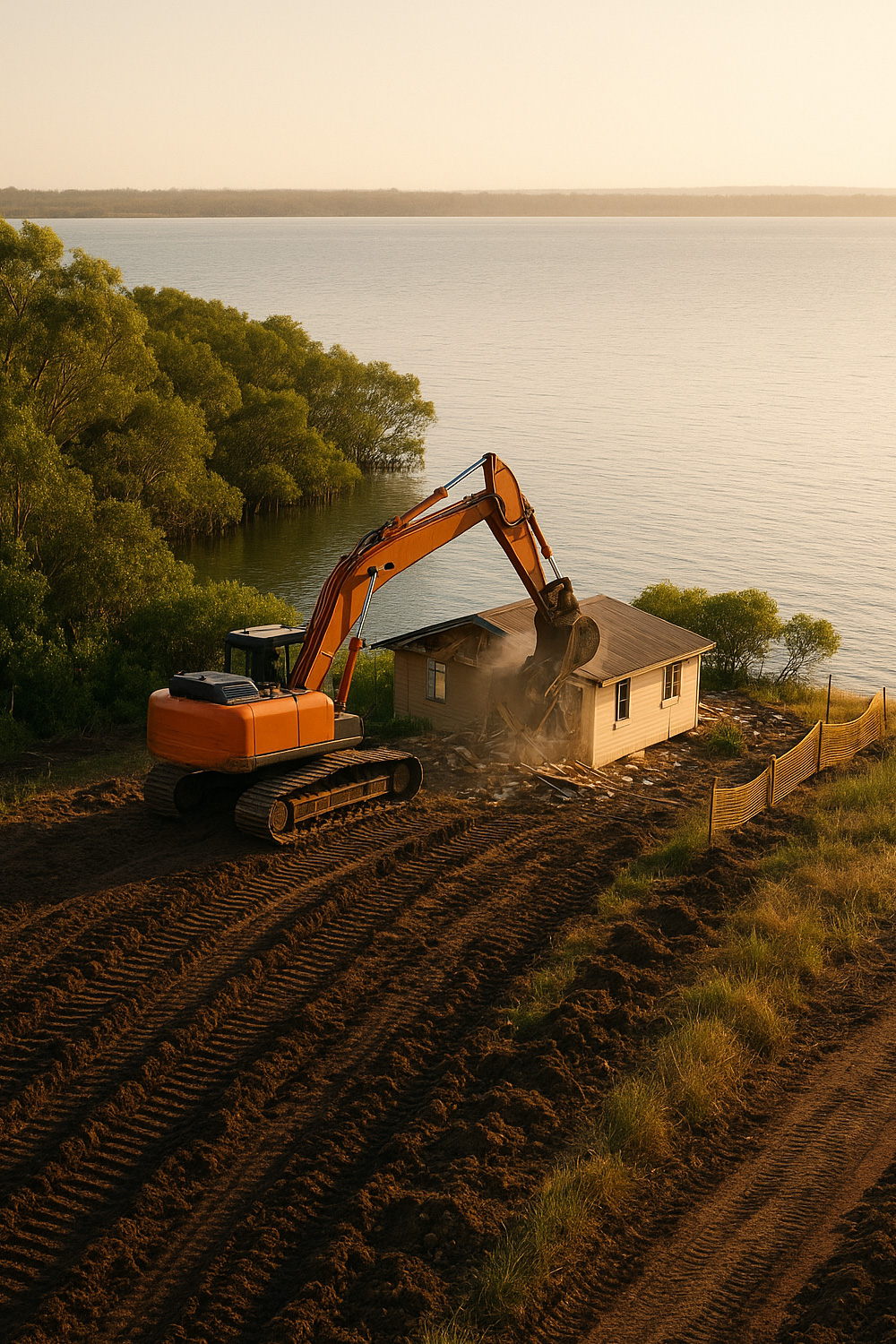
That location alone would reshape the island's property map overnight. Blocks at the southern end, long regarded as the more modest end of the market, could find their fortunes reversing dramatically. The premium hierarchy that currently favours certain northern and waterfront pockets would be disrupted as convenience and proximity to the bridge suddenly became decisive value drivers. Not every block would benefit equally – some land remains constrained by terrain, access or flood considerations – but the broad pattern would be unmistakable. Southern lots, previously overlooked, could surge in value.
With any major infrastructure corridor, resumption of some properties would almost certainly be inevitable. Access roads, bridge footings, staging areas and environmental offsets require space, and the island's narrow, irregular lot pattern means impacts would be felt by a select but significant number of owners. Compensation processes would follow, but the emotional and financial complexity of resumptions would become a defining chapter in the island's evolution.
Flood mitigation would also be unavoidable. The centre of Russell Island contains areas with higher flood susceptibility, and any north–south road spine capable of supporting bridge traffic would need substantial engineering. Without major upgrades, heavy rain events could sever the island's connection between north and south, undermining the very purpose of a bridge. Drainage works, road reconstruction, culverts and raised sections would all become essential components of the project.
In short, a bridge would not simply connect the island to the mainland. It would redraw its internal geography, reshape its value landscape, trigger new civil works and alter the lived character of the community. For better or worse, Russell Island would become a fundamentally different place the moment foundations were poured.
The political realities
For decades the bridge question has been shaped as much by politics as by engineering. Successive governments have treated Russell Island as a low-priority infrastructure challenge, largely because of its smaller population, its historically lower-value housing stock, and a demographic profile that hasn't carried the same electoral weight as mainland growth corridors. Major capital works in Queensland often follow the invisible trail of political return, and the ratio between cost and votes has never favoured a bridge. The projected spend is immense, the approvals labyrinthine, and the financial ROI negligible. For politicians, that equation has repeatedly been too difficult to champion.
Yet this reluctance cannot last indefinitely. The island's growth trajectory, and the strain it places on transport, services, and emergency response, is gradually shifting the conversation. At some point the lack of a long-term solution becomes a political liability of its own. When an essential piece of infrastructure reaches the stage where doing nothing becomes less defensible than committing to the cost, the calculus changes. Russell Island is drifting steadily toward that moment. If growth continues in its current direction, the bridge debate will eventually evolve from a fringe aspiration into a mainstream political problem that governments can no longer sidestep.
So will it ever be built?
It remains possible, and in the very long-term it may even become inevitable. As the island's population continues to climb well beyond the last census count, Russell Island is edging toward a scale where its current infrastructure will struggle to keep pace. Unless major upgrades are eventually introduced, the ferry-dependent model risks becoming unsustainable.
But inevitability does not mean imminence. Any shift in political appetite, any regional plan calling for higher island density, or any serious private toll-bridge proposal would still take years of studies, approvals and funding debates before shovels ever touched the ground. These are hypothetical scenarios in a region with many competing priorities.
For now, every available signal still points to a ferry-centred future for decades. The new terminal, upgraded pontoons, better public transport integration and ongoing mainland parking works all reinforce the expectation that water access will remain the backbone of island life long into the future.
The bridge will remain part rumour, part hope, part frustration and part defining feature of local identity. It will be talked about, argued over and imagined in countless forms. But until a government commits real money, real planning and a real timeline, the Russell Island bridge is not a project. It is a story. And for now, the island's property market continues to evolve within the world that actually exists.
What buyers and owners should take from all this
The most reliable approach is to buy or sell based on today's transport reality rather than a speculative future. Ferries. Barges. Parking. Weather conditions. This is the framework that shapes daily life, access and price.
The absence of a bridge is not just an inconvenience; it is one of the defining forces behind the island's affordability. It creates opportunity for some buyers and barriers for others. It is part of the market's DNA.
If a bridge ever moves from rumour to construction, it will rewrite that DNA in a heartbeat. But until a government says otherwise, the island remains exactly what it is now: a community connected by water, shaped by ferries and living in the long shadow of a bridge that might one day appear on the horizon.
You might also like





Disclaimer: Every effort has been made to ensure the accuracy of the information provided, but we make no guarantees regarding its completeness or reliability. The data is presented for general informational purposes only and does not constitute financial, investment, or legal advice. We are not liable for any errors, omissions, or consequences arising from its use. Users should verify details with relevant sources and seek professional advice where appropriate for the most accurate and up-to-date guidance.