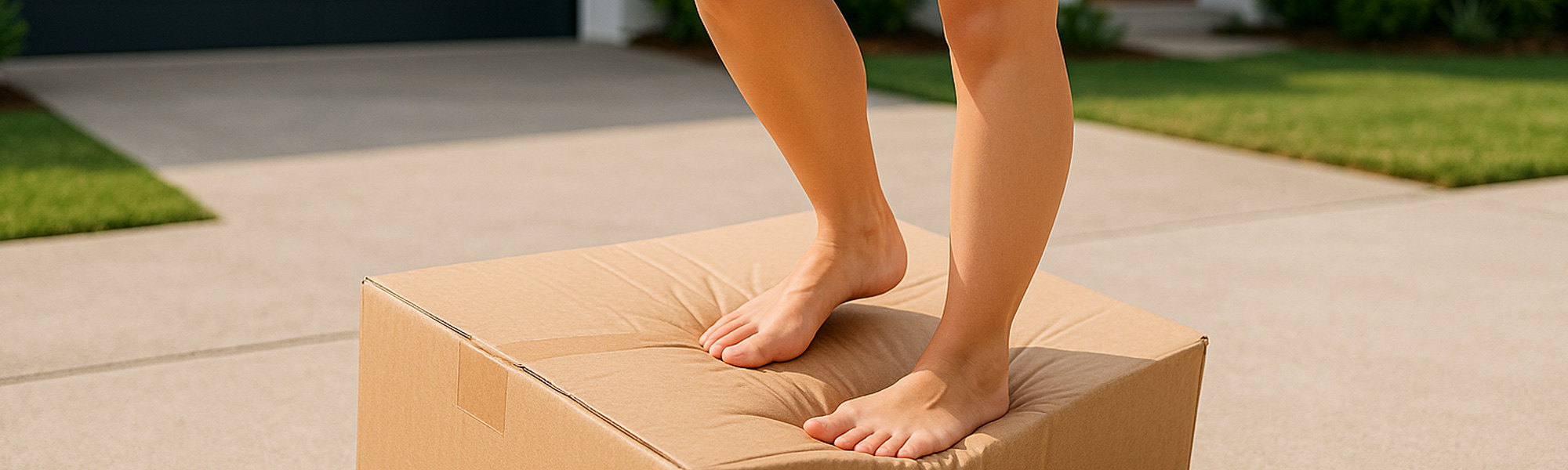
Cardboard slips into everyday life so quietly that most households barely notice how much of it they deal with. Moving house, ordering furniture, buying appliances, resetting rooms for sale - almost every major property moment generates empty boxes that need to be handled quickly to keep a home tidy and functional. It's one of those small domestic tasks that shapes the feel of a household more than people realise: manage it well and the home stays clear, calm and presentable; let it build up and it becomes clutter before you know it.
Good recycling habits sit right at the centre of how a household functions. They help families keep garages usable, keep bin areas tidy, and make pre-sale preparations far smoother. And when people understand how cardboard is actually processed - what really happens after the bin is wheeled to the kerb - they tend to trust the system more, recycle more consistently and take those extra few seconds to prepare material properly. It becomes one of those simple household habits that quietly supports both the home and the broader community.
Nothing overstays its welcome like an empty box. It gets in the way, and everyone knows the quickest fix is to drop it to the floor and use their feet to finish it. Someone takes a moment to deal with it, the space clears instantly, and there's a small but familiar sense of satisfaction in seeing it gone. By the time it reaches the bin, the box is out of sight and out of mind.
That's why this feature looks beyond the bin and follows the box through the rest of its life. After it leaves the house, it enters a well-coordinated process designed to turn yesterday's packaging into tomorrow's material. It's a sequence most people never witness, yet it becomes far more engaging once you track it from its very first step at home.
Seeing that sequence makes the whole task feel different. It shows how a quick household action like stomping down a box with your feet shapes everything that follows, turning an ordinary moment into the start of a much larger cycle. And once you're aware of that, even small domestic routines feel more connected and purposeful.
Part 1: Destroying the Box to Begin Recycling
A cardboard box begins its recycling life long before it reaches a truck or a conveyor belt. The real beginning happens at home, in a moment so ordinary and so widely repeated across the country that people rarely stop to think about it. Someone finishes unpacking something - groceries, a delivery, a TV, a dozen small online orders - and the empty box ends up on the ground in front of them. It stands there, rigid, hollow, full of trapped air. And then, within seconds, that whole structure disappears beneath a pair of feet.
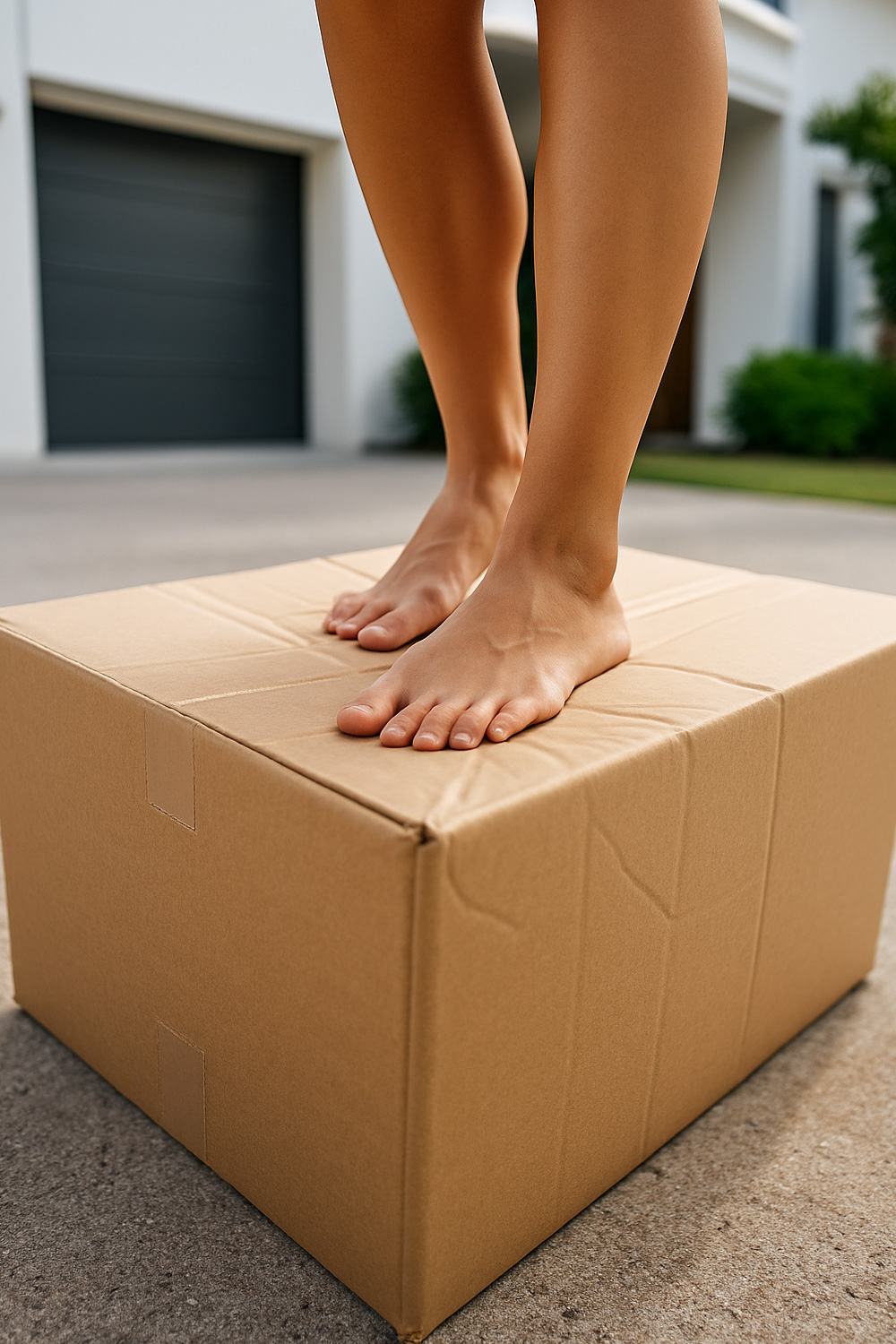
Flattening a box is so familiar that people barely notice themselves doing it. It's instinctive - placing the box upside-down, stepping forward, letting body weight do the work - and for most households it happens barefoot, and it happens to be the most effective way to destroy a box's engineered structure.
From above, it looks like nothing more than someone stepping on a box, a quick flattening you barely register as it happens. But under the soles, the first real damage is already underway as their pressure forces the material to bow, strain and begin to fail. The feet take on a broad, stable posture - toes apart, arch lowered, heel firm - a shape built to deliver weight evenly. That simple stance is what begins the collapse inside the box well before the change is visible from above.
Corrugated cardboard is built around flutes, tiny repeating arches glued between outer layers that give the box its surprising strength. These flutes behave like miniature beams: excellent at holding shape, excellent at resisting sideways pressure, excellent at storing tension - and disastrous inside machinery that only wants flat sheets. As long as the flutes stand upright, the box behaves like a small structure, not a material.
The first downward step changes that. When a bare sole comes down on the highest part of the upside-down box, the skin moulds gently to the surface, anchoring the foot where shoes would slide. The flutes beneath begin to bow, then buckle, releasing the tension that once held the box open. Corners soften. Hollow space collapses. The outer layers relax into something flexible and low-profile.
What the bare sole brings to this moment is something no shoe can replicate: natural traction. The skin has just enough texture to anchor itself on the cardboard's surface, gripping lightly without sticking, and this micro-friction keeps each step controlled even as the structure shifts beneath it. Instead of sliding across a glossy panel the way a rubber tread often does, the foot holds its ground and allows pressure to be directed precisely into the lines and ridges that still need to collapse.
The human foot is almost perfectly suited to finishing the job. Without cushioning or thick treads absorbing force, body weight transfers directly into the cardboard. The arch spreads pressure across a wide footprint, encouraging the flutes to fail in a broad, uniform wave. The heel offers the firmness needed to drop stubborn ridges that remain after the initial collapse. The toes provide micro-stability, letting people adjust instinctively toward raised edges and seams without thinking. Every shift of balance, every small adjustment in stance, helps guide the collapse toward completion.
In just a few seconds, the box transforms. The engineered geometry disappears. The tension dissolves. Air escapes from between the collapsed flutes. What remains is a flat, compliant pad that behaves predictably in every part of the recycling stream: it stacks neatly in the bin, compacts cleanly in the truck, moves across sorting screens without rolling, and breaks down faster in the pulper because the internal structure has already been removed at home.
The industrial phases of recycling may be loud, complex and mechanical, but they all rely on this quiet household moment - the moment a person steps on a box until the structure collapses and the material beneath them becomes ready for its next life.
Part 2: The Journey Beyond the Bin - Processing
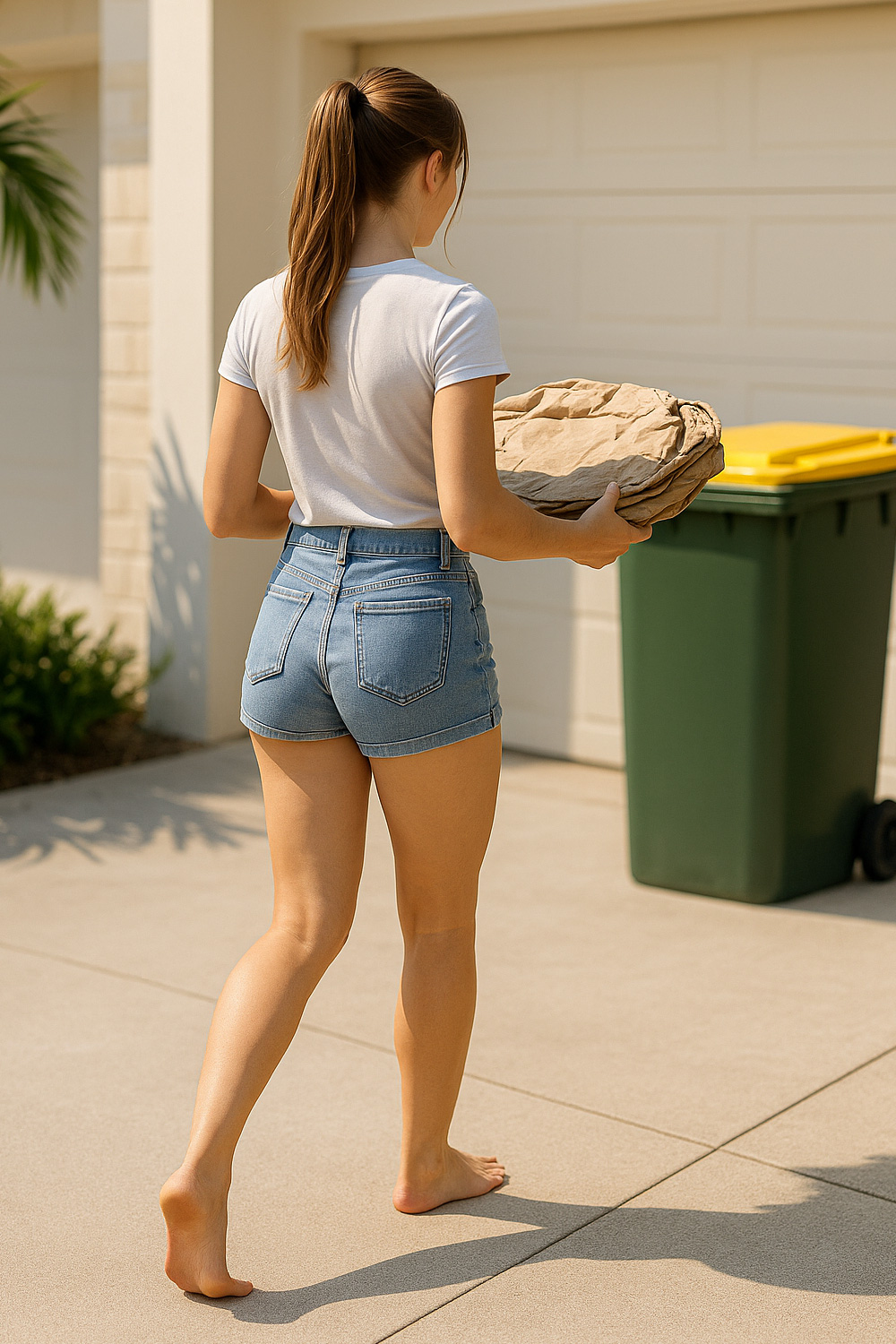
From here the industrial part takes over. The truck will lift the bin, crush once more and compact the contents, and deliver the cardboard to a recovery facility where it will be sorted and fed into pulpers. The machinery there expects flat material. Her work starts the process that ensures that the cardboard passes smoothly through belts, screens and reprocessing steps without causing jams or misfeeds.
Arrival at the Recovery Facility
Once the compactor truck reaches the facility, the load is tipped onto a receiving floor. Thousands of crushed boxes from households and businesses spill out in one broad wave. Excavator-style loaders push the material onto a conveyor. Almost everything about the system is designed for flow. Clean, flat pieces slide easily and stay aligned.
The cardboard begins its upward climb on the main conveyor. Workers or automated scanners remove contaminants that should not be there, including plastic wrap, polystyrene and oversized debris. Any intact boxes stand out here. They are either manually broken down or diverted, because their shape can interfere with the next stage.
Sorting by Material Type
Cardboard is heavier and stiffer than mixed paper, so sorters and automated systems separate it early. Rotating screens, known as star screens or disc screens, let smaller paper fall through while carrying larger cardboard forward. Air jets, optical sensors and mechanical paddles assist the split. By the time the material reaches the final sorting line, it is almost entirely corrugated cardboard of similar size, weight and structure.
Uniformity is vital. Mills ask for predictable feedstock because it affects pulping time, water balance and fibre quality. Her flattened sheet is now part of a clean, sorted stream ready to be turned back into pulp.
Into the Pulpers
The pulping stage is the heart of the recycling process. Giant circular vats mix water with the cardboard to break the fibres apart. Rotating impellers agitate the slurry with controlled turbulence. Within minutes the bonds between the outer layers and the fluted core dissolve. What was once a rigid, three-layer structure becomes a suspension of cellulose fibres floating in water.
Pulpers operate at specific consistency ratios. Too much material and the slurry becomes thick and unresponsive. Too much water and the fibres separate poorly. The plant constantly measures temperature, viscosity and strength of the pulp to maintain the ideal conditions.
Screening and Removing Contaminants
Once the cardboard becomes pulp, the cleaning stages begin. A series of screens and centrifugal cleaners separate unwanted materials. Plastics, tape residues, food fragments, staples and tiny bits of string all need to be removed before the pulp is suitable for reuse.
Fine screens catch small particles. Larger contaminants spin outward in hydrocyclones due to differences in density. Each stage refines the pulp further. By the end of the cleaning line, what remains is almost pure fibre suspended in water.
For cardboard recycling, de-inking is minimal because the majority of corrugated packaging uses simple inks that disperse easily. If needed, air flotation cells lift ink particles to the surface, where they form a foam that is skimmed away.
Fibre Strength and Its Limitations
Cellulose fibres are strong, but not infinitely reusable. Every time cardboard is pulped, the fibres shorten slightly. Their structure frays and loses tensile strength. On average a fibre can be recycled five to seven times before it becomes too weak to bond into new material.
To maintain quality, mills blend recycled fibres with a proportion of virgin fibres made from sustainably managed timber. This blend restores strength, stiffness and durability to the final board. Without reinforcement, recycled cardboard would become progressively softer and less usable with each cycle.
Thickening and Preparing the Pulp
Before the pulp becomes a sheet again, excess water is removed. Pressing screens and mechanical thickeners reduce the water content while keeping the fibres suspended evenly. Mills store this refined pulp in giant tanks called chests. From here it is pumped to the paper machine that will transform it back into a solid material.
This is the point where the box from her bin ceases to be a familiar object. Its fibres are now part of a vast blended mixture that will soon be formed into fresh cardboard ready for manufacturing.
Forming New Sheets of Cardboard Material
The pulp flows onto a moving mesh screen known as the forming table. Water drains away through the mesh as the fibres begin to bond. Additional layers are added to build strength. For corrugated cardboard, this process creates both the flat outer layers and the fluted middle layer separately. Each layer requires different fibre blends and drying conditions.
The sheet moves through a series of presses that squeeze more water out. Then it passes through heated drying cylinders that evaporate the remaining moisture. By the time it leaves the machine, it is a continuous ribbon of solid board rolling forward at remarkable speed.
The board is trimmed, wound into huge rolls and sent to converting plants. Only then is it ready to be shaped into new boxes through cutting, creasing, gluing and printing.
The End of Industrial Recycling and the Start of Rebirth
By the time the material reaches this stage, her original box is no longer recognisable. Its fibres have joined countless others, blended, cleaned and reshaped into strong new board. The industrial journey transforms what was once domestic waste into raw material for the next generation of packaging.
And so the cycle continues. Each box lives multiple lives. Each life begins at home when someone places a box on the ground, presses it flat and sets the entire system in motion.
Part 3: The Rebirth of a Box
By the time the recycled fibres reach the converting plant, the material is strong, uniform and ready for transformation. What was once a discarded household box is now part of a broad, continuous sheet of freshly made board. Its fibres have been blended, thickened, dried and rolled into enormous reels that weigh several tonnes. These reels form the foundation for the next generation of cardboard packaging.
Between the repeated cycles of cardboard re-entering the system, sometimes up to seven times, the fibres in a single new box can include traces from tens of thousands of earlier boxes. The material becomes a blend of countless past uses, each recycling round breaking it down and rebuilding it again into something new.
From Board to Usable Components
At the converting plant the rolls are loaded onto machines that unwind the board at high speed. Some will become the flat inner and outer layers of a new box. Others will be formed into the fluted core. The fluting process shapes the central layer into a wave pattern that gives corrugated cardboard its strength. Heat and moisture soften the fibres, then pressure and controlled tension set the waves in place.
Once the fluting is formed, it is glued to the flat liners on each side. This creates the familiar three-layer corrugated structure. The board is then trimmed to exact width and fed into huge stacks ready for printing and cutting.
Printing and Customisation
Most boxes carry branding or information, so the next stage is printing. Flexographic presses apply ink directly onto the board in a fast, clean process that uses quick-drying, low-impact inks. These inks bond easily with the fibre surface and maintain clarity even when the board is folded or creased later.
Printing is timed with cutting so the artwork lines up precisely with the final shape. Registration marks and sensors track the board's movement to ensure the pattern stays aligned throughout the run.
Cutting, Creasing and Shaping
Cutting dies, which look like giant wooden panels fitted with sharp metal blades, stamp the board into flat box shapes. At the same time, creasing rules apply the fold lines. These creases allow the board to bend cleanly without cracking the outer layers or damaging the flutes inside.
Every crease is carefully measured. Too shallow and the box will burst open when filled. Too deep and the structure weakens. The board passes through these stations in a matter of seconds, emerging as flat, printed box blanks ready for assembly.
Gluing and Folding
Next, automated folders bring the creased panels together and apply a thin line of adhesive along the joining flap. The glue sets quickly, bonding the fibres firmly without adding unnecessary thickness.
Once dried, the boxes are folded flat for transport. In this form they take up almost no space. A pallet can hold hundreds of them, each created with precise dimensions for its intended product.
Distribution: Moving New Boxes Into the World
The finished boxes are banded, stacked and loaded onto trucks. They may travel only a short distance to a local packing shed or warehouse, or they may move through large distribution centres before arriving at the business that ordered them.
At their destination the flat boxes are unfolded, shaped and filled with goods. Some hold food. Some carry electronics. Some make their way into postal networks. Others end up in retail storerooms or packing benches where workers assemble them at speed.
A box built partly from the fibres she recycled may now be travelling across the country or waiting on a shelf to be used again. The material has re-entered the economy, ready to perform its next purpose.
The Loop Back Home
Eventually every box reaches the same end point. It is opened, emptied and crushed. In many homes, it returns to the ground once more. Someone places it on the floor, steps on the highest panel and begins the collapse.
The loop is simple but powerful. A box begins life in a manufacturing plant, travels through supply chains, reaches a household and becomes part of everyday living. When it is no longer needed, a quiet moment under the soles of someone's feet in a driveway or on a set of tiles sets its next life in motion.
The recycling system is vast, but its beginning is always small. It starts with a single person pressing down with their feet, transforming an object back into material, and sending it onwards to begin again.
You might also like


Disclaimer: Every effort has been made to ensure the accuracy of the information provided, but we make no guarantees regarding its completeness or reliability. The data is presented for general informational purposes only and does not constitute financial, investment, or legal advice. We are not liable for any errors, omissions, or consequences arising from its use. Users should verify details with relevant sources and seek professional advice where appropriate for the most accurate and up-to-date guidance.