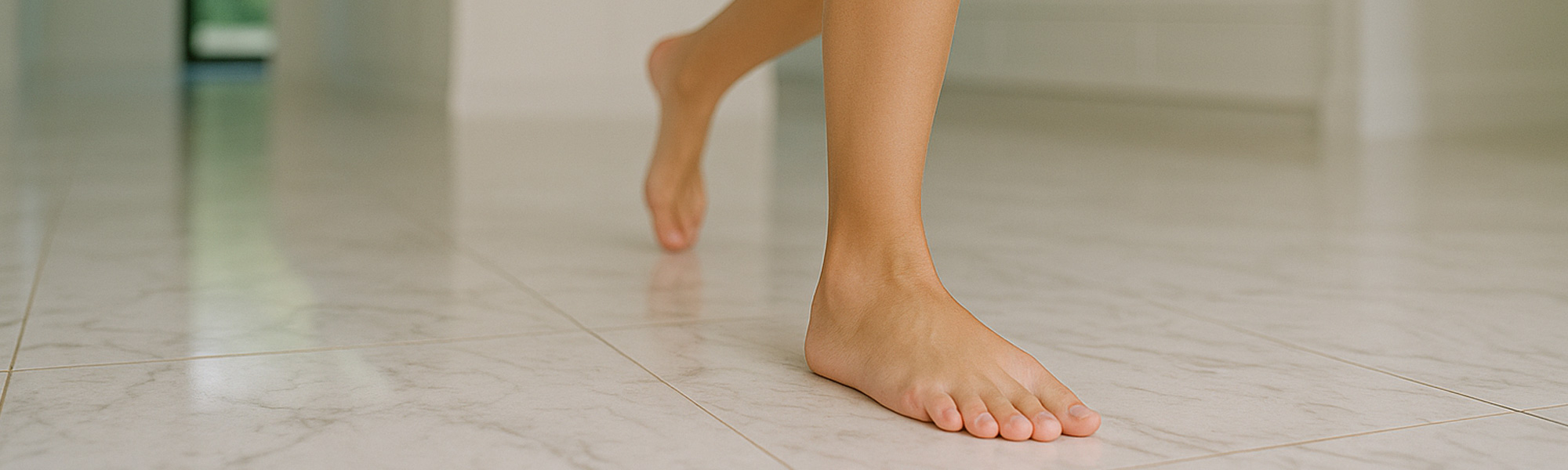
Every home has its own small moments that never quite make it into conversation, yet everyone quietly recognises them. In warm climates, insects wander across tiles, patios and outdoor steps as part of the everyday backdrop. Most people deal with them quickly and move on, but there's often a lingering uncertainty about what actually happens in that brief instant when a foot comes down. Is it clean? Is it normal? Does the moment matter more than people think?
This article exists simply because that small question lingers for far more people than they admit. It isn't about being dramatic or encouraging anything unusual. It's about taking a calm look at a tiny piece of household life that most people experience but never talk about, and offering some clarity so the moment feels less mysterious and more grounded in reality.
Note for Readers: This guide reflects everyday pest control practices in the Gold Coast's subtropical climate. Some cultural habits, such as managing minor pests while barefoot, are a common part of local life but may feel unfamiliar to readers from other regions. The advice is shared responsibly, with safety and hygiene in mind, and should be adapted to your own circumstances.
Everything here relates to the tiny insects people usually deal with around the house. Spiders are a different matter entirely. They move unpredictably, carry more moisture and can deliver bites, which makes them unsafe to step on. Most people handle them in other ways for exactly that reason.
Why the Moment Feels Bigger Than It Is
Many adults carry childhood rules in their heads about floors being fragile or dirty, feet needing constant protection or insects being somehow dangerous by default. These rules create hesitation before the physical act even begins. The mind imagines mess or contamination because that is what the culture surrounding footwear has taught it to imagine. The foot has, for several generations, been treated as something that should remain wrapped and shielded, which makes any unfiltered ground contact feel dramatic.
Yet the discomfort rarely reflects what actually occurs when a foot meets a tiny household insect. The biological exchange is far smaller, far cleaner and far more controlled than the imagination suggests.
What Physically Happens Underfoot

The scale difference cannot be overstated. A firm human sole pressing down on a creature that weighs almost nothing results in a rapid collapse with minimal residue. Because household insects are extremely small and dry-bodied, the contact leaves only the lightest residue, often barely visible.
Because the sole is a smooth, sealed surface, there is almost no transfer to the foot itself. The skin of the foot does not soak in material, does not hold anything between layers and does not behave like fabric or shoe rubber. The moment the weight is lifted, the sole looks and feels exactly as it did before. A quick rinse in the shower later that day is more than enough, and in many cases even that is unnecessary because nothing has adhered in the first place.
Cockroaches behave differently from tiny dry-bodied insects because they hold more internal moisture. Most of the residue spreads across the floor rather than rising toward the foot, but a larger insect can leave a faint trace of moisture on the sole at the moment of contact. Even then, the foot does not absorb or retain it. The skin is firm, dry and non-adhesive, so anything that touches it is easily rinsed away. In practice the floor requires far more cleaning attention than the foot does, and a quick wash later is all that's needed. Some people prefer to drop a small object over the cockroach before stepping, simply to create a bit of distance and to make the moment feel easier.
The Surfaces Beneath You Do Most of the Work
People often picture floors behaving like sponges, ready to absorb matter or become contaminated. In reality, household and outdoor surfaces are some of the cleanest, driest and least reactive materials in the environment. Tiles, timber and polished concrete indoors hold nothing at all. They are smooth, sealed and instantly dry. The fragment left by an insect simply sits on top until it is wiped away.
Outside, the effect is even more pronounced. Sunlight hits patios, decks and driveways throughout the day, drying them out, warming them and breaking down organic material almost the moment it appears. Air circulation helps too. These surfaces are exposed, constantly ventilated and never remain damp long enough for anything meaningful to develop. A small insect fragment is, in practical terms, no more significant than a fleck of dried leaf.
This is why outdoor barefoot households rarely give the matter a second thought. The environment takes care of itself long before anyone feels the need to intervene.
How Feet Themselves Stay Clean and Resilient
One of the most misunderstood aspects of barefoot living is the way the sole adapts over time. When people regularly walk barefoot on warm patios, concrete paths or garden edging, the skin responds by becoming firm, dry and incredibly easy to keep clean. It does not become damaged or fragile. It becomes an efficient contact surface that sheds micro-particles naturally through movement and friction.
The foot is constantly renewing itself. The outer layers replace themselves quietly and continuously. Each step brushes away older cells and reveals newer, cleaner ones beneath. This natural renewal keeps the sole far fresher than a shoe interior ever could. Shoes trap moisture and encourage microbial growth. Bare soles do the opposite. They dry immediately and remain ventilated from morning to night.
This is why people who live partially barefoot are often surprised to hear someone else describe the sole as vulnerable. In reality it is one of the most resilient and low-maintenance parts of the body. It is designed for ground contact, and that design works exactly as intended.
Why People Misjudge Barefoot Hygiene
Much of the discomfort surrounding stepping on an insect comes from the belief that bare feet are somehow more exposed or at risk. That belief is cultural, not biological. In places where shoes were always worn indoors, or where children were taught to treat floors as untouchable spaces, feet become symbols of fragility. They are rarely seen, rarely talked about and often assumed to be unclean simply because they are not part of the everyday sensory world.
In barefoot-friendly climates, the opposite is true. The foot is treated as a normal contact point with the environment. People who grow up barefoot on patios, pool surrounds and warm paths understand that the sole stays clean through exposure, not despite it. Air, sunlight, heat and movement take care of hygiene long before deliberate cleaning enters the picture.
When someone used to shoes sees a bare foot step on an insect, their mind fills the moment with imagined risk. When someone used to barefoot living sees the same thing, they register nothing more than a quick, neat solution to a small household problem.
What the Insect Actually Experiences

A lot of the discomfort people feel comes from imagining the insect going through a long or distressing moment. That picture doesn't line up with how insects actually work. They don't process the world with anything close to human awareness. Their senses are simple. They notice movement in the air, a shift in light or the shape of something large nearby, like your foot or leg, but they don’t anticipate what is about to happen and they don’t feel pain in the way people imagine.
When pressure is applied, their coordination ends almost immediately. The last thing they register is the brief contact of the sole touching them and the rising pressure, and then it simply stops. There is no drawn-out awareness or sense of time passing. It is a moment that ends almost as soon as it begins.
A human sole is often the most humane contact an insect could meet. For an insect, it is likely the closest thing to a peaceful end it could ever encounter. The surface that meets it is warm and cushioned rather than harsh, and the firmness behind it is decisive enough that everything stops before it can register more than that first muted touch. Among all the ways an insect might be caught or harmed, this is probably the quickest and least chaotic, ending almost the moment it begins.
Why Stepping Is Often the Cleanest and Safest Approach
People sometimes assume that using a tissue or object is more hygienic, but the opposite is usually true. A tissue spreads moisture across a wider area and smears fragments. A shoe tread traps material in grooves. A cup or jar drags the insect across the surface as you try to trap it. Hands carry the risk of accidental contact.
A foot places controlled pressure on a precise point. Nothing is dragged. Nothing spreads. Nothing gets caught. The foot lifts away cleanly, and the floor underneath remains dry and predictable. The entire interaction is smaller in scale than people imagine.
Why the Act Feels Dramatic Even When It Is Mundane
The mind enlarges what the body barely notices. People picture insects as miniature versions of larger animals, when in reality their bodies contain almost no fluid and leave behind almost no residue. They imagine surfaces becoming contaminated even though the fragment dries immediately and has no ability to spread. They imagine the sole picking up material even though it can shed anything instantly and naturally without holding it.
The drama exists only in thought, not in the physical world beneath the foot.
An Ordinary Part of Domestic Life
Insects are part of Australian homes, especially in coastal environments where indoor and outdoor life blend together. Knowing how to deal with them quickly and cleanly helps people feel settled and confident in their own spaces. Stepping on an insect, when needed, is not an unhygienic act. It is a small, controlled solution performed on surfaces that are already clean and on soles that are naturally equipped for the moment.
Once the myths fall away, the act becomes no more remarkable than brushing a speck from the kitchen bench or rinsing a leaf fragment from the patio. It is simply one of the tiny, practical realities of living comfortably with the natural world that surrounds the home.
This article discusses common household insects and the everyday ways people deal with them. It is not intended as professional pest control advice and does not cover dangerous species or situations where safety is a concern. Always use caution around larger insects or spiders, and choose the method that feels safe and appropriate for your home.
You might also like




Disclaimer: Every effort has been made to ensure the accuracy of the information provided, but we make no guarantees regarding its completeness or reliability. The data is presented for general informational purposes only and does not constitute financial, investment, or legal advice. We are not liable for any errors, omissions, or consequences arising from its use. Users should verify details with relevant sources and seek professional advice where appropriate for the most accurate and up-to-date guidance.