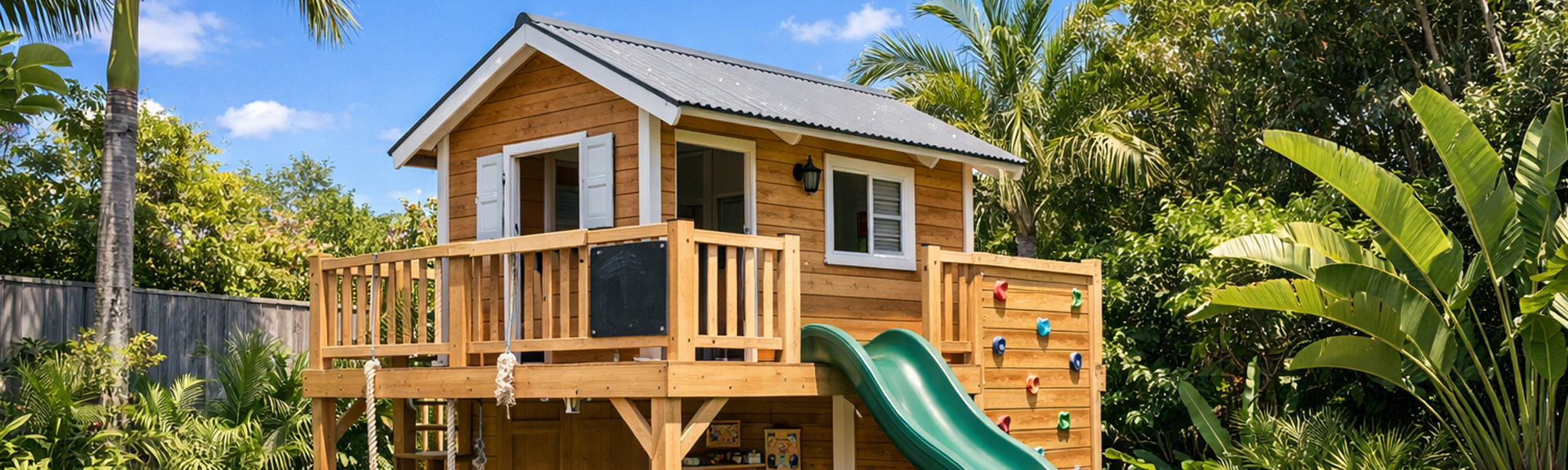
Outdoor cubby houses occupy a strange middle ground in residential design. They are often treated as temporary toys, something bought flat-packed or put together on a weekend, yet they sit outdoors, take up space, interact with neighbours, and invite children to climb and invent games that push structures harder than many adults expect. On the Gold Coast, where backyards are used year-round and weather conditions are unforgiving, cubby houses function less like toys and more like small buildings. They need to handle heat, rain, wind, termites, sun exposure, and sustained use. Done well, they become a long-lived part of the yard that children grow into rather than out of. Done poorly, they warp, fade, wobble, or quietly become unsafe.
This guide looks at outdoor cubby houses as built objects, not novelty items. It covers how to choose or design one that suits Gold Coast blocks, how to build it properly if you are constructing from scratch, and how council rules, safety expectations, and neighbour considerations quietly shape what is sensible. The goal is not to overcomplicate a simple idea, but to make sure that when something is built, it lasts, stays safe, and fits naturally into the way Gold Coast homes are actually used.
Understanding How Cubby Houses Are Used in Real Backyards
Children do not use cubby houses gently. They climb on roofs, hang off railings, jump from platforms, drag furniture inside, and invite friends over who immediately test every weak point. A cubby house that looks fine in a catalogue photo but relies on thin fixings or decorative bracing will reveal its limitations quickly. On the Gold Coast, outdoor play also happens more often and for longer stretches than in cooler climates, which means wear accumulates fast. Heat cycles cause timber to expand and contract, afternoon storms dump water into corners, and salt air near the coast accelerates corrosion.
This matters because many cubby houses are selected visually, with little thought given to how children actually behave or how the structure will age. A cubby house is not static. It is climbed, leaned on, shaken, and occasionally jumped off. Thinking about use patterns early changes design decisions. Roof pitch becomes about shedding water rather than cuteness. Handrails become structural elements rather than decorative ones. Floor height becomes a safety decision tied to fall risk rather than just visibility. When these things are considered upfront, the cubby house feels solid and reassuring rather than fragile.
Choosing Between Prefabricated and Custom-Built Cubby Houses

Prefabricated cubby houses dominate the market because they are convenient and appear cost-effective. Many are designed overseas for temperate climates and shipped flat-packed with lightweight timber, thin fasteners, and minimal bracing. Some perform reasonably well if installed carefully and maintained, but many struggle in Gold Coast conditions unless modified. Sun exposure fades finishes quickly, untreated timber attracts termites, and light framing can rack under repeated play.
Custom-built cubby houses allow better control over materials, proportions, and placement, but they also demand more planning. The advantage is not complexity for its own sake, but the ability to match the cubby house to the yard, the children's ages, and the expected lifespan. A custom build can be designed so that it works first as a low, enclosed playhouse for younger children, then later becomes a raised platform, reading nook, or shaded hangout as children grow. This flexibility is difficult to achieve with prefabricated kits.
Cost differences are often smaller than expected. Once a prefabricated cubby house is upgraded with better fixings, added bracing, and a proper footing system, the price gap narrows. The decision often comes down to time versus control. If time is limited and expectations are modest, a high-quality prefabricated unit installed carefully can work. If longevity, safety, and integration into the yard matter, custom construction usually wins.
Siting the Cubby House Within the Yard

Where a cubby house sits matters as much as how it is built. Poor placement creates ongoing problems that no amount of construction quality can fix. On the Gold Coast, sun orientation is the first consideration. A cubby house placed in full western sun will become uncomfortably hot in the afternoon, even with ventilation. Timber surfaces heat up quickly, and enclosed spaces trap warmth. Positioning the structure where it receives morning sun and afternoon shade dramatically improves usability.
Drainage is equally important. Many cubby houses fail at ground level because they are placed on turf or soil that stays damp after rain. Water splashes onto walls, wicks into posts, and slowly degrades timber. A well-sited cubby house sits on a drained base, often over compacted gravel or pavers, with clear separation between timber and soil. Even a small change in height can significantly extend the life of the structure.
Visibility from the house is another practical concern. Parents want to see and hear what is happening without hovering. Placing the cubby house within sightlines from kitchens or living areas makes supervision passive rather than intrusive. At the same time, it should not dominate views or interfere with adult outdoor spaces. The best placements feel intentional, as though the cubby house belongs there rather than having been dropped wherever space was available.
Designing for Gold Coast Climate Conditions
Gold Coast weather is not extreme in the sense of snow or freezing temperatures, but it is punishing in its consistency. High UV levels degrade finishes quickly. Summer storms deliver heavy rain and gusty winds. Humidity encourages mould and timber movement. Designing a cubby house for these conditions means prioritising durability over novelty.
Roof design is a key example. Flat or near-flat roofs look neat but perform poorly unless waterproofed properly. A simple pitched roof with sufficient overhang protects walls, sheds water efficiently, and creates shade. Overhangs reduce direct sun on walls and openings, lowering internal temperatures and slowing timber degradation. Roofing materials should be selected for longevity rather than appearance alone. Lightweight metal roofing often outperforms thin timber shingles in this environment, provided edges are finished safely.
Ventilation should be intentional. Openings on multiple sides allow cross-breezes, making the space usable even on warm days. Fixed windows or cut-outs placed high on walls provide airflow without compromising safety. Fully enclosed cubbies quickly become ovens unless designed with airflow in mind. On the Gold Coast, outdoor play structures that ignore ventilation are often abandoned in summer.
Structural Design and Framing Considerations
Even small structures need proper framing logic. Cubby houses are often built with decorative panels fixed together rather than framed walls, which leads to flexing and loosening over time. A simple stud frame, scaled appropriately, provides stiffness and allows cladding to be fixed securely. This does not mean overbuilding, but it does mean respecting basic building principles.
Floor systems deserve particular attention. Raised cubby houses are popular, but the higher the platform, the greater the fall risk and the structural demand. Platforms should be framed like small decks, with joists sized for load and properly fixed to bearers. The temptation to use thin boards or minimal supports often leads to bounce and movement, which children quickly exploit. A solid floor feels safer and encourages calmer play.
Connections are where many failures occur. Screws and bolts should be corrosion-resistant, especially near the coast. Fixings should be sized appropriately, not chosen solely because they came in a kit. Where components meet, loads should be transferred cleanly rather than relying on fasteners in shear. This sounds technical, but in practice it means avoiding flimsy brackets and relying on timber-to-timber bearing wherever possible.
Materials Selection for Longevity and Safety
Material choice determines how much maintenance a cubby house will need and how safe it remains over time. On the Gold Coast, untreated pine exposed to weather rarely lasts without regular attention. Termite-resistant timber, treated pine rated for ground contact, or durable hardwoods are more appropriate for structural elements. Cladding materials should tolerate sun and rain without splitting or warping excessively.
Paints and finishes should be selected with UV resistance in mind. Bright colours look appealing initially but fade quickly if the coating is not designed for exterior use. Lighter colours reduce heat absorption and tend to age more gracefully. Recoating schedules should be realistic. If a finish requires annual maintenance to remain safe, it is likely the wrong choice for a children's structure.
Safety also extends to surface textures and edges. Rough-sawn timber can splinter, while sharp edges become hazards when children move quickly. Sanding and rounding edges is not cosmetic. It materially reduces injury risk. Hardware should be recessed or covered, and moving parts such as doors should be designed to avoid finger traps.
Council Requirements and When Approvals Are Needed
One of the most misunderstood aspects of outdoor cubby houses is when council approval is required. On the Gold Coast, small, low structures used as play equipment often fall under exemptions, but those exemptions have limits. Height, floor area, proximity to boundaries, and whether the structure is fixed to the ground all matter.
As a general principle, cubby houses that are low, lightweight, and clearly temporary are less likely to trigger approval requirements. Once a structure becomes tall, enclosed, or anchored permanently, it begins to resemble an outbuilding rather than play equipment. At that point, setback rules, height limits, and possibly building approvals come into play. The Gold Coast City Council provides guidance on exempt development, but interpretation can vary depending on specifics.
Boundary proximity is particularly important. Even if approval is not required, placing a cubby house hard against a fence can create disputes, especially if it allows children to see into neighbouring yards or climb higher than the fence line. Sensible setbacks reduce friction and align with broader planning expectations. When in doubt, checking with council or a building professional before construction avoids costly changes later.
Safety Standards and Risk Management
While cubby houses are not regulated in the same way as playground equipment in public spaces, safety expectations still apply. Falls are the primary risk. Platform heights should be chosen conservatively, especially for younger children. Guardrails should be present where there is a meaningful drop, and openings should be sized to prevent children slipping through.
Ladders and steps deserve careful thought. Vertical ladders look adventurous but increase fall risk. Angled steps with handholds encourage safer movement. The goal is not to eliminate challenge, but to manage it in a way that matches children's abilities. As children grow, their use of the structure changes, which is why designing with adaptability in mind is valuable.
Surface treatment around the cubby house also matters. Hard surfaces beneath elevated structures increase injury risk. Grass, mulch, or soft landscaping reduce impact severity. These choices are often overlooked, yet they have a direct influence on outcomes when accidents happen.
Integrating Cubby Houses with Landscaping and the Yard
A cubby house should feel like part of the yard rather than an afterthought. Integration improves both aesthetics and functionality. Planting around the structure can provide shade, soften edges, and create a sense of enclosure without fully closing the space. On the Gold Coast, fast-growing shrubs and small trees can quickly transform how a cubby house is experienced.
Paths and access matter more than expected. A clear, durable path to the cubby house reduces wear on lawns and keeps mud from being tracked inside. Simple stepping stones or compacted gravel often suffice. These small touches signal that the structure is meant to be used regularly rather than occasionally.
Storage is another integration issue. Loose toys scattered around the cubby house quickly become clutter. Designing built-in benches, shelves, or small storage areas encourages tidiness and extends play scenarios. These features also help the cubby house evolve as children's interests change.
Maintenance and Ongoing Care
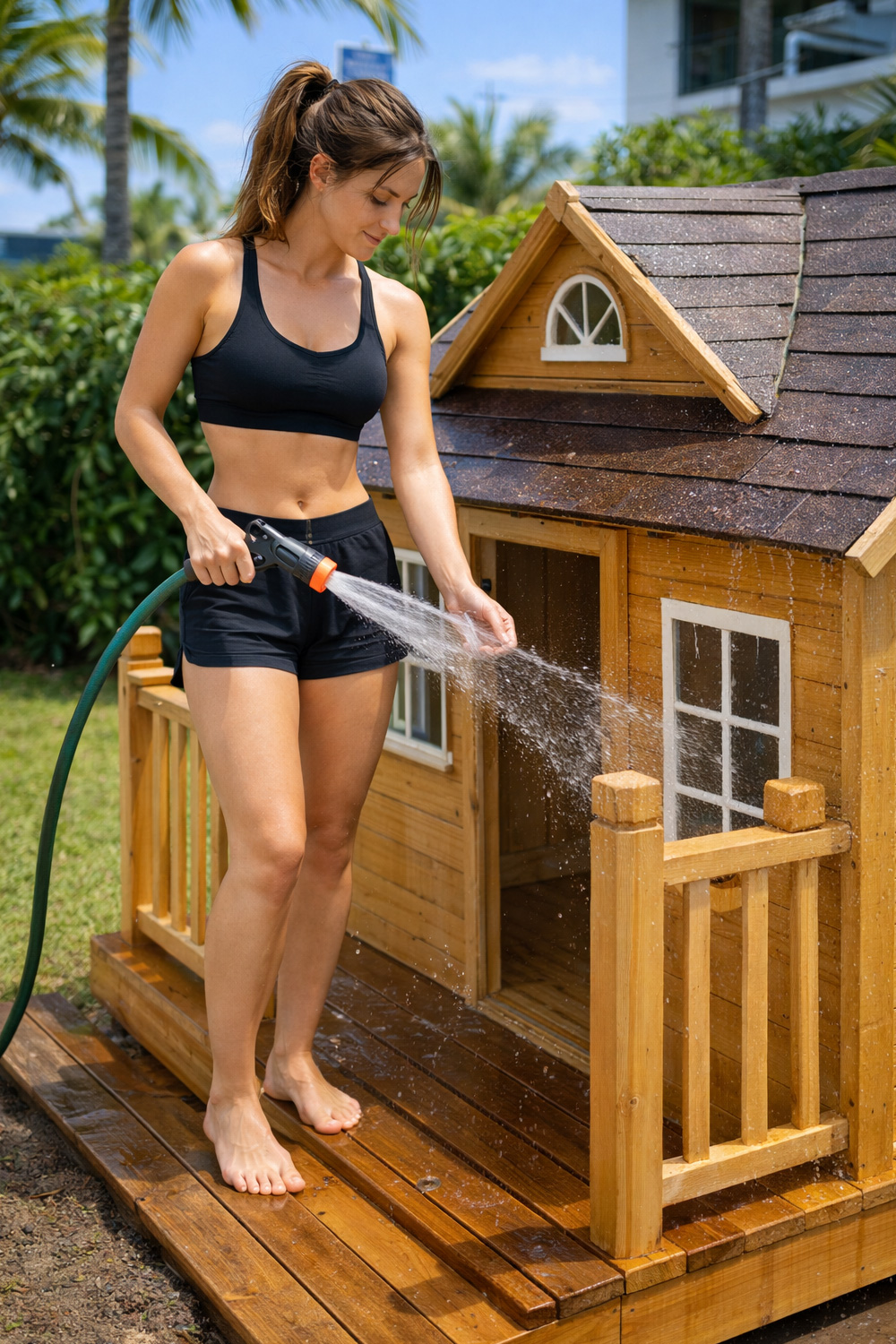
Even the best-built cubby house requires maintenance. On the Gold Coast, inspections should be more frequent due to weather exposure. Checking fixings, looking for signs of timber movement, and addressing minor issues early prevents larger problems. Maintenance should be designed into the structure, meaning access to fixings and components should be straightforward rather than hidden behind decorative panels.
Termite protection should not be ignored simply because the structure is small. Physical separation from soil, treated materials, and regular inspection are basic precautions. Once termites establish themselves, damage can be rapid.
Cleaning is also part of care. Outdoor structures accumulate dirt, spider webs, and organic debris. Occasional cleaning keeps the space inviting and discourages pests. Choosing materials and finishes that tolerate cleaning without damage makes this easier.
Designing for Longevity as Children Grow
One of the most satisfying outcomes of a well-designed cubby house is watching it adapt to different stages of childhood. What begins as a pretend house becomes a reading nook, then a hangout, then perhaps a quiet retreat. Designing with this progression in mind changes decisions about size, layout, and robustness.
Avoiding overly childish themes helps. Neutral forms and materials age better than novelty shapes. Leaving space for furniture or cushions allows the interior to be repurposed. Structurally, building slightly stronger than initially required accommodates older children without feeling excessive.
This approach also makes the structure easier to justify in terms of cost and effort. When a cubby house remains useful for a decade rather than a few years, it feels like a genuine part of the property rather than a temporary indulgence.
Neighbours, Privacy, and Social Considerations
Cubby houses are social objects. Children invite friends, games become louder, and activity concentrates in one part of the yard. Considering neighbours early avoids tension. Keeping elevated platforms away from boundaries reduces overlooking. Orienting openings away from neighbouring windows respects privacy.
Noise is harder to manage, but placement helps. Locating the cubby house closer to the main dwelling rather than at the far end of the block can reduce the sense that noise is spilling outward. Landscaping also buffers sound more effectively than bare fences.
Having conversations with neighbours before building can be surprisingly effective. Explaining what is planned and where it will sit often defuses concerns. Cubby houses are generally viewed more favourably when they appear thoughtfully integrated rather than abruptly installed.
Common Mistakes and How to Avoid Them
The most common mistake is treating a cubby house as disposable. This leads to poor material choices and minimal structural thinking. The result is a structure that degrades quickly and becomes unsafe. Another frequent error is overcomplicating design at the expense of usability. Elaborate features that look impressive but are rarely used add cost and maintenance without real benefit.
Ignoring climate realities is another issue. Designs copied from cooler regions often fail under Gold Coast sun and rain. Adjusting proportions, materials, and finishes to local conditions dramatically improves outcomes.
Finally, underestimating how hard children are on structures leads to disappointment. Building with a margin of robustness is not wasteful. It is realistic.
Bringing It All Together
Creating an outdoor cubby house on the Gold Coast is an opportunity to build something meaningful rather than something temporary. When treated as a small building rather than a toy, a cubby house becomes safer, more durable, and more enjoyable. Thoughtful siting, climate-appropriate design, sound construction, and awareness of council and neighbour considerations all contribute to a structure that feels at home in the yard.
The best cubby houses are not the most elaborate. They are the ones that quietly endure, invite daily use, and adapt as children grow. On the Gold Coast, where outdoor living is woven into everyday life, a well-designed cubby house becomes part of the landscape of childhood rather than a short-lived novelty.
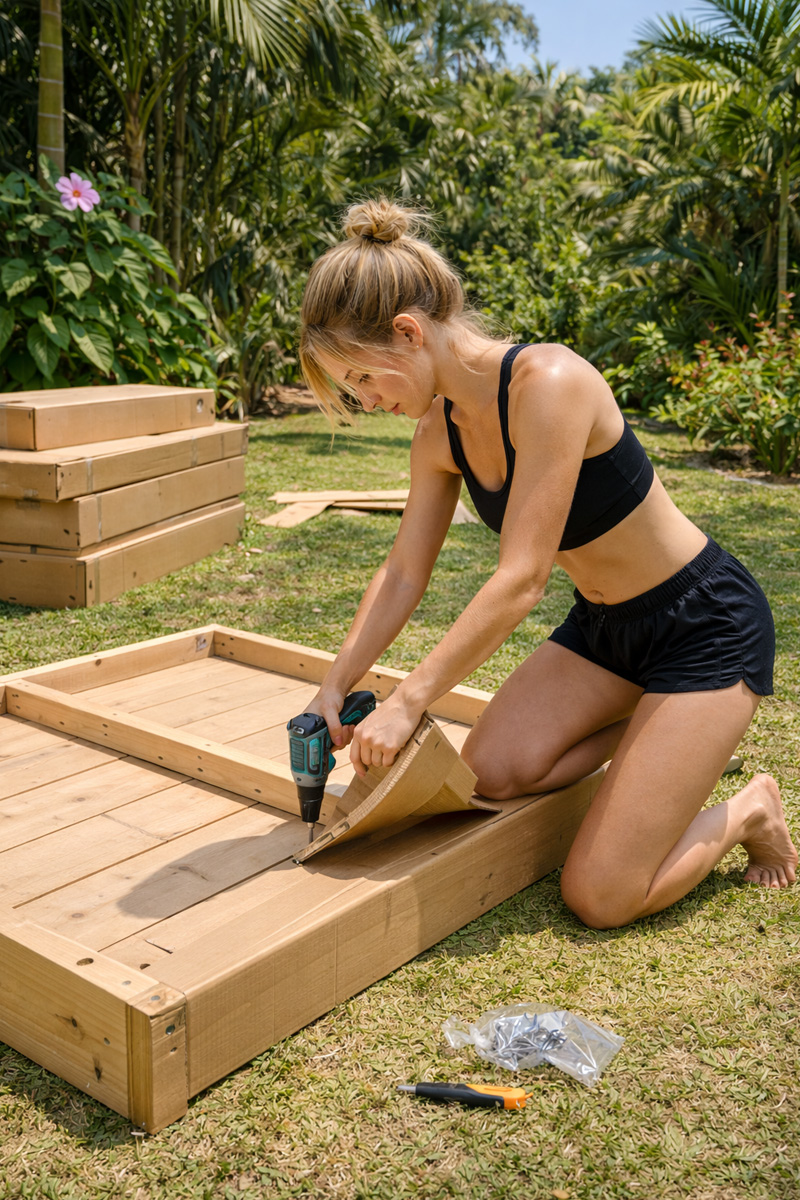
Cubby Construction - Your Build Overview Guide
A practical, start-to-finish sequence for selecting, assembling, protecting, and finishing an outdoor cubby house - including site prep, tidy build habits, and the less-fun reality of packaging disposal.

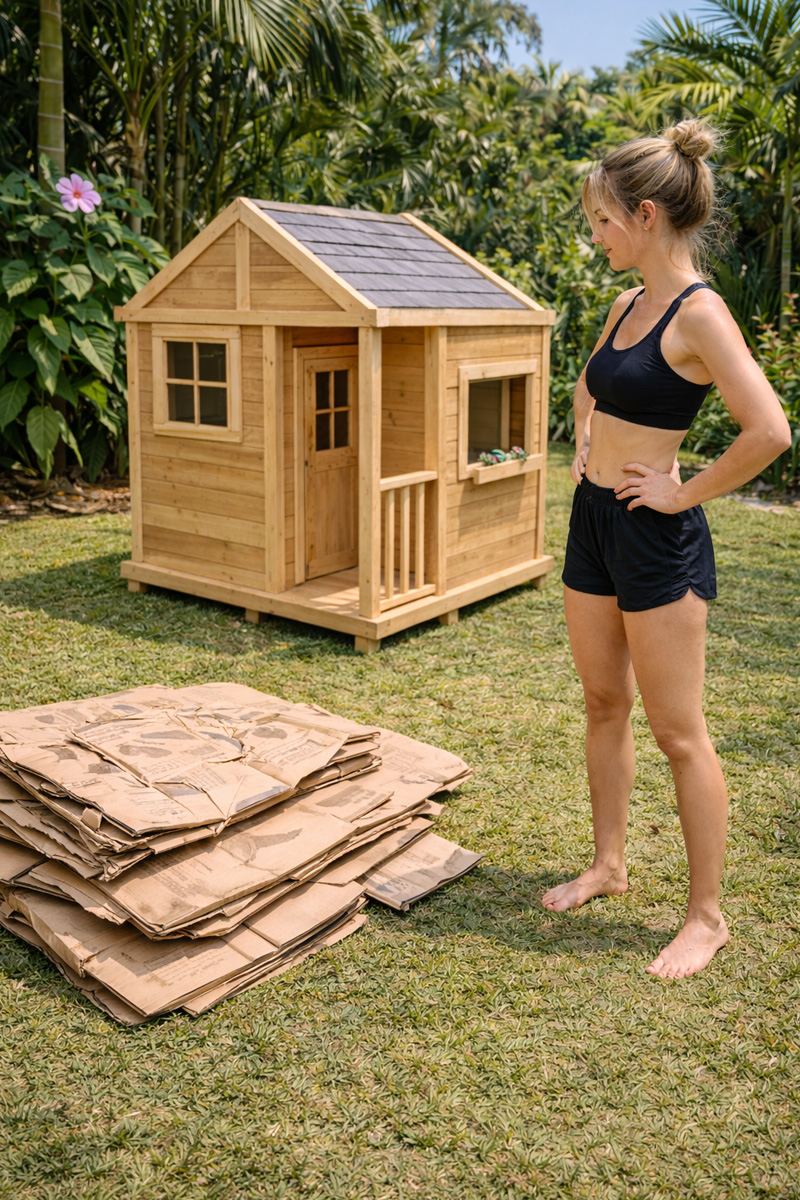
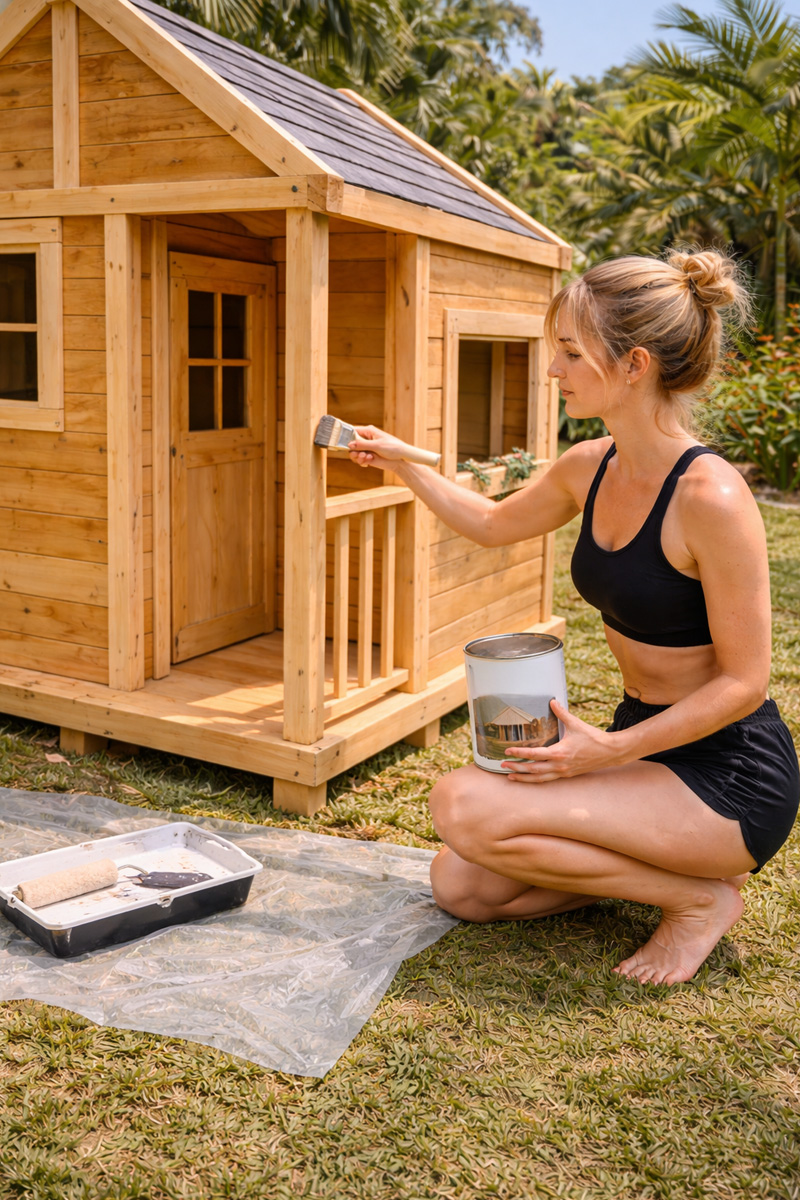
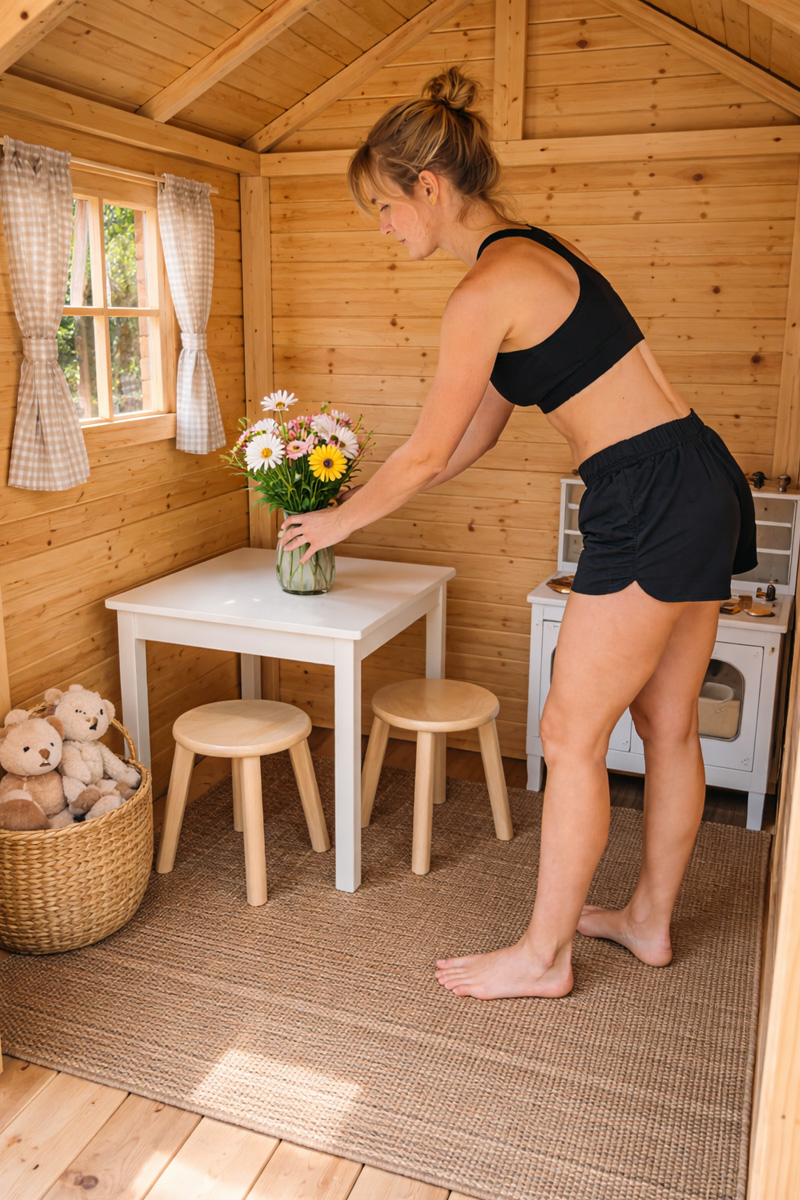
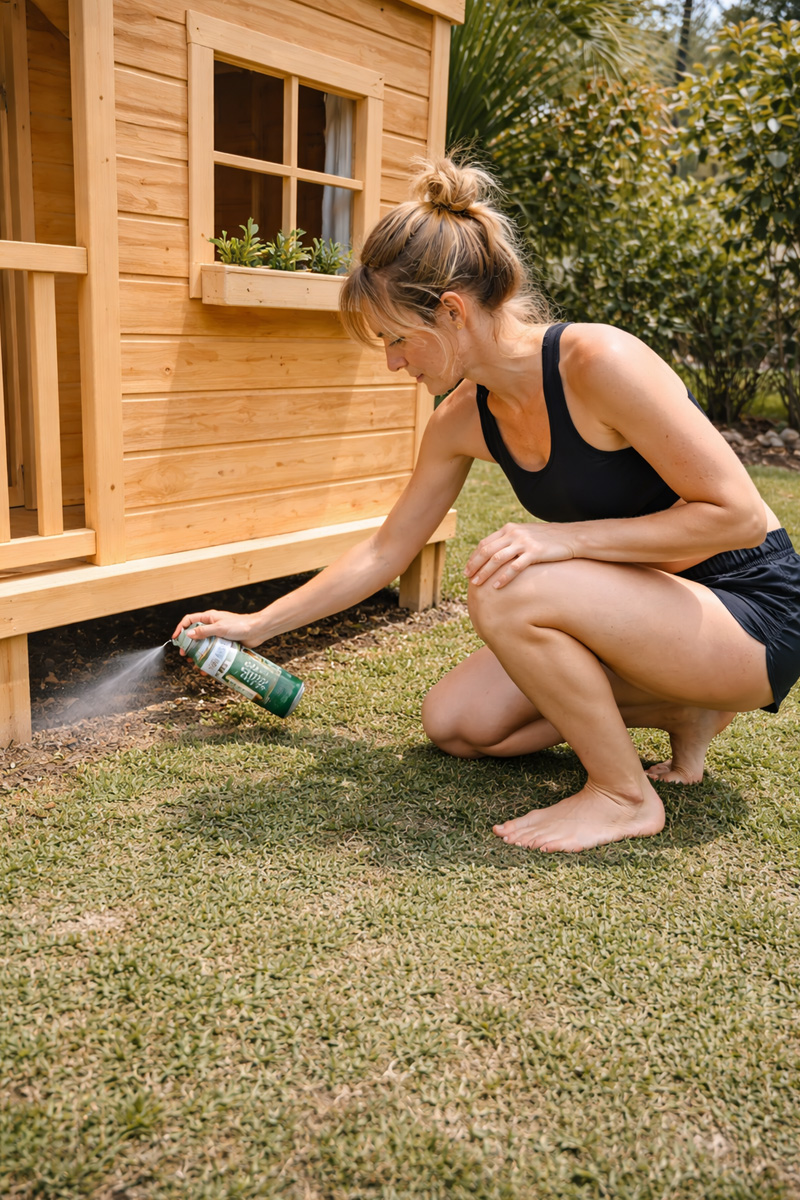
Cardboard Cubby Houses for Families Who Cannot Build Permanent Structures
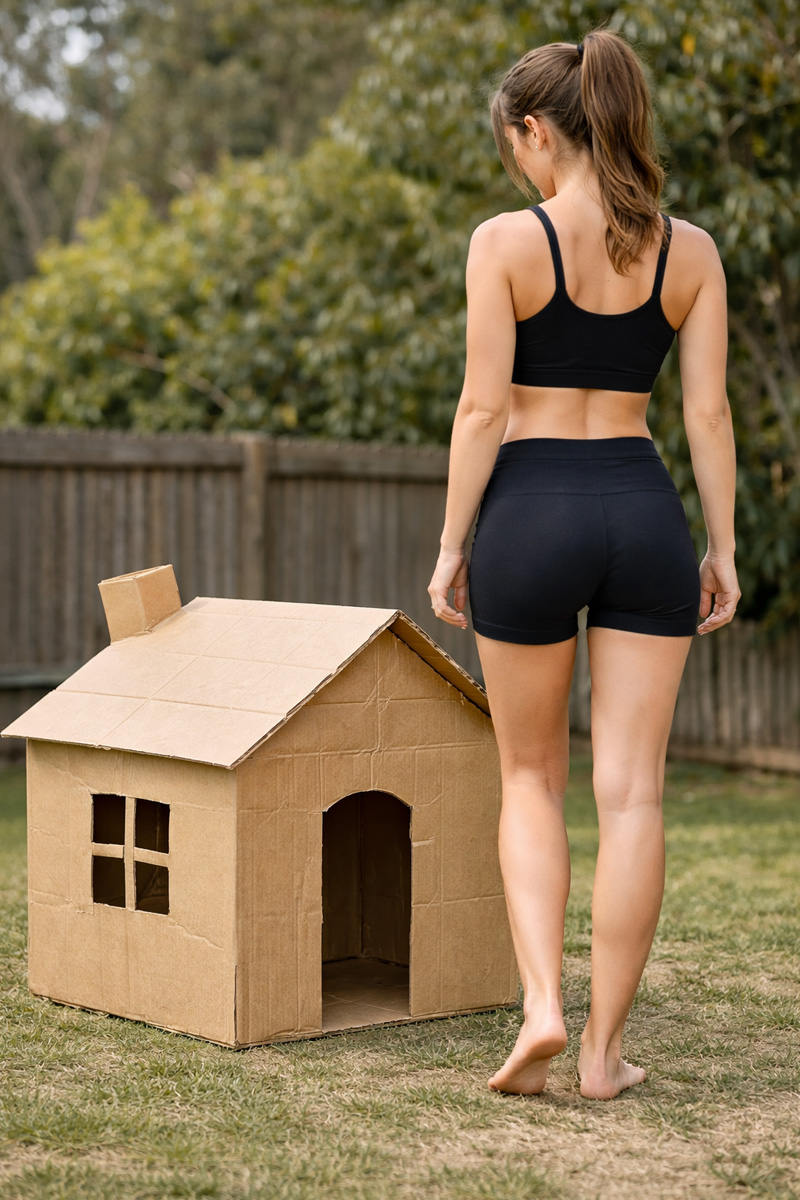
Not every household has the ability, permission, or appetite to build a permanent cubby house, and that reality deserves to be acknowledged within any discussion of backyard play structures. Rental arrangements, body corporate rules, limited yard space, flood-prone land, short-term living plans, or simple budget constraints all place reasonable limits on what families can construct. Cardboard cubby houses sit comfortably within these boundaries, offering children a genuine backyard play space without requiring footings, fixings, approvals, or long-term alteration of the property. Framed this way, cardboard cubbies are not a lesser substitute for timber builds. They are a practical, inclusive option that allows families to participate fully in outdoor play culture even when permanent construction is off the table.

From a design perspective, cardboard cubbies still allow meaningful engagement with space, scale, and use. Large appliance boxes or flat-packed cartons can be arranged to test where a cubby feels best in the yard, how children move in and out of it, and whether shaded or open locations are preferred. For some households, this becomes a way to explore what a future permanent structure might look like without committing materials or money prematurely. For others, it is simply a way to give children ownership over a play space that exists on its own terms, independent of the property's long-term constraints.
Hygiene and material selection are particularly important when working with cardboard. New or near-new boxes should always be used, especially for enclosed cubbies where children will sit, crawl, or spend extended time inside. Boxes that have previously sat in garages, warehouses or been exposed to moisture can carry residues, odours, mould, or insects that make them unsuitable for play. Clean cardboard is stronger, easier to tape securely, and avoids the discomfort of children associating their play environment with something that once was around dirty environments or held unknown contents.
Because cardboard cubby houses are not designed to last indefinitely, it is important to talk about their lifespan before construction begins. Setting clear expectations helps children enjoy the cubby fully without becoming distressed when it eventually needs to be removed. Explaining that the structure will last for a few days, a weekend, or until weather or wear takes its toll frames the cubby as a complete experience rather than something that has failed. This upfront clarity is particularly valuable for families already navigating limits around what they can build, as it avoids later conflict or disappointment.
Equally important is discussing what will happen when the cubby's time is up. Letting children know in advance that the cardboard will need to be crushed and placed in the recycling bin normalises the idea that temporary structures can have a defined and respectful end. Many families find that involving children in the final breakdown and carrying them to the bin, provides a sense of closure and responsibility rather than loss. The cubby does not disappear suddenly or because it was unwanted. It completes its purpose and makes way for the next use of the yard.
Within the broader context of permanent cubby house design, cardboard structures serve an important role. They ensure that children are not excluded from backyard play simply because a household cannot build something fixed and enduring. They also remind parents that meaningful play does not always require longevity, expense, or permanence. When used thoughtfully, cardboard cubby houses fit neatly alongside timber builds as part of a broader, inclusive approach to how families create play spaces that suit their circumstances.
Cardboard Cubbies: High Imagination, Easy Clean-Up

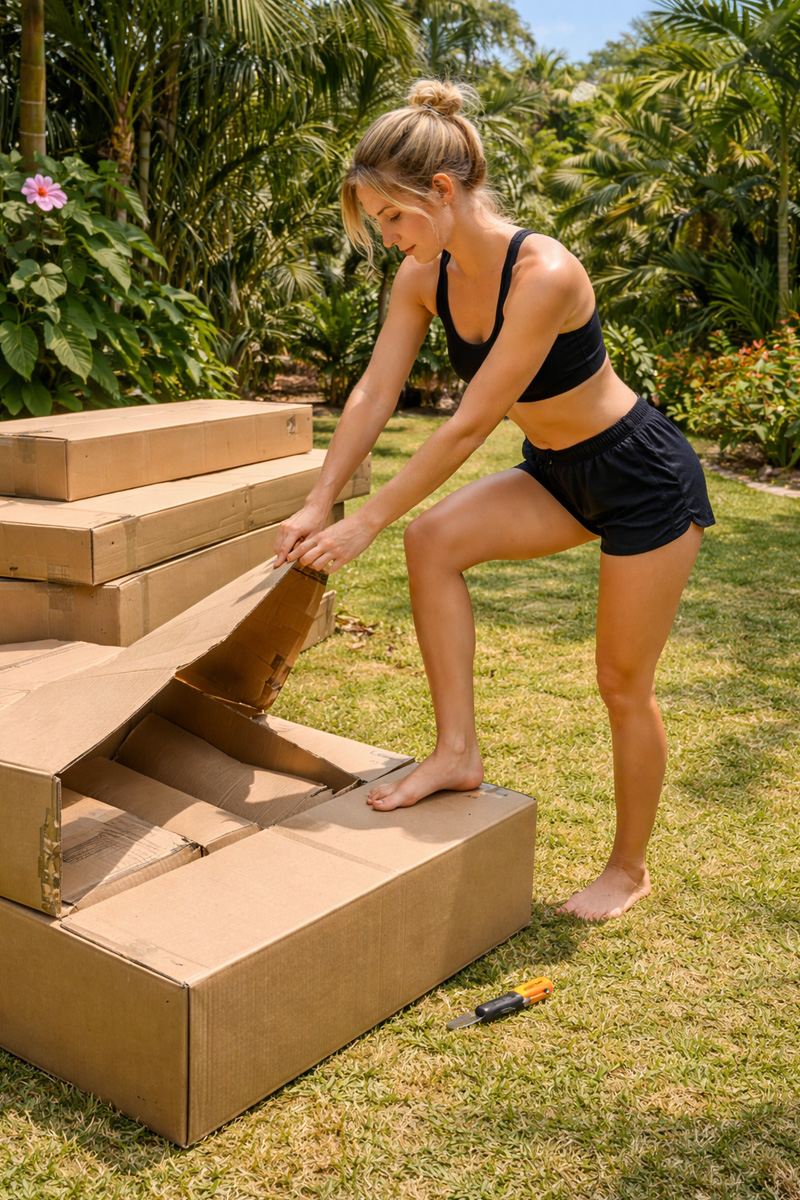
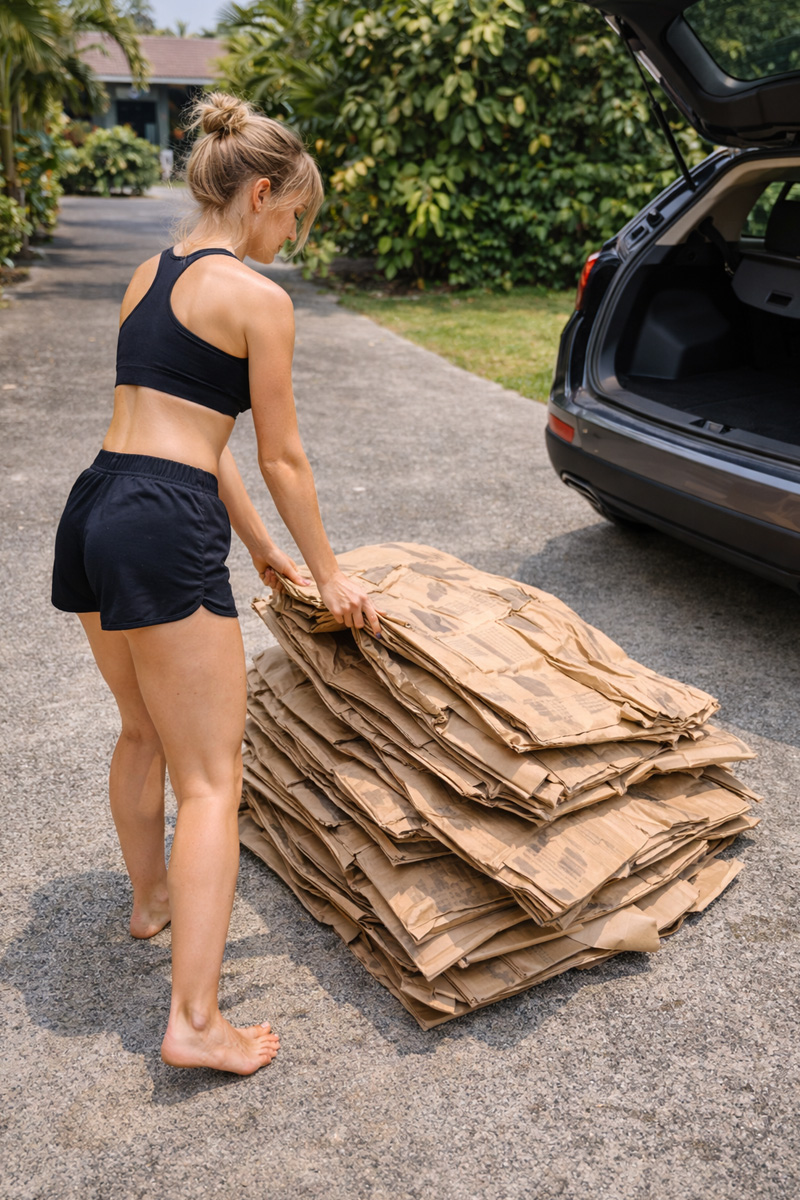
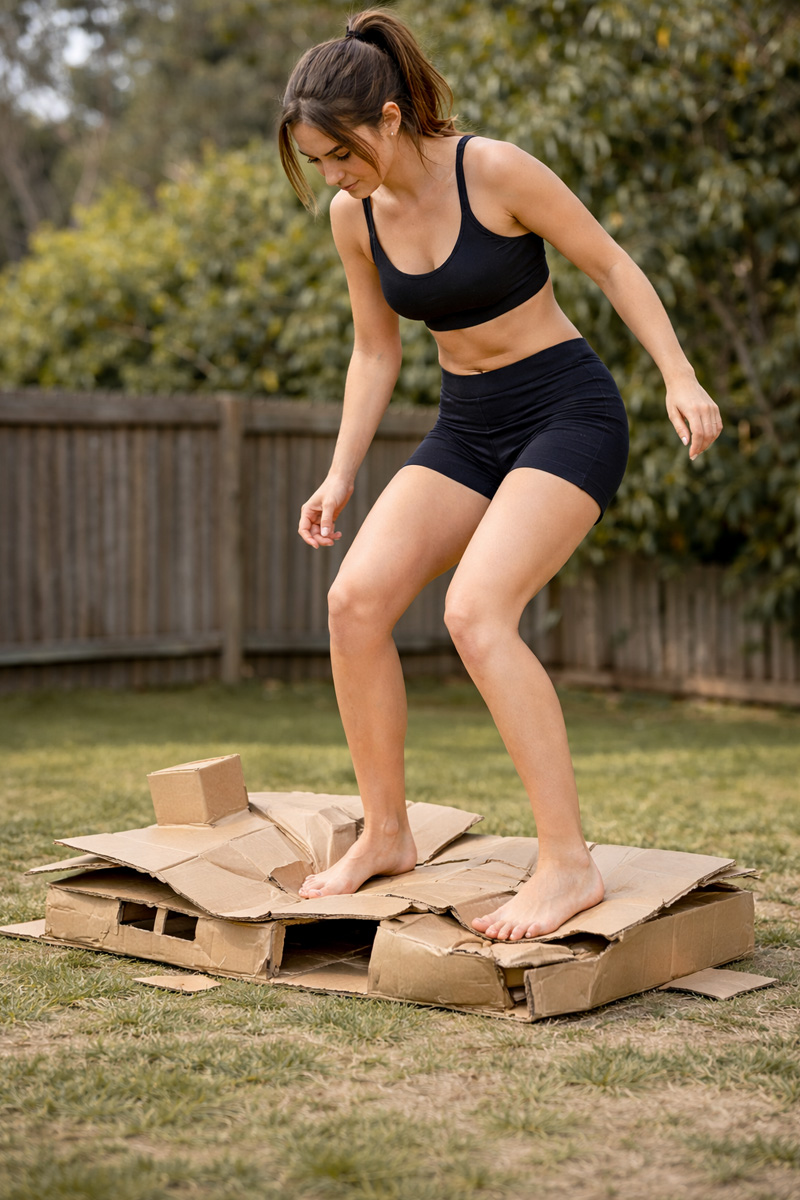
One of the quiet advantages of cardboard cubbies is how cleanly they can exit a household once play is finished. Unlike timber or plastic play structures, cardboard builds are honest about their lifespan. They are designed to be temporary, easy to modify, and just as easy to dismantle when their moment has passed. Parents often hesitate to encourage cardboard builds because they picture a stubborn mess at the end, but in practice the opposite is true. Once the cubby has been enjoyed, it can be brought down quickly by pressing and crushing it flat with feet and body weight, the taped seams giving way as the panels crease and collapse. What stood as walls and tunnels a few minutes earlier becomes a neat, compact stack that can be lifted easily and sorted for disposal. Smaller, lightly reinforced cubbies can go straight into the yellow bin after being flattened, while larger or heavily taped builds are still simple to load and take to the tip without tools or lingering debris. Knowing that the end is straightforward makes it easier to say yes at the beginning. Cardboard cubbies invite creativity without committing the household to long-term clutter, and when play moves on, they leave behind clear space rather than regret.
Cardboard Cubby Disposal - Simple 4-Step Breakdown
One of the biggest advantages of cardboard cubbies is how easily they can be dealt with at the end of their life. Once play is over, the structure can be collapsed quickly using your feet and body weight, giving parents confidence that choosing cardboard will not lead to a drawn-out or frustrating disposal job.


This article provides general information about selecting, building, finishing, and maintaining outdoor cubby houses. It is not a substitute for professional advice. Site conditions, soil stability, drainage, wind exposure, material quality, and local council requirements vary, and these factors can affect safety and compliance. Always follow the manufacturer's instructions for any cubby kit, including anchoring, finishes, load limits, and age suitability. Use tools, paints, stains, and insect control products strictly in accordance with their instructions and safety labels. Children should be supervised during use, and play structures should be inspected regularly for wear, loosening, or damage. The author and publisher accept no responsibility for injury, loss, or damage arising from reliance on this information.
You might also like





Disclaimer: Every effort has been made to ensure the accuracy of the information provided, but we make no guarantees regarding its completeness or reliability. The data is presented for general informational purposes only and does not constitute financial, investment, or legal advice. We are not liable for any errors, omissions, or consequences arising from its use. Users should verify details with relevant sources and seek professional advice where appropriate for the most accurate and up-to-date guidance.