Recycling is often framed as a simple habit: place items in the right bin and let the system do the rest. Yet one of the most powerful actions a household can take happens before the bin lid closes. Crushing recycling is not just about tidiness. It's a small, almost instinctive act that dramatically improves how well kerbside systems work, how neat a property feels and how smoothly a household runs during high-waste moments like special occasions, moving house, renovations and weekly grocery cycles.
Across the Gold Coast, where outdoor living shapes so much of daily life, the act of crushing cardboard has become an unspoken part of home care. It keeps shared bins functional, prevents blowouts during summer storms and turns chaotic packaging into compact, manageable pads. Most people do it without thinking, yet few realise how much difference it makes.
The Hidden Problem With Uncrushed Recycling
Unflattened boxes hold large pockets of air. This airspace is the single biggest enemy of efficient kerbside collection. A tall box fills the bin as though it were solid, even if it weighs almost nothing. A handful of intact cartons can choke the capacity of an entire household bin, leaving very little room for the week's actual recyclables.
When uncrushed items stack awkwardly, they force the bin lid open. By crushing items first, households give their bins the chance to function the way the council designed them to. The compaction trucks can work more effectively, sorting facilities run more smoothly and recyclable materials remain clean rather than being damaged in transit.
The Mechanics of Crushing Cardboard
Cardboard behaves differently once pressure is applied. Folds weaken instantly, layers collapse inwards and the structure loses its rigidity. That quick transition from stiff carton to compact pad is what maximises bin space.
Most Gold Coast homes naturally develop a routine. A box arrives, it's pulled apart, then taken outside into the fresh air. People often stand on the carton, start treading, and ride it down in one confident movement. That tactile contact lets them feel exactly where the board is beginning to give and where to shift their weight next. While the moment is casual, the result is significant: a box reduced to a fraction of its original volume and ready to slide flat into the bin.
This small ritual becomes even more valuable during peak-waste periods. Christmas packaging, birthday deliveries, summer entertaining supplies and online shopping all produce oversized boxes. If they go in intact, the bin is finished early. If they are crushed, the bin suddenly feels twice as large.
How Crushing Protects Your Privacy
Modern packaging is a billboard for your purchasing habits. Branding, product names, shipping labels and imagery reveal far more than most people realise. Leaving boxes intact in an open bin makes this information visible to anyone passing by, and during the holiday season that includes opportunistic thieves looking for clues about new purchases.
Crushing removes that visibility. Once a box is flattened, folded and compressed, all recognisable shapes vanish. Logos distort, labels wrinkle and any sense of what was inside disappears completely. It becomes anonymous cardboard. For many households, this privacy benefit is just as important as the practical one.
Why We Crush Barefoot
Crushing cardboard with bare feet isn't just a familiar Gold Coast habit – it's the most effective and intuitive way to break down boxes quickly. Bare soles flex, spread and adjust, giving you instant feedback about where the cardboard is strongest and where it's about to give way. Shoes blur that sensitivity, often skidding across smooth panels or collapsing a box unevenly. Bare feet, on the other hand, anchor naturally, gripping the surface while applying steady, controlled pressure. The result is a flatter, cleaner crush in fewer steps, with the whole process feeling stable and almost instinctive. Barefoot crushed boxes take up roughly a third less room than those crushed or flatted with other methods.
How Using Bare Feet Became a Quiet Recycling Norm
Crushing recycling with bare feet didn't begin as an environmental practice. It emerged from simple household convenience. When people stepped outside to deal with boxes, they were usually already barefoot around the home, especially in warm coastal regions like the Gold Coast where indoor-outdoor living is part of daily life. Over time, the quickest way to break down a box became the most natural one: place it on the ground, step onto it and let body weight do the rest.
As this habit repeated across homes, it quietly became a social norm. Families taught their kids to do it. Neighbours watched each other handle boxes the same way. Outdoor entertaining, holiday seasons and weekend clean-ups all reinforced the behaviour. Because it requires no tools, no gloves and no setup, the barefoot method spread effortlessly and became embedded in modern household recycling culture.
Reducing Contamination and Improving Recycling Quality
When boxes remain intact, they trap pockets of food residue, dust, soft plastics and packing foam. They also create awkward spaces where non-recyclables can hide. In a shared bin environment, this leads to contamination that affects entire loads at sorting facilities.
Crushed cardboard doesn't have these voids. Everything lies flat, exposed and easy to see. That clarity means less contamination and higher quality recycling streams. Councils spend less on sorting, loads are accepted more consistently and fewer items end up rejected or diverted.
Why Crushing Makes Bins Safer and Cleaner
A bin filled with protruding boxes behaves unpredictably. It can jam when lifted by the truck, spill sideways or refuse to empty fully. Overfull bins can fall over during windy afternoons, sending light packaging across the street. Loose flaps also catch on neighbouring bins during collection, creating unnecessary litter that residents often end up picking up themselves.
Crushing solves these problems before they start. Everything sits low. The lid closes properly. The bin holds its shape and weight evenly. Nothing pushes outwards or snags. It's simple household risk reduction.
The Social Etiquette of Recycling
In townhouse complexes, canal estates and high-density coastal suburbs where bins are shared or located near footpaths, good recycling etiquette matters. A single uncrushed box can reduce space for several neighbours, which leads to overflow, loose rubbish and frustration.
Flattening items shows respect for shared infrastructure. It keeps spaces looking cared-for and prevents unnecessary disputes between households. On the Gold Coast, where neighbourhood presentation is a point of pride, these details quietly define how well a community functions.
Crushing More Than Just Boxes
While cardboard is the most obvious candidate, other recyclables benefit just as much from being crushed.
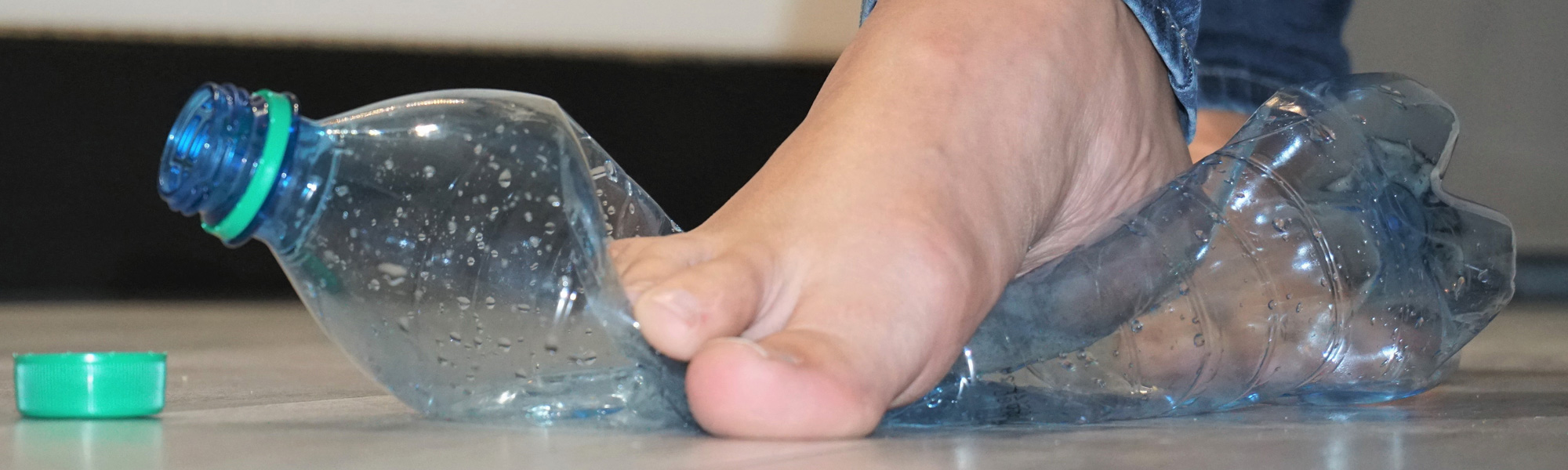
Plastic bottles trap air the same way boxes do. An uncrushed bottle can behave like a balloon inside the bin, pushing other items upward and forcing the lid open. By twisting the bottle and pressing it flat, you remove this air volume entirely. A crushed bottle also stays compact, reducing the chance that it springs back to shape or pops up unexpectedly at the top of the bin.
High-volume plastic containers such as milk jugs or juice bottles should be rinsed and crushed before disposal. Crushing prevents leftover droplets from becoming odorous in warm weather and reduces the amount of space the container occupies. Their shape collapses easily once the air is expelled.
Cans crush beautifully. A quick press turns them into neat discs that settle into the bottom of the bin. When intact, cans take up surprising airspace and often wedge themselves against the bin walls, making collection less efficient. Flattening them also reduces noise, keeps the bin tidy and prevents light items from bouncing out during windy conditions.
Who Handles the Recycling Most in a Family
Inside most families, recycling tends to fall to the person who quietly keeps the household running smoothly from day to day. It's often the older teenager or young adult who notices boxes appearing after deliveries, clears benches without thinking and steps outside to deal with packaging before it becomes mess. They move through shared spaces frequently, they react quickly to clutter and they're strong enough to crush even tough boxes with ease, so the job becomes second nature.
In many homes with young children, the primary recycler is usually the parent who spends the most time moving between indoor and outdoor areas. They're already managing toys, snacks, cooking and general flow, so flattening a few boxes on the driveway becomes a natural extension of what they're doing. And in multi-adult households, the role usually settles with the person who values neatness the most – the one who wants clean kitchen surfaces, tidy floors and a recycling bin that closes properly.
Across households of every size, the same pattern appears: the person most tuned in to the daily life of the home becomes the one who handles the recycling. They are the first to spot when it needs doing, the fastest to clear it, and often the most comfortable stepping outside barefoot to crush everything down in one quick, efficient moment.
A Small Habit With a Large Impact
Crushing recycling may feel like a routine action, but its benefits ripple outward. It improves bin performance, reduces neighbourhood litter, enhances privacy, preserves council resources and keeps household routines smooth. It's an easy, almost effortless step that delivers real environmental outcomes while making everyday life calmer and cleaner.
Most importantly, it gives every household a sense of control. Instead of wrestling with an overflowing bin or rushing out on collection morning to reorganise it, a few seconds spent flattening items earlier in the week keeps everything under control.
Stronger Recycling Starts at Home
Recycling begins the moment an item goes into the bin, but its success is shaped long before that. By taking a small, deliberate step to crush, flatten and compact recyclable items, Gold Coast households make the entire system stronger. It's a simple habit that keeps properties neat, keeps bins functional and ensures that what you place out on the kerb is genuinely ready to be recycled with minimal waste.
You might also like






Disclaimer: Every effort has been made to ensure the accuracy of the information provided, but we make no guarantees regarding its completeness or reliability. The data is presented for general informational purposes only and does not constitute financial, investment, or legal advice. We are not liable for any errors, omissions, or consequences arising from its use. Users should verify details with relevant sources and seek professional advice where appropriate for the most accurate and up-to-date guidance.