
A private tennis court is one of the most demanding outdoor structures you can build on a residential property. It looks simple once finished, but the performance, longevity, and enjoyment of the court depend almost entirely on decisions made long before the first surface is laid. Unlike patios or driveways, a tennis court is a precision structure that must remain flat, drain correctly, resist movement, and play consistently year after year. When it is done properly, it becomes a permanent lifestyle asset. When it is done poorly, it becomes a cracked, puddled, high maintenance problem that is expensive to fix.
This guide is written specifically for private residential tennis courts. It assumes a homeowner building for personal or family use, not a club, school, or commercial facility. Every section focuses on what actually matters for private land, including approvals, site selection, construction, surfaces, fencing, lighting, and long term care. The aim is to give you enough understanding to make good decisions, ask the right questions, and avoid mistakes that often only become obvious years later.
Do Private Tennis Courts Need Council Approval?
Whether council approval is required depends on how the court is classified under the local planning scheme and what associated works are involved. In many residential zones, a private tennis court is not automatically exempt development. Councils tend to assess the entire scope of works rather than just the playing surface. This includes earthworks, retaining walls, fencing, lighting, drainage changes, and how close the court sits to boundaries.
On some large residential or rural residential lots, a court without lighting, tall fencing, or major cut and fill may be accepted as self assessable or exempt. On smaller blocks or prestige urban sites, approval is more commonly required. Lighting almost always triggers assessment because of potential impacts on neighbouring properties. Tall perimeter fencing, especially near boundaries, can also require approval. Significant earthworks, particularly where soil is removed or relocated, frequently fall outside exempt thresholds.
The safest approach is to treat council advice as an early design input rather than a final hurdle. A short pre lodgement discussion can clarify whether approval is required and what conditions may apply. This is far easier than redesigning a finished court to comply with setbacks, fence heights, or lighting restrictions after construction. Even when approval is not required, compliance with planning rules, overlays, and environmental controls still applies.
Planning Overlays and Site Constraints That Affect Private Tennis Courts
Beyond the basic question of whether a tennis court needs approval, many private properties are affected by planning overlays that quietly shape what can and cannot be built. Flood overlays, bushfire overlays, environmental protection zones, coastal hazard areas, and site cover limits often apply even when the land is residential and the court is for private use only. These overlays rarely prohibit courts outright, but they can impose conditions that influence levels, drainage design, surface permeability, fencing style, and even the allowable location on the lot.
Flood affected land is a common example. Councils may require courts to sit above certain flood levels, allow water to pass underneath, or avoid obstructing natural flow paths. This affects earthworks design and can rule out solid perimeter edging in favour of more open drainage solutions. Bushfire overlays can influence vegetation clearance around the court, fencing materials, and access requirements. Environmental overlays may restrict clearing, excavation depth, or the discharge of stormwater into natural areas.
These constraints matter because they are often discovered late, after a design has been settled. Integrating overlay requirements early avoids redesign, approval delays, and unexpected cost increases. For private owners, the key point is that a court can comply structurally and still fail planning rules if overlays are ignored.
Choosing the Right Location on Your Property
Site selection is the single most important decision in the entire project. Many court failures can be traced back to placing the court where it looked convenient rather than where it would perform best. A tennis court needs stable ground, good natural drainage, and enough surrounding space to accommodate fencing, run off areas, and access for construction equipment.
Flat ground is ideal, but not essential. Sloping sites can work well if earthworks are designed correctly, but excessive cut and fill increases cost and long term risk. Courts built partly on fill are more prone to movement unless the fill is properly engineered and compacted in layers. Natural drainage patterns should be respected rather than fought. Placing a court in a low point where water naturally collects almost guarantees future problems, regardless of how much drainage is added later.
Orientation matters more than many homeowners expect. The traditional north south orientation reduces sun glare during play, particularly in the early morning and late afternoon. While private courts do not need to be competition perfect, poor orientation can make the court uncomfortable to use for large parts of the day. Wind exposure should also be considered. Courts positioned in open, elevated areas without shelter can be frustrating to play on, even if the construction itself is flawless.
Noise and Acoustic Considerations for Residential Courts
Noise is one of the most underestimated issues with private tennis courts. Even without lighting, repeated ball impacts, voices, and play patterns can affect nearby homes. Councils assess noise differently from clubs, but private courts are not exempt from nuisance provisions.
Surface choice has a real impact on sound. Hard acrylic courts produce sharper ball impact noise than cushioned or synthetic systems. Fence type also matters. Rigid mesh reflects sound differently from chain mesh, and solid rebound walls amplify noise significantly. Orientation and proximity to reflective surfaces like retaining walls or buildings can worsen acoustic effects.
While occasional use is rarely a problem, frequent or extended play can attract attention. Designing with acoustics in mind reduces risk. This includes selecting quieter surfaces, avoiding rebound walls near boundaries, incorporating soft landscaping buffers, and positioning the court to direct sound away from neighbouring dwellings. These decisions are far easier to make at design stage than to fix later.
Boundary Setbacks, Visual Bulk, and Overlooking
Private tennis courts often push close to boundaries because of space constraints, but this is where planning issues frequently arise. Councils assess not just the playing surface, but the combined visual impact of fencing, retaining walls, lighting poles, and any raised platforms. Even where the surface itself is at ground level, perimeter elements can create visual bulk that affects neighbours.
Setbacks vary by zone, but courts near side or rear boundaries are more likely to attract scrutiny. Tall fencing can create an enclosure effect, particularly if combined with retaining walls or raised ground levels. Lighting poles introduce height and visibility well beyond the court footprint. In some cases, courts that technically fit within setbacks still raise overlooking concerns if elevated areas allow views into neighbouring properties.
Design responses include stepping fences away from boundaries, lowering fence heights where possible, using darker or recessive colours, and integrating landscaping to soften edges. For private courts, these measures are not just about approval. They significantly reduce the risk of neighbour complaints over time.
Understanding Court Dimensions and Space Requirements
A full size tennis court measures 23.77 metres long and 10.97 metres wide for doubles play. However, the playing lines are only part of the required footprint. Adequate run off space around the court is essential for safe and enjoyable play. Private courts typically allow at least 3 to 6 metres beyond the baselines and sidelines, depending on available space and intended use - bringing the total to around 34.77m x 17.07m.
When fencing is included, the total footprint grows further. Gates, maintenance access, and space for posts and footings all need to be allowed for. Many homeowners underestimate how much land a court actually occupies once these allowances are included. Trying to squeeze a court into a tight area often leads to compromised run off zones, awkward fencing, or maintenance difficulties later.
If space is limited, it is better to accept slightly reduced run off areas than to reduce the playing surface itself. Altering court dimensions affects play quality and can make the court feel cramped or inconsistent. A well proportioned court with slightly tighter surroundings is generally more enjoyable than a distorted playing area.
Ground Conditions and Soil Preparation
The unseen layers beneath the surface determine whether a tennis court will remain flat and playable over time. Soil type, moisture content, and compaction all matter. Clay soils, sandy soils, and reactive soils behave very differently and must be treated accordingly. A professional soil assessment is often money well spent, especially on sites with known movement issues.
Excavation must remove unsuitable material and reach a stable base. Fill, if required, should be placed in controlled layers and compacted to engineering standards. Skipping this step or rushing compaction is one of the most common causes of cracking and surface deformation later. The base needs to support not only the weight of the surface but also dynamic loads from play and seasonal moisture changes.
Edge conditions are just as important as the centre of the court. Weak edges lead to cracking along the perimeter, which then allows water ingress and progressive failure. Proper edge detailing and containment prevent movement and protect the surface over the long term.
Earthworks, Retaining Walls, and Engineering Requirements
Many private tennis courts require more earthworks than owners initially expect. Sloping sites often need cut and fill, retaining walls, or stepped construction to achieve a playable surface. While the court itself may be permitted, associated retaining structures often trigger separate approval or engineering requirements.
Retaining walls above certain heights typically require structural design and certification. Poorly designed walls are a major cause of long term court movement, cracking, and drainage failure. Walls must be integrated with the court base, not treated as separate landscape features.
Even on flatter sites, edge containment systems act as low retaining structures and must be designed accordingly. For private owners, the takeaway is that earthworks and retaining are not secondary tasks. They are structural elements that directly affect performance and longevity.
Drainage Design for Private Tennis Courts
Water is the enemy of every tennis court surface. Even surfaces marketed as low maintenance rely on effective drainage to perform correctly. Drainage must deal with surface water from rain as well as subsurface moisture moving through the soil. Relying solely on surface falls without addressing subsurface conditions is rarely sufficient.
Most private courts incorporate a combination of subsoil drainage and surface grading. Drainage lines are installed beneath the base layers to intercept water and direct it away from the court. The finished surface is then graded to encourage water to move off quickly without affecting play. Achieving this balance requires precision. Too little fall leads to puddling, while too much fall affects ball behaviour and player comfort.
Drainage outlets must have a clear path to discharge points. Connecting into existing stormwater systems, where permitted, or directing water to appropriate dispersal areas prevents water backing up beneath the court. Poorly designed outlets can undo otherwise excellent drainage work.
Lawful Stormwater Discharge and Drainage Compliance
Effective drainage is not just a performance issue, it is a legal one. Stormwater from a tennis court must be discharged lawfully. Directing water onto neighbouring properties, easements, or uncontrolled areas can breach local laws and create liability issues.
Private courts often concentrate runoff due to their size and surface characteristics. Councils may require connection to lawful discharge points or on site detention systems, particularly where multiple hard surfaces already exist. This can influence court levels, drainage layout, and construction cost.
Understanding drainage compliance early prevents costly retrofits and disputes. It also protects the court itself by ensuring water has somewhere to go during heavy rainfall events.
Access for Construction and Future Resurfacing
Access is critical, not just during initial construction, but throughout the life of the court. Heavy machinery is required for excavation, base construction, asphalt placement, and surface installation. Years later, resurfacing or major repairs will require similar access.
Courts built in locations that become inaccessible once landscaping, fencing, or buildings are completed can turn routine maintenance into a major logistical problem. In some cases, resurfacing costs escalate dramatically because equipment must be brought in by crane or dismantling is required.
Planning access routes early protects future flexibility. This includes gate widths, turning areas, and ground strength along access paths. Private owners who think long term save significant cost and disruption later.
Base Construction and Structural Layers
The base is the structural heart of the court. It typically consists of a compacted sub base topped with a fine crushed rock or asphalt layer, depending on the chosen surface system. Each layer has a specific role, and substitutions or shortcuts often lead to failure.
For hard and cushioned acrylic courts, an asphalt or concrete base provides a stable, uniform platform. The quality of this layer directly affects surface life and playability. Cracks or imperfections in the base almost always telegraph through to the finished surface. For synthetic grass or clay style courts, the base still needs to be firm and well compacted, even if it is not sealed in the same way.
Construction tolerances are tight. Levels must be accurate across the entire court, not just visually acceptable. Small deviations that seem insignificant during construction can cause noticeable issues once play begins.
Choosing the Right Surface for Private Use
Surface choice should be driven by how the court will be used, who will use it, and how much maintenance the owner is prepared to undertake. There is no universally best surface, only surfaces that suit particular situations better than others.
Hard courts with acrylic finishes are popular for private use because they offer predictable play and relatively straightforward maintenance. Cushioned systems add comfort and reduce joint impact, which many private owners appreciate. These systems cost more upfront but can improve long term enjoyment and reduce fatigue.
Synthetic grass courts provide a softer feel and are often chosen for their visual appeal and perceived ease of care. However, they still require regular brushing, infill management, and occasional resurfacing. Poor installation leads to uneven wear and drainage problems.
Clay style and hybrid surfaces offer slower play and reduced impact, but they demand consistent maintenance. For owners who enjoy routine care and want a particular playing experience, they can be rewarding. For others, the maintenance commitment becomes a burden over time.
Playing in Bare Feet on Private Tennis Courts
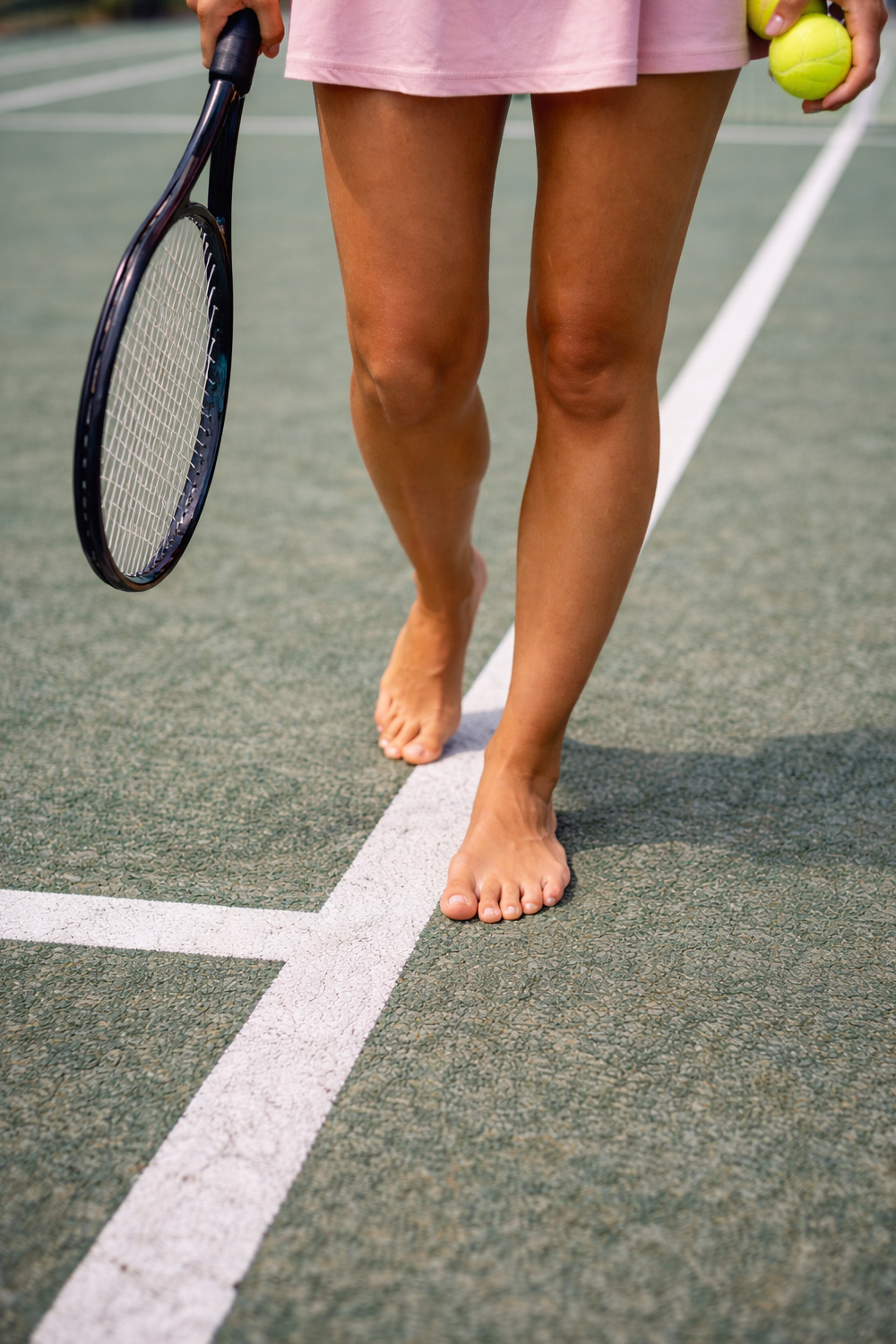
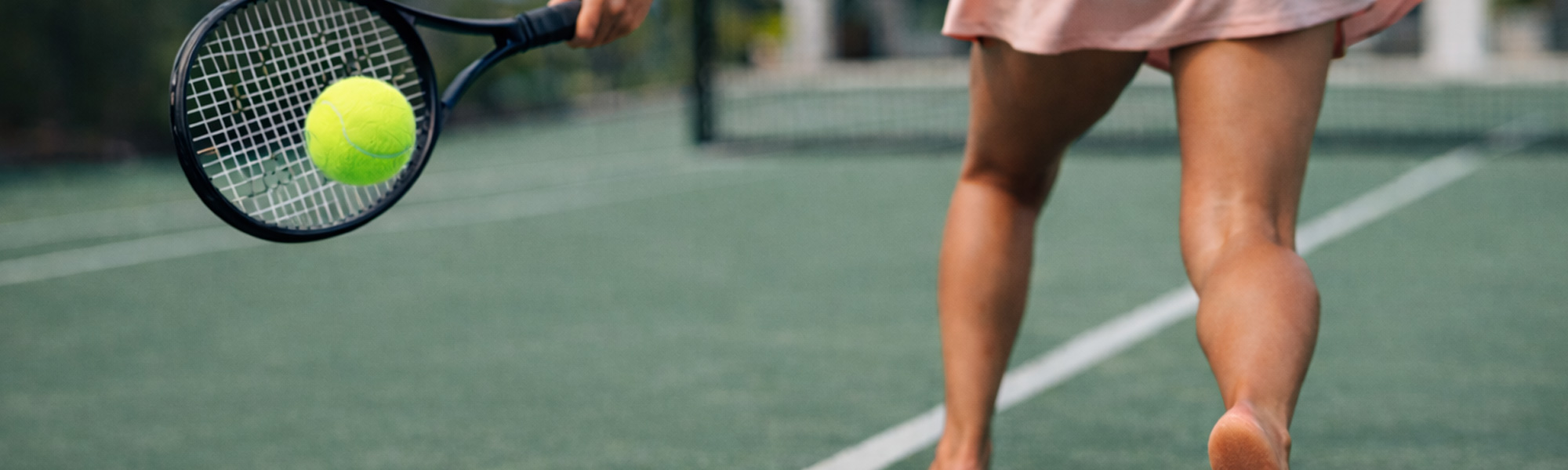
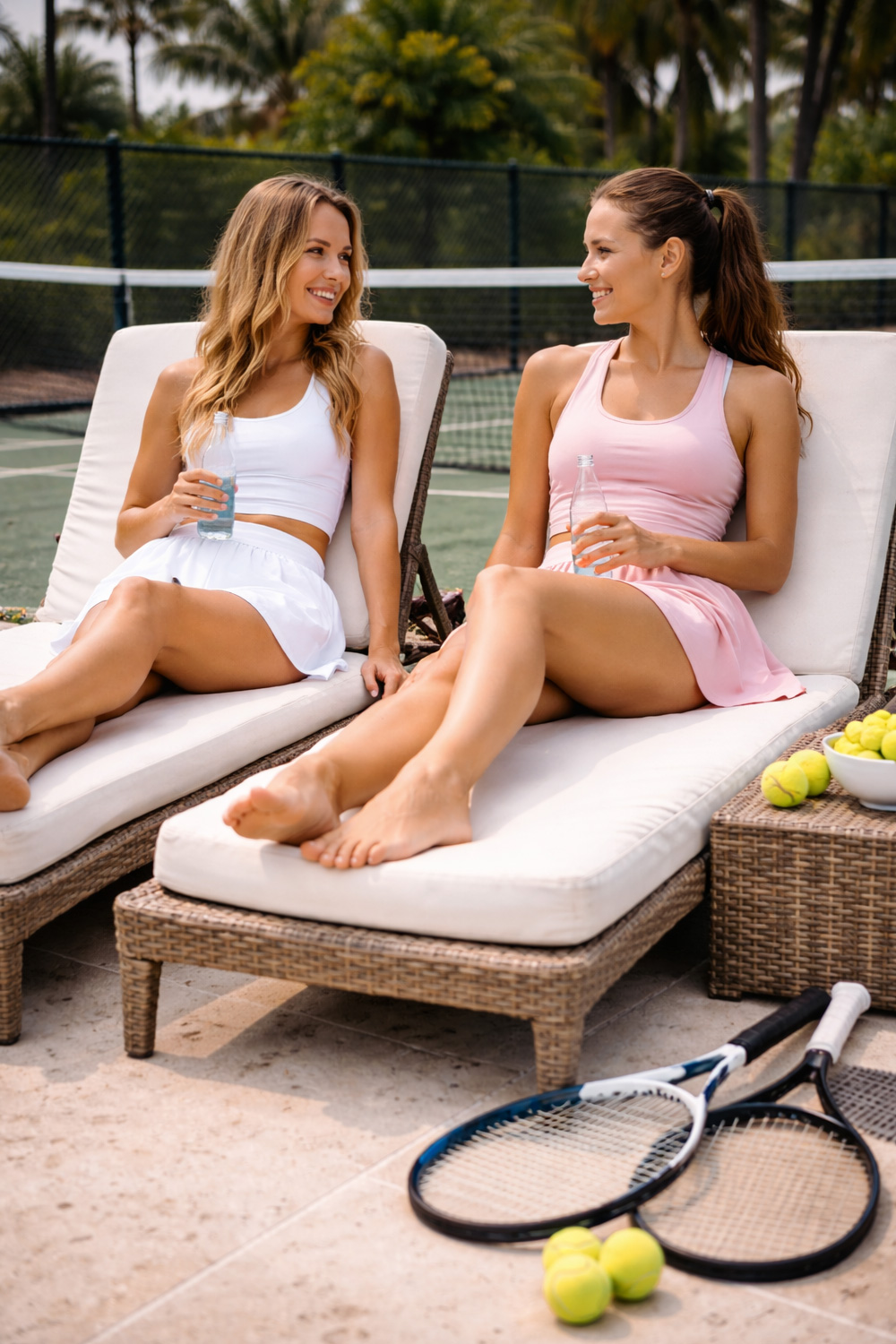
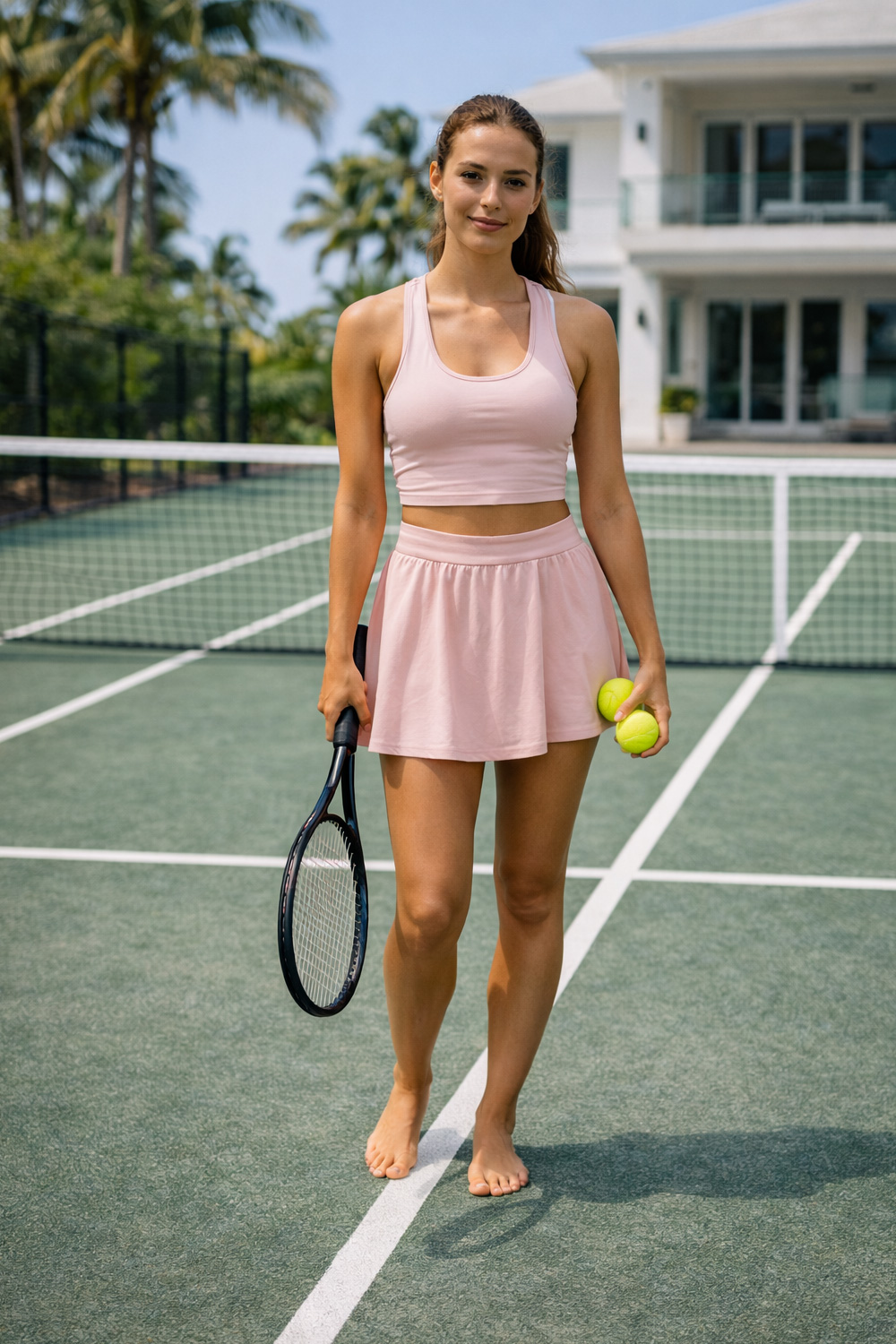
On the Gold Coast, casual tennis with friends is often enjoyed barefoot. Warm weather, relaxed social play, and private home courts all contribute to a style of use that is very different from competitive club tennis. For many homeowners, especially those using the court for family games, fitness hits, or informal social matches, playing without shoes feels natural and comfortable. That preference has real design implications, particularly when it comes to surface choice, colour, and how the court handles heat.
Surface temperature is one of the biggest practical considerations for barefoot play. Tennis courts can become significantly hotter than surrounding lawns or garden areas, especially in full sun. Dark coloured hard courts absorb and retain heat, often becoming uncomfortable or unusable during the middle of the day in summer. Even when air temperatures feel manageable, the surface itself can be far hotter, making extended barefoot play unpleasant. Lighter coloured acrylic finishes reflect more sunlight and generally remain cooler, which is one reason many private courts favour mid tone blues, greens, or soft greys rather than very dark finishes.
Construction type also affects heat retention. Dense asphalt bases tend to store heat longer than lighter systems, particularly late in the afternoon when the sun has been on the surface all day. Cushioned acrylic systems, while still built over asphalt or concrete, can feel marginally more forgiving because the top layers do not heat quite as aggressively as a bare, dense finish. Synthetic grass courts are often noticeably cooler than hard courts, especially lighter green variants, because the surface structure allows some airflow and does not store heat in the same way. However, infill materials can still warm up, so colour choice and installation quality matter.
Clay style and hybrid surfaces are generally the most forgiving for barefoot use in warm conditions. Their lighter tones and moisture retention characteristics help moderate surface temperature, particularly if lightly watered before play. For private courts where barefoot use is common, this can be a meaningful advantage. That said, these surfaces come with higher maintenance requirements, which need to be weighed against comfort benefits.
Design details around the court can also influence barefoot comfort. Shade from nearby trees or structures, even partial shade during peak sun hours, can significantly reduce surface temperatures. Surrounding landscaping that avoids heat reflective materials near the court edge helps as well. Some owners deliberately schedule casual play for early mornings or late afternoons, when surfaces have cooled and conditions are more comfortable.
For homeowners who expect regular barefoot use, it is worth raising this explicitly during design and surface selection. A court that looks good but becomes unpleasant to stand on for much of the day will be used less often. Thoughtful choices around surface type, colour, and exposure make a real difference to how inviting the court feels for relaxed, social play in a coastal climate.
Surface Lifespan and Renewal Expectations
Every tennis court surface has a finite life. Understanding what renewal actually involves helps owners choose wisely. Hard acrylic surfaces typically require recoating every several years, depending on use and exposure. Cushioned systems may need periodic top layer renewal to maintain performance.
Synthetic grass courts require infill management, brushing, and eventual carpet replacement. Clay style and hybrid surfaces need regular conditioning and periodic top-ups. None of these systems are maintenance free, and all involve future costs.
Private owners benefit from understanding not just initial cost, but lifecycle cost. A surface that feels economical upfront may become expensive if renewal is frequent or complex.
Fencing Design and Installation
Fencing serves both functional and regulatory purposes. It keeps balls contained, protects surrounding areas, and defines the court visually. Fence height, mesh type, and post spacing all affect performance and appearance. Taller fences reduce ball loss but increase visual impact and may trigger approval requirements near boundaries.
Posts must be set in stable footings that do not interfere with drainage. Poorly installed fence posts can move over time, stressing the mesh and creating maintenance issues. Gates should be positioned for convenient access without interrupting play or maintenance activities.
From an aesthetic perspective, fencing can be softened with landscaping or finished in colours that blend with the surroundings. Thoughtful design avoids the court feeling like an industrial enclosure dropped into a residential garden.
Lighting for Private Tennis Courts
Lighting transforms how and when a private court can be used, but it also introduces complexity. Light spill, glare, and visual impact are common sources of neighbour complaints and regulatory scrutiny. Proper design is essential.
Modern LED systems offer excellent control and efficiency, but they must be positioned and angled correctly. Pole height, number of fittings, and beam spread all affect performance. Over lighting a court does not improve play and increases the risk of off site impacts.
Timers, zoning, and smart controls help manage usage and demonstrate consideration for neighbours. Even where approval is granted, responsible operation helps maintain good relationships and avoids future restrictions.
Construction Timeframes and What to Expect
Building a private tennis court is not a quick project. Site preparation, earthworks, base construction, and curing periods all take time. Weather plays a significant role, particularly during earthworks and surface application stages. Rushing the process often leads to compromises that shorten the life of the court.
Owners should expect periods where the site looks incomplete or unusable. This is normal and necessary. Understanding the sequence of works helps manage expectations and reduces frustration during construction.
Costs and Budget Planning
Costs vary widely depending on site conditions, surface choice, fencing, lighting, and approvals. Earthworks and drainage often account for a larger portion of the budget than many owners expect. Flat sites with good soil conditions are significantly cheaper to build on than sloping or reactive sites.
Budgeting should include not only construction but also approvals, design, and long term maintenance. Skipping professional input to save money upfront often results in higher costs later.
Maintenance and Long Term Care
Every tennis court requires maintenance, regardless of surface type. Cleaning, line repainting, surface rejuvenation, and drainage inspections all form part of responsible ownership. Understanding these requirements upfront helps owners choose a surface that aligns with their willingness to maintain it.
Neglect accelerates wear and shortens surface life. Regular, modest maintenance is far more cost effective than infrequent major repairs. Many issues can be addressed early if they are identified and managed promptly.
Insurance, Safety, and Liability for Private Courts
Private tennis courts can affect home insurance policies. Some insurers consider them higher risk features, particularly if fencing, lighting, or hard surfaces are involved. Inadequate fencing, poor surface condition, or lack of controlled access can increase liability exposure if guests are injured.
Gates, non slip surfaces, proper drainage, and good lighting all contribute to safer use. Maintaining the court in good condition is not just about play quality, it is about risk management. Private owners should confirm insurance implications early and design accordingly.
Property Value and Resale Considerations
A private tennis court can be a major asset or a limitation, depending on context. On large prestige properties, a well designed court often adds appeal and value. On smaller blocks, it can reduce flexibility and limit buyer interest.
Designing courts to integrate with landscaping, allow alternative future uses, or be removed if necessary improves long term adaptability. Understanding the likely buyer market helps owners decide how permanent and prominent the court should be.
Using Specialist Tennis Court Contractors
One of the most important decisions is who builds the court. Tennis courts are specialist structures. General concreters or landscapers may produce a visually neat result that fails structurally over time. Issues with levels, drainage, base preparation, and surface application often emerge long after construction.
Specialist court builders understand tolerances, layering systems, and long term behaviour. They also understand how approvals, drainage, and surface systems interact. For private owners, this expertise is often the difference between a court that quietly works for decades and one that demands constant attention.
Common Mistakes and How to Avoid Them
The most common mistakes include poor site selection, inadequate drainage, insufficient compaction, and choosing a surface based on marketing rather than usage. Another frequent issue is underestimating the importance of approvals and neighbour considerations.
Avoiding these mistakes requires planning, professional advice, and patience. A private tennis court is a long term investment. Treating it as such leads to better outcomes and far greater enjoyment over its lifetime.
Final Thoughts on Building a Private Tennis Court
A private tennis court can transform how a property is used and enjoyed. It encourages regular activity, supports social use, and adds a unique dimension to residential living. When designed and built properly, it becomes a seamless part of the property rather than a problem area to manage.
The key is understanding that success lies in the details. Taking the time to plan, seek advice, and build correctly pays dividends for decades. A well built court does not demand attention. It simply works, year after year, ready whenever you are.
This guide is provided for general information only and is intended to help homeowners understand the considerations involved in building a private residential tennis court. It does not replace professional advice, site-specific engineering, council approvals, or specialist construction input. Local regulations, soil conditions, drainage requirements, and access constraints vary widely, and you should always consult qualified engineers, builders, and relevant authorities before commencing any works.
You might also like

Disclaimer: Every effort has been made to ensure the accuracy of the information provided, but we make no guarantees regarding its completeness or reliability. The data is presented for general informational purposes only and does not constitute financial, investment, or legal advice. We are not liable for any errors, omissions, or consequences arising from its use. Users should verify details with relevant sources and seek professional advice where appropriate for the most accurate and up-to-date guidance.