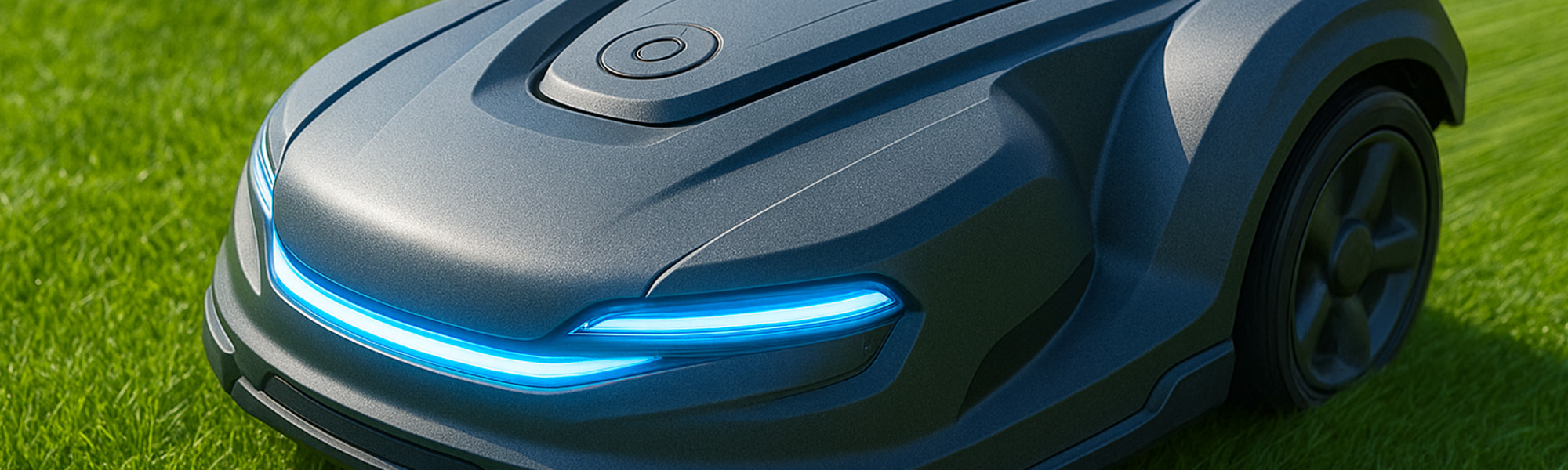
For years, robotic lawnmowers sat in the background of backyard technology, quietly trimming away while most people assumed they were gadgets for early adopters or hobbyists. Today, they've become something very different. The new generation of machines is smarter, safer, more reliable, and designed to handle the subtleties of real Australian lawns. They aren't novelties anymore. They're outdoor appliances that can free up whole chunks of your weekend while keeping your lawn looking as though someone has hand-trimmed it every day.
But choosing the right one takes more thought than many expect. There are models built for flat, open yards that behave almost like indoor robot vacuums, others engineered for sloped gardens, complex boundaries, heavily landscaped areas, and homes where pets or kids are outdoors often. What separates one brand from another isn't just cutting power or battery life, but how the machine understands the world around it, how it handles rough patches, and what level of independence you want to hand over to it.
A robotic lawnmower is, ultimately, a tool for lifestyle as much as lawn care. And like any tool that quietly takes over a household task, you want to choose one that matches how you live far more than the glossy marketing promises. The trick is understanding what really matters once the machine starts rolling across your backyard day after day.
Understanding Your Lawn's Shape and Behaviour
Every lawn has a personality. Some grow in thick, lush waves that require regular micro-cuts to stay tame. Others develop dry spots, soft edges, curved garden beds or shaded regions where the grass behaves differently. A robotic lawnmower will eventually learn these patterns, but its success depends on whether the machine suits the layout of your garden from the start.
Complex gardens with irregular edges, raised zones, stepping-stone paths or small pockets of turf benefit from models that use advanced mapping or vision systems to navigate with intention rather than chance. These machines don't wander as much as they think; they track precise digital maps, adjust trimming patterns automatically, and return to tight corners when the growth rate shifts.
By contrast, open rectangular yards are far simpler. Almost any mower with a reliable boundary system can keep them neatly clipped. In those cases, the machine's efficiency, battery system and futureproofing matter far more than advanced navigation features you may never use.
The best starting point is to take a quiet walk around your garden. Notice every obstacle, every tight curve, every spot where you've previously had to lift a manual mower just to reach the edge. The right robotic mower is the one that handles those awkward tasks for you.
Boundary Systems: Wires, Beacons and Fully Wireless Navigation
For years, boundary wires dominated. A thin line was laid around the perimeter of the lawn and the robot followed it faithfully, staying within the safe zone. Today, new systems are emerging that use beacons, satellite correction, and in some cases, onboard cameras and sensors to free you from installing anything at all.
Boundary wires remain the most reliable method for highly complex gardens because they create a physical reference the robot can't misinterpret. They perform well around ponds, pools, retainer walls and irregular edges. But they do require planning, setup and occasional repairs.
Wireless boundary systems feel like a step toward the future. Instead of wires, they depend on GPS augmentation or localised positioning beacons. That means no digging, no cable tracing, and easy modification if your garden changes shape. However, the reliability of these systems varies between brands. Some excel in open outdoor environments but struggle in gardens with dense tree cover or tall structures that interrupt signals. Others combine GPS with machine vision to compensate for shadows, obstacles and the shapes of garden beds.
Understanding which system suits your home is central to choosing the right mower. If you have a stable, open layout and want the clean simplicity of wire-free installation, the newer technologies feel transformative. If your garden is a labyrinth of planting zones and winding edges, a wired system may still give you the precision you need.
Cutting Systems and the Importance of Daily Micro-Trimming
A robotic lawnmower does not behave like a traditional mower. Instead of removing large quantities of grass in a single noisy push, it trims tiny amounts each day. This constant micro-cutting is what creates the smooth, even appearance robotic lawnmowers are known for.
Different brands use different blade systems. Some depend on small pivoting razor blades that spin on a disc, creating a gentle cut with minimal strain on the grass. Others use robust fixed blades more reminiscent of a full mower. Pivoting blades tend to be quieter and safer, especially around pets and children, while fixed blades deliver more force and may suit thicker turf varieties.
Noise is another factor. Most modern units glide across the lawn at a low hum, becoming part of the background soundscape rather than a disturbance. If your yard is close to neighbouring homes, the quieter trimming style may enhance your overall experience.
Slope Handling and Wheel Design
Many Australian yards aren't completely flat. Even small incline differences can challenge lesser robotic mowers. High-quality models use grippy tyres, articulated frames and intelligent torque management to climb slopes and descend safely without slipping.
If your lawn has even moderate undulation, checking the maximum supported gradient is crucial. Manufacturers measure slope differently, so a little cross-checking helps, but in general, premium units are far better designed for angled lawns. They manage traction not only for mowing, but during wet periods or early mornings when the grass is slick.
The best models adapt by the second. When they detect resistance, uneven surfaces or sliding, they slow themselves, adjust the wheel torque, and recalculate their line so the cut remains even.
Safety and Sensors
Safety systems have advanced dramatically. Modern robotic mowers are designed to protect pets, wildlife, backyard wildlife visitors and inquisitive children who wander too close.
Most robots lift and shut down instantly if they tilt above a certain angle. Many detect motion near the cutting disc and stop before contact. Vision-based models can identify obstacles and reroute automatically instead of bumping gently and turning away.
If your home sees frequent backyard activity, prioritising sensor quality is worth the investment. The peace of mind alone often justifies choosing a more advanced model.
Smart Features, App Control and Remote Monitoring
A robotic lawnmower becomes far more useful once paired with a good app. The best apps make it effortless to set schedules, send the mower out for a quick tidy-up before guests arrive, or pause it if you're spending the afternoon outside.
Some apps go further, offering digital maps of your lawn, zones that can be mowed on separate schedules, and event-based routines that adjust automatically depending on season or growth rates. Others run simple, direct controls without unnecessary complication.
If you enjoy fine-tuning household routines, or if your lawn varies in size or microclimate across different areas, an advanced app enhances your control. If you prefer set-and-forget simplicity, look for a machine that manages itself intelligently without constant intervention.
Charging, Weather Awareness and Durability
Look for units that automatically return to their charging dock when the battery runs low, then resume from the same point later. This keeps the lawn consistent and avoids uncut patches.
Weather awareness also plays a role. Some machines detect rain and avoid mowing wet grass, while others continue regardless, depending on user preference. Dust resistance, water protection and sturdy housings matter too, especially in regions where humidity, sun exposure and storms can be intense.
The ideal robotic mower should feel like something you can leave outdoors confidently year-round.
Security, Connectivity and Data Considerations
Some robotic lawnmowers include onboard sensors or cameras for advanced navigation. These features enhance mapping and obstacle detection, but they also introduce the question of digital privacy. As with indoor robot vacuums, it's worth choosing a reputable brand that clearly outlines how data is stored, handled and protected.
Many models also include PIN locks, alarms and geofencing to deter theft. These systems combine device-level security with app-based tools that notify you if the mower leaves the property or is lifted unexpectedly.
For most households, it's as simple as choosing a brand that takes data handling seriously and offers clear, transparent technical documentation.
Choosing the Right Model for Your Lifestyle
In the end, the best robotic lawnmower is the one that aligns not only with the shape of your garden but also with the rhythm of your household. If your lawn is large, open and receives steady growth, a strong battery and wide cutting deck matter most. If your garden is detailed, curved or landscaped, navigation intelligence becomes the star feature. If you have pets, active children, or spend long stretches outdoors, safety sensors and quiet operation take priority.
A robotic lawnmower isn't a luxury anymore. It's a quiet, dependable outdoor helper that keeps your lawn steady and healthy with a level of consistency even manual mowing rarely achieves. Once you choose the model that fits your home, it simply becomes part of the background, gliding across the grass while you live your life. And that, perhaps, is its greatest advantage: a beautiful lawn that just takes care of itself.
You might also like





Disclaimer: Every effort has been made to ensure the accuracy of the information provided, but we make no guarantees regarding its completeness or reliability. The data is presented for general informational purposes only and does not constitute financial, investment, or legal advice. We are not liable for any errors, omissions, or consequences arising from its use. Users should verify details with relevant sources and seek professional advice where appropriate for the most accurate and up-to-date guidance.