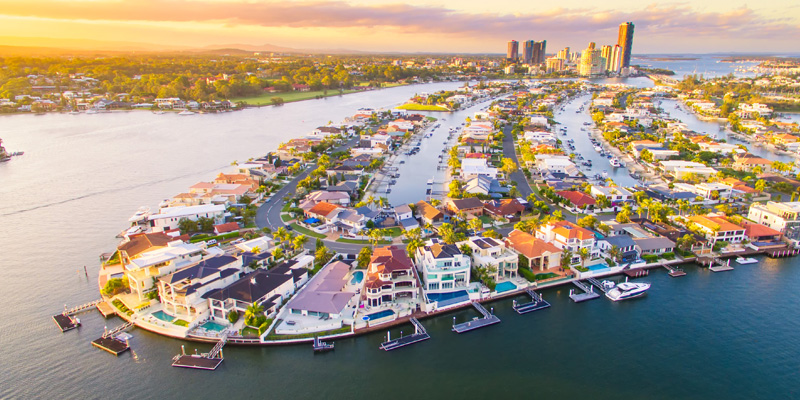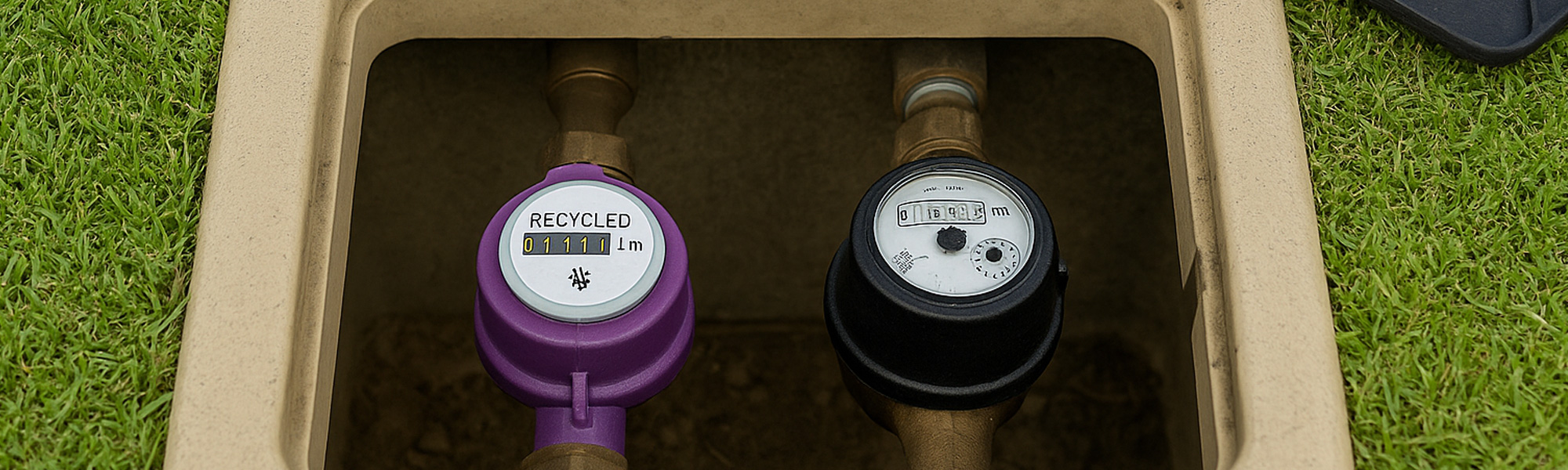
Drive through certain estates in Upper Coomera and Oxenford and the signs are still there. A lone purple tap near a garden bed. A capped riser beside a letterbox. A second meter box that no longer serves an active purpose. These fittings are the last physical traces of a once-ambitious plan to deliver recycled water directly to residential properties across the city. For a brief moment, the Gold Coast pursued one of Australia's most forward-leaning dual reticulation systems, and many homeowners today are curious about what happened to it.
Why the Scheme Was Created
In the early to mid-2000s, southeast Queensland faced a combination of severe drought, rapid population growth and constrained catchments. Local councils were under enormous pressure to diversify water supply and reduce the region's reliance on traditional storages. The Gold Coast in particular was seen as a high-growth corridor with limited spare capacity in its potable network.
Recycled water offered a potential solution. The idea was simple but transformative. Build a parallel water network that supplied highly treated recycled water to homes for non-potable uses, and free up more of the potable supply for essential purposes. Toilet flushing, garden irrigation and outdoor cleaning were seen as the main opportunities, and national standards had already allocated purple as the universal colour for non-potable residential pipework and taps.
How the Network Was Supposed to Work
Developers in selected new estates were required to install dual plumbing as homes were built. One system delivered standard potable water. The other delivered recycled water through purple pipes, meters and external fittings. Treatment plants would produce a consistently higher-quality recycled supply that met stringent guidelines, and the city would distribute it through a dedicated network.
Homeowners in participating estates received two separate water bills, two sets of meters and clear instructions on what the recycled supply could be used for. The system operated successfully in several neighbourhoods, and early feedback suggested households adapted quickly to the two-tap model.
The Broader Policy Landscape Shifted
The timing of the scheme turned out to be its greatest challenge. Just as the rollout was gaining momentum, rainfall patterns changed and the drought eased. State-level water authorities moved toward creating a large integrated supply grid across southeast Queensland, including major investments like the Western Corridor Recycled Water Scheme and regional desalination capacity.
This shift meant the Gold Coast was no longer developing its water future in isolation. The recycled water scheme, once envisioned as a city-shaping solution, now sat within a larger web of planning, politics and state priorities. Long-term contracts, distribution responsibilities and funding arrangements blurred, and the case for an independent residential recycled network weakened.
Operational Constraints Emerged
Behind the scenes, practical difficulties were also accumulating. Residential recycled water requires extremely consistent treatment quality, rigorous testing and stable demand. The estates connected to the system formed only a small catchment, which created unusual supply and demand imbalances. Maintaining treatment output for a limited customer base was costly. The network lacked the scale needed to operate efficiently, yet the next phase of rollout never occurred.
There were also public confidence issues. Some residents misunderstood the difference between potable and non-potable systems, leading to concerns about cross-connection or future property resale implications. Even though safeguards were strict, perception mattered, and it influenced the scheme's political support.
Why the Scheme Was Ultimately Disbanded
No single failure brought the scheme to an end. Rather, it stalled because the environment around it changed too quickly. The drought broke. The integrated water grid arrived. Funding priorities shifted toward regional-scale solutions. The Gold Coast found itself maintaining a sophisticated dual network for only a handful of suburbs without any realistic path to expansion.
Once the recycled supply was disconnected, the infrastructure inside each home remained but effectively became dormant. Developers opted out of dual plumbing requirements in new communities. Purple taps, meters and risers were left in place but no longer served their original purpose.
What Remains in Estates Today
Many homeowners still have these relics on their lawns and garden edges. Some purple taps have been repurposed as standard irrigation points using potable supply. Others have been capped off entirely. In a few estates, the distribution pipework still exists underground but now delivers ordinary town water and will never be reinstated with recycled water without major reinvestment.
To newcomers, these fittings often appear mysterious because there is no longer signage or public information explaining them. Older sales brochures and development approval documents confirm just how seriously the city once took the idea.
The Legacy of the Abandoned Network
Although the residential rollout ended, the expertise built during the scheme did not vanish. The city and the state refined treatment standards, monitoring systems and emergency planning frameworks that are still relevant today. Public awareness of alternative water sources grew. The project also created valuable baseline data about how households respond to dual tap systems, which remains useful for future planning.
As the Gold Coast prepares for hotter, drier periods driven by climate variability, the concept of recycled water may return in some form. Large-scale industrial, agricultural and environmental reuse programs already operate successfully in many regions. Residential networks are more complex, but the early Gold Coast model proved they can work technically when supported by stable policy, scaled infrastructure and long-term investment.
A System Ahead of Its Time
In hindsight, the Gold Coast's recycled water scheme was launched at a moment of genuine environmental urgency but abandoned when that urgency faded. It was not a technical failure. It was a planning initiative caught between climate cycles and shifting political priorities. The purple taps that remain are quiet reminders of an ambitious idea that arrived before the region was ready to support it at scale.
Whether similar networks will re-emerge in the coming decades depends on how the city responds to the next major drought and how household attitudes evolve. For now, the old dual plumbing estates stand as a small but important chapter in the Gold Coast's ongoing search for secure and sustainable water solutions.
You might also like





Disclaimer: Every effort has been made to ensure the accuracy of the information provided, but we make no guarantees regarding its completeness or reliability. The data is presented for general informational purposes only and does not constitute financial, investment, or legal advice. We are not liable for any errors, omissions, or consequences arising from its use. Users should verify details with relevant sources and seek professional advice where appropriate for the most accurate and up-to-date guidance.