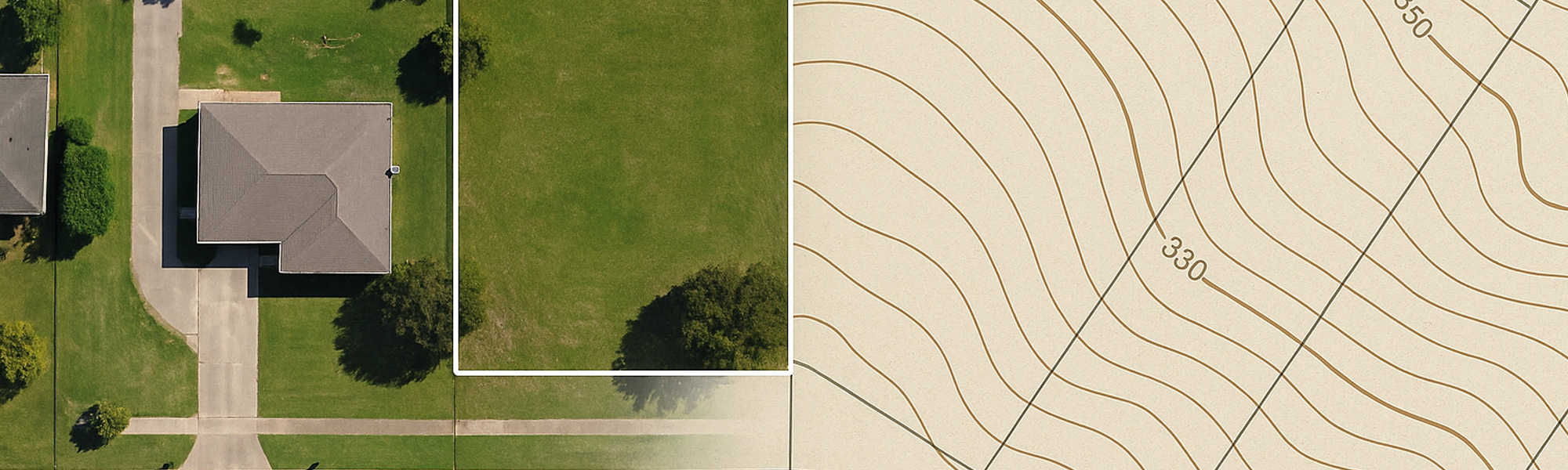
When you are trying to understand a property properly, there is no single source that answers everything. Ownership, planning controls, development history, flood exposure, slope, and service constraints all sit in different systems. On the Gold Coast and in Redland City, those systems are well developed, but only if you know where to look and how they fit together.
Bringing those strands into view allows property information to be read in context rather than in isolation, reducing the risk of drawing conclusions from a single map, search, or approval record.
Using This Guide Wisely
This guide is designed for general property research and early understanding, not as a substitute for professional advice. Public planning systems, mapping tools, and search portals are indicative, can change over time, and often require interpretation. If you are making decisions with financial, legal, or development consequences, the information here should be confirmed through official searches and qualified professionals.
That is enough. It sets the boundary, respects the reader, and keeps the article authoritative rather than defensive.
Start With The Property Identifiers That Matter
Before opening any mapping system or search portal, it helps to lock down the identifiers that will follow the property everywhere.
Street address is the most familiar, but it can be unreliable for new lots, rear lots, strata, or properties that have changed numbering.
Lot and plan is the most consistent identifier across planning schemes, mapping layers, and survey plans. This usually looks like Lot 12 on RP 12345 or Lot 3 on SP 678910.
Title reference is used for legal ownership and registered interests and becomes essential once you move beyond general research.
If you only have an address, most council mapping systems or Titles Queensland searches will allow you to convert it into lot and plan.
Checking Development Applications On The Gold Coast
City of Gold Coast uses PD Online as its public development application portal. This is where you can see current, past, approved, refused, and amended development applications linked to a property or surrounding area.
https://www.goldcoast.qld.gov.au/Planning-building/PD-Online
PD Online is best used in two passes. First, search by address to see the property history and nearby applications. Then, once you have an application number, open it directly to view documents, conditions, and assessment status.
For context around whether approval is required in the first place, Council's development application guidance pages explain thresholds and triggers.
If you are trying to interpret application stages, timeframes, or public notification periods, the development application process overview helps decode the terminology used in PD Online.
Checking Development Applications In Redland City
Redland City Council uses Development.i as its public development application system. It is particularly strong for map-based searches and scanning activity across a suburb.
https://developmenti.redland.qld.gov.au/
The map search is often the fastest way to see what is happening near a property when you do not yet know application numbers.
https://developmenti.redland.qld.gov.au/Home/MapSearch
Redland's planning and development hub connects Development.i with lodgement tools and guidance material.
https://www.redland.qld.gov.au/Planning-building-and-development
Zoning, Overlays, And Planning Scheme Controls
Development applications only make sense when viewed through the planning scheme that governs them.
On the Gold Coast, City Plan interactive mapping is the main public tool for checking zoning, overlays, and planning constraints.
https://www.goldcoast.qld.gov.au/Planning-building/Planning-our-city
This tool allows you to see zone codes, overlay triggers, and spatial constraints that directly affect what can be approved on a site.
In Redland City, the Redland City Plan provides the same role. The documents hub links to interactive mapping and the supporting planning scheme material.
Red-e-Map is the commonly used interactive interface for viewing zones and overlays in Redland.
https://www.arcgis.com/apps/webappviewer/index.html?id=b3e7c450b99c4aa281ce24a9c747728f
Always check overlays as well as zoning. Flood, environmental, heritage, or infrastructure overlays often matter more in practice than the zone label itself.
Ownership, Easements, And Legal Interests
For authoritative information about ownership, easements, covenants, and registered interests, Titles Queensland is the definitive source.
https://www.titlesqld.com.au/title-searches/
The online search portal allows searches by address, lot and plan, title reference, or dealing number.
https://search.titlesqld.com.au/
Queensland Government also provides guidance on land titles and related searches.
https://www.qld.gov.au/environment/land/title
For property research, titles are rarely used alone. The title shows what interests exist, while the survey plan shows where they physically sit on the land.
Survey Plans And Boundaries
Survey plans define boundaries, easement locations, and lot geometry. They are essential when questions arise about buildable area, setbacks, or shared access.
Survey plans are accessed through Titles Queensland searches and are usually linked directly from title search results.
https://www.titlesqld.com.au/title-searches/
For early-stage research, survey plans often reveal constraints that are not obvious from aerial imagery or zoning maps.
Topography, Contours, And Elevation
Understanding slope and elevation early can prevent expensive surprises later.
Queensland Globe is one of the most powerful free tools for viewing topography, contours, elevation points, and spatial layers across Queensland.
https://qldglobe.information.qld.gov.au/
It includes tools for checking spot heights and drawing elevation profiles across a site.
https://qldglobe.information.qld.gov.au/help-info/measurements.html
For a cleaner, traditional map view, QTopo provides readable topographic mapping.
https://qtopo.information.qld.gov.au/
Contours and elevation data are excellent for screening and feasibility, but final design decisions should always rely on a professional site survey.
Flood Mapping And Flood Levels
Flood exposure affects planning approval, design requirements, insurance, and resale considerations.
On the Gold Coast, Council's flood maps allow property-level checks for flood affectation and indicative flood depths.
https://www.goldcoast.qld.gov.au/Planning-building/Flood-maps
Council also outlines how flood risk affects buying and building decisions.
For documented flood level information, flood level searches are available.
For broader context, FloodCheck Queensland provides historic and modelled flood information across the state.
https://floodcheck.information.qld.gov.au/
In Redland City, flood mapping is accessed through the planning scheme mapping tools within the Redland City Plan.
https://www.redland.qld.gov.au/Planning-building-and-development/Redland-City-Plan
Infrastructure, Services, And Council Searches
Council mapping searches can reveal property boundaries, lot details, and indicative service information.
On the Gold Coast, mapping search tools include products such as property diagrams and service location diagrams.
https://www.goldcoast.qld.gov.au/Planning-building/Buying-and-selling-property/Mapping-search
Redland City provides a range of property and planning searches that can be requested for more formal information.
These searches are useful for due diligence but should not replace engineering design or on-site investigation.
Land Valuations And Rates Context
Queensland statutory land valuations influence rates and provide insight into how land value is assessed over time.
Land valuation searches can be performed using address or property identifiers.
https://www.qld.gov.au/environment/land/title/valuation/annual/find-your-land-valuation
Queensland Globe also includes land valuation layers for spatial comparison.
State Planning Layers That Affect Local Decisions
Some planning constraints are driven by state-level interests rather than local zoning alone.
Queensland planning mapping systems provide access to state planning layers and frameworks.
https://www.planning.qld.gov.au/planning-framework/mapping
State Planning Policy mapping can be accessed directly here.
https://planning.dsdmip.qld.gov.au/maps?type=spp
These layers become important when dealing with referrals, coastal management, transport corridors, or environmental constraints.
Public Notification And Development Assessment Rules
If you are making or responding to a submission, understanding procedure matters as much as understanding planning intent.
Queensland's Development Assessment Rules explain notification requirements, timeframes, and assessment steps.
Many disputes arise from misunderstanding process rather than planning controls themselves.
Underground Services And Before You Dig Checks
Before any excavation, fencing, drainage, or structural work, Before You Dig Australia allows you to request free plans showing underground services.
A guide to requesting plans is available here.
https://www.byda.com.au/before-you-dig/guide-to-free-plans/
These checks are as valuable for feasibility as they are for construction safety.
A Practical Way To Use These Resources Together
Effective property research usually follows a simple order. Start with planning scheme maps to understand what is allowed. Check flood and hazard layers early. Review development history to see what has already been tested. Confirm ownership and constraints through title and survey plans. Use topographic tools to understand the land itself. Then check services before any design assumptions harden.
Used together, these resources allow you to move from vague curiosity to informed decision-making without guesswork.
This information is general in nature and provided for guidance only. It does not constitute legal, planning, surveying, engineering, or development advice, and public mapping and search tools may be indicative or subject to change. Property details, constraints, and approval outcomes should always be confirmed through official searches and qualified professional advice, with councils and state authorities remaining the final decision-makers.
You might also like





Disclaimer: Every effort has been made to ensure the accuracy of the information provided, but we make no guarantees regarding its completeness or reliability. The data is presented for general informational purposes only and does not constitute financial, investment, or legal advice. We are not liable for any errors, omissions, or consequences arising from its use. Users should verify details with relevant sources and seek professional advice where appropriate for the most accurate and up-to-date guidance.