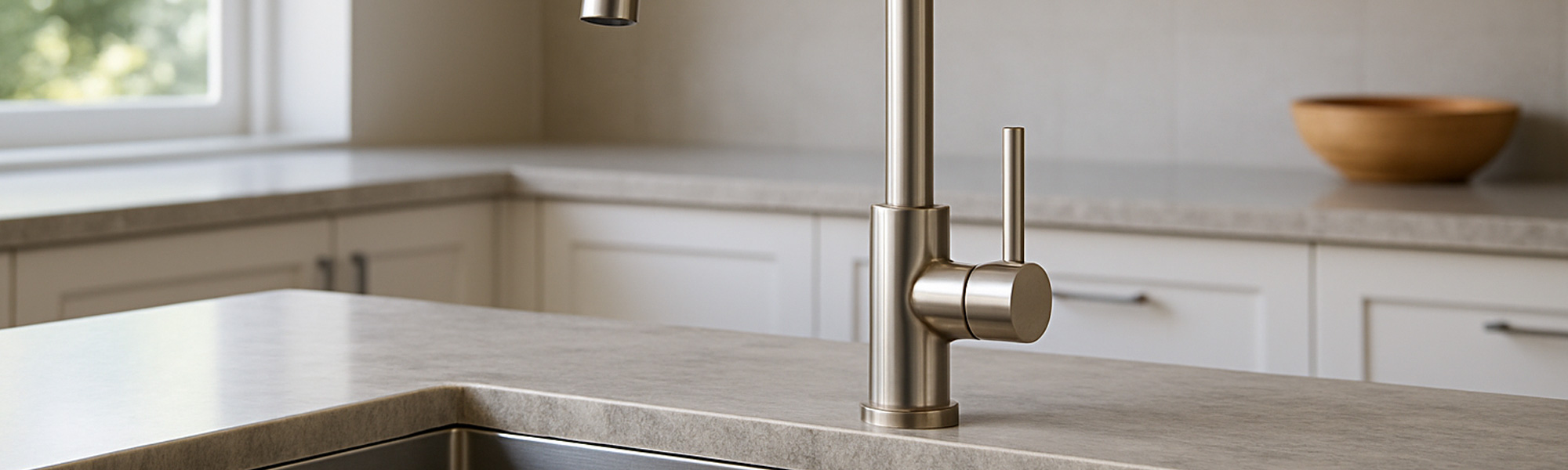
Whether it's a full renovation, a new build, or the simple refresh of an existing kitchen, tapware has an influence far greater than its footprint suggests. It sits at the centre of the workspace, visible from almost every angle, and becomes the quiet anchor of the preparation zone. In new homes it often becomes the first thing installed on a pristine benchtop, setting the tone for the entire palette. In renovations, it's frequently the missing piece that finally brings coherence to a space that's been evolving in stages. In both cases, a tap has the power to change the emotional temperature of the kitchen before anything else is even used.
The Emotional Weight of Something You Use Every Day
Tapware is one of the few kitchen inclusions touched constantly. The handle becomes part of daily life, shaping the way mornings start and evenings wind down. In a new build, the first turn of a brand-new mixer sets expectations for the rest of the home. In a renovation, upgrading a tired fixture instantly elevates the experience of the kitchen, even if the larger structural elements haven't changed. Because you interact with a tap more than almost any other feature, its feel, resistance, movement and smoothness matter deeply. A well-chosen fixture makes everyday tasks feel lighter, while a poorly chosen one becomes a repeated annoyance.
Style, Shape and the Architecture of the Sink
The silhouette of a tap does more than provide water. It becomes part of the kitchen's architecture. Tall arcs feel spacious and sculptural, making them ideal for contemporary homes and new builds with open sightlines. Compact mixers work seamlessly in tighter layouts or renovations where cabinetry height and proportions may already be fixed. Pull-out sprays offer welcome versatility in busy households, particularly in new homes designed around deep sinks and multifunction prep zones. Handle placement, spout angle and even the thickness of the neck influence how the sink area looks from across the room. These tiny decisions accumulate into the difference between a space that feels balanced and one that feels visually unsettled.
Choosing a Finish That Ages Gracefully
A finish can transform a kitchen, but it also needs to stand the test of time. For new builds, choosing the right finish establishes the long-term visual identity of the space. Brushed nickel and stainless steel integrate smoothly with a wide variety of palettes and stay elegant even as the surrounding decor evolves. Chrome remains classic but requires regular upkeep to maintain its shine. Matte black brings strong definition and works well when the surrounding elements are equally intentional. Brushed gold and bronze add warmth, but because they become focal points, they should be chosen with confidence. Whether the kitchen is brand new or being refreshed, the right finish is as much about longevity as aesthetics.
How the Sink and Benchtop Influence the Decision
Tapware doesn't stand alone. Undermount sinks, popular in both high-end new builds and renovated kitchens, put the tap on full display. Their seamless edges give mixers and spouts more visual presence. Top-mount sinks soften the impact of the tap and work harmoniously with slimmer fixtures. Double sinks benefit from taller spouts and full swivel capability, while single sinks allow more freedom in form. In both new builds and renovations, window placement behind the sink can quietly determine tap height, especially where lever clearance matters. Ensuring that the tap physically fits the space is just as important as the design choice itself.
The Hidden Experience: Flow, Sound and Smoothness
What distinguishes high-quality tapware in both new homes and older kitchens is the sensory experience hidden beneath the surface. The aerator determines how quietly water lands in the sink. The cartridge determines how the handle glides over time. A kitchen with hard surfaces, whether brand new or decades old, magnifies sound, which is why a smooth, soft flow can instantly make the room feel more refined. These internal components often matter more than the visible finish, because they shape the part of tapware you interact with constantly.
Lifestyle Match: The Difference Between Want and Need
Tapware should suit the way a household truly lives, not just how the kitchen looks at handover. New builds often present the temptation to choose purely on aesthetics, but a handle that feels wrong in daily use or a spout that doesn't reach where you need it quickly becomes frustrating. Renovations come with their own pitfalls when people try to match an existing space rather than choosing what suits their habits. Families who cook often gain enormous value from pull-out sprays. Minimalist households may adore a slender fixed spout that blends into the background. People who entertain regularly may prefer finishes that glow softly in evening light. Matching the tap to lifestyle ensures the kitchen functions as well as it looks.
How to Choose a Tap That Actually Suits Your Kitchen
Choosing tapware becomes far easier once you stop thinking of it as a standalone fixture and start treating it as a conversation between the kitchen's materials, proportions and daily habits. The best decisions come from reading the room slowly, almost like you're learning its language. Every benchtop, every cabinet colour, every sink shape quietly influences which tap will feel right.
A good starting point is the benchtop itself. Stone with gentle veining tends to work best with curved spouts that echo those softer lines, while bolder slabs with dramatic patterning often feel more balanced with a cleaner, more architectural silhouette. Timber-heavy kitchens usually welcome warmer metals because they settle into the organic tones rather than fighting against them. White or neutral cabinetry gives you far more freedom, though a tap that stands out slightly often brings welcome definition to an otherwise calm palette.
Then there's the question of proportion. A tall, elegant arc looks incredible when it has room to breathe, but that same shape can feel overblown if the cabinets sit close or the window frame crowds it. Smaller kitchens often benefit from compact mixers that tuck themselves neatly into the flow of the space. If the sink is deep, a taller spout becomes practical as well as beautiful, but if the sink is shallow, the extra height can accelerate splashing and make daily tasks more irritating than they need to be. Matching tap height to sink depth is one of those details that homeowners rarely consider but instantly feel once the tap is installed.
The sink configuration plays its own role in the selection. Single bowls are forgiving and allow nearly any shape to shine. Double bowls, on the other hand, need a spout with enough reach and swivel to move between both sides without stretching awkwardly. Undermount sinks give tapware more visual presence, so a finish that speaks softly rather than loudly often works in their favour. Top-mount sinks naturally absorb some of the attention with their visible rims, making slimmer silhouettes look intentional and considered.
Quality becomes obvious the moment you touch a tap. A fixture that feels hollow or lightweight often signals weaker internals that may loosen over time. A sturdy body with a smooth, weighted handle tells you the mechanism inside is well made. Turning the handle should feel clean rather than grainy, and even the smallest resistance point usually hints at cheaper construction. Aerators shape the flow of water more than most people realise, and if the stream feels harsh or scattered, it will become a daily irritation no matter how beautiful the tap looks.
The room around the tap gives clues too. Hard floors such as stone or large tiles amplify sound, so a tap with a softer, well-controlled flow becomes more pleasant to live with. If the kitchen receives strong natural light, polished finishes will demand more maintenance, while brushed surfaces soften glare and hide the tiny marks of daily use. Even the distance between the spout and the splashback matters. A tap that sits too close can limit handle movement or create awkward cleaning angles you'll resent later.
Lifestyle may be the final influence, but it's one of the most decisive. A household that cooks constantly needs a tap that works with them rather than slowing them down. A pull-out spray becomes almost essential in that environment, letting you rinse quickly, fill awkward containers and keep the sink fresher between deeper cleans. Homes where the kitchen is more of a casual gathering point often prioritise aesthetics, choosing a silhouette that looks calm and sculptural even when it isn't working hard. People who entertain regularly gravitate toward finishes that warm under evening lighting, because they understand that the tap becomes part of the mood of the room. And those who prefer minimal maintenance often return to brushed metals that hide the small traces of everyday life.
The real secret to choosing the right tap is noticing how your kitchen behaves when no one is trying to impress it. Where the light falls, how the sink is used, which surfaces dominate the sightlines and how the space feels during its busiest and quietest moments. When you choose a tap that responds to those realities, everything settles into place. It stops being a fixture and starts becoming part of the way the kitchen works, looks and lives.
Longevity and the Quiet Confidence of Quality
A new build promises a clean slate, yet the fixture that wears out earliest is often the one touched most. Quality cartridges, solid internal construction and stable mounting prevent the creeping leaks and wobbles that undermine the long-term performance of a kitchen. Renovated kitchens benefit just as strongly from these unseen upgrades. A tap with robust internals maintains its feel year after year, making the whole room feel more composed. This quiet reliability becomes part of the kitchen's long-term atmosphere, no matter the age of the surrounding cabinetry.
A Small Upgrade With Surprisingly Big Impact
In renovations, replacing the tap can be the most transformative change without structural upheaval. It can make an older benchtop feel contemporary or give a tired sink area a sense of renewed clarity. In new builds, installing the perfect tap from day one ensures the kitchen feels complete rather than generic. The right fixture upgrades both aesthetics and experience, often far more dramatically than people expect.
Bringing the Whole Kitchen Into Balance
Choosing kitchen tapware is about shaping the lived feel of the home, whether brand new or gradually evolving. The right tap enhances the look of the kitchen, softens the daily workload and introduces a sense of effortlessness to the most frequent tasks. When it's chosen thoughtfully, everything around it feels better aligned. It becomes the point where design and comfort meet, grounding the entire room with a quiet, lasting sense of harmony.
You might also like





Disclaimer: Every effort has been made to ensure the accuracy of the information provided, but we make no guarantees regarding its completeness or reliability. The data is presented for general informational purposes only and does not constitute financial, investment, or legal advice. We are not liable for any errors, omissions, or consequences arising from its use. Users should verify details with relevant sources and seek professional advice where appropriate for the most accurate and up-to-date guidance.