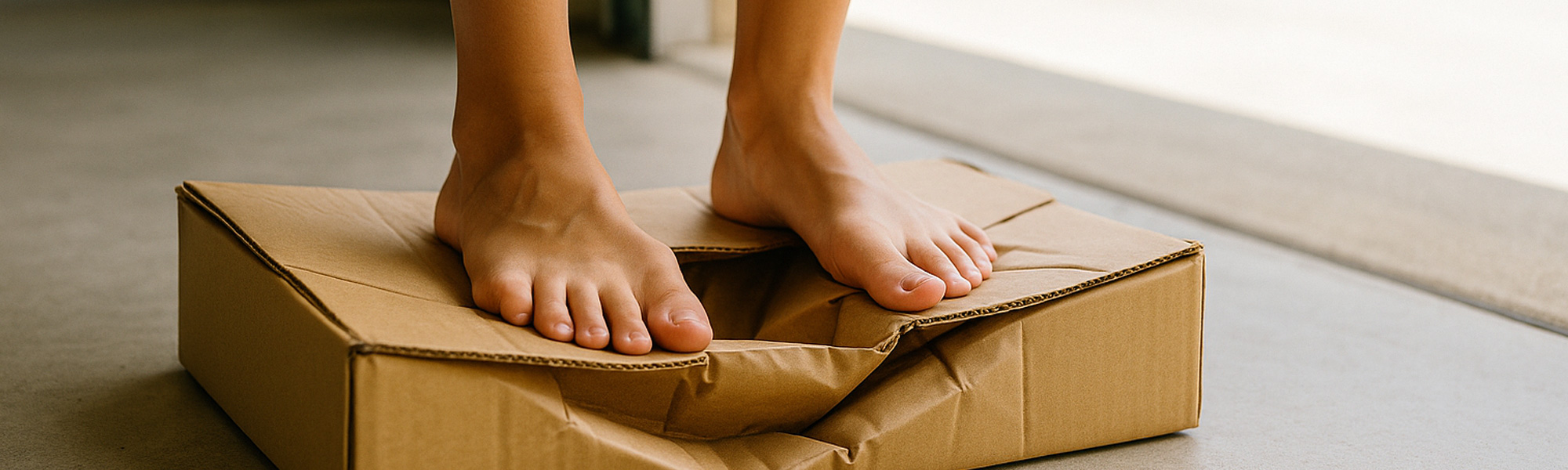
Whether you've just moved into a new home, refreshed a room, or simply accumulated too many delivery boxes, managing cardboard is one of those small but steady chores every home has. It may not be the most glamorous job in a household, but it's one of those little routines that helps keep everything tidy. Cardboard boxes need to be crushed before they go into the bin, saving valuable space and serving as a small act of courtesy to the community.
For most households a cardboard box ends its life the same way - taken outside, dropped on the ground and trodden down, usually barefoot, until it's crushed flat for recycling. The resulting squashed cardboard pads are familiar, appearing so often that we rarely stop to notice the faint footprints stamped across them. Each one is a quiet record of the moment someone's feet pressed into the fibres to bring the box down. And on the Gold Coast, where home recycling is simply part of life, couples, families and housemates handle these flattened boxes every day without a second thought.
And yet, the sight of those faint footprints can prompt a brief second thought, as if the simple act of stepping the box flat has transformed it into something less hygienic.
That little pause is understandable, but in reality the hygiene profile of a crushed box is far cleaner and safer than most people imagine. Cardboard is a dry, fibrous material that does not harbour bacteria easily, it rarely carries moisture long enough for anything concerning to grow, and the quick flattening process adds almost nothing to its microbial load. Touching it, passing it to someone else, loading it into a trailer or sliding it into a bin is one of the safest parts of the entire household waste cycle.
The real hygiene considerations lie not in the moment of touching a crushed box, but in understanding what actually happens to it from the minute it arrives in your home until the moment it leaves. And when you break down the journey, it becomes clear that the hands, feet and contact points involved are far less worrisome than people assume.
The Clean Science of Dry Cardboard
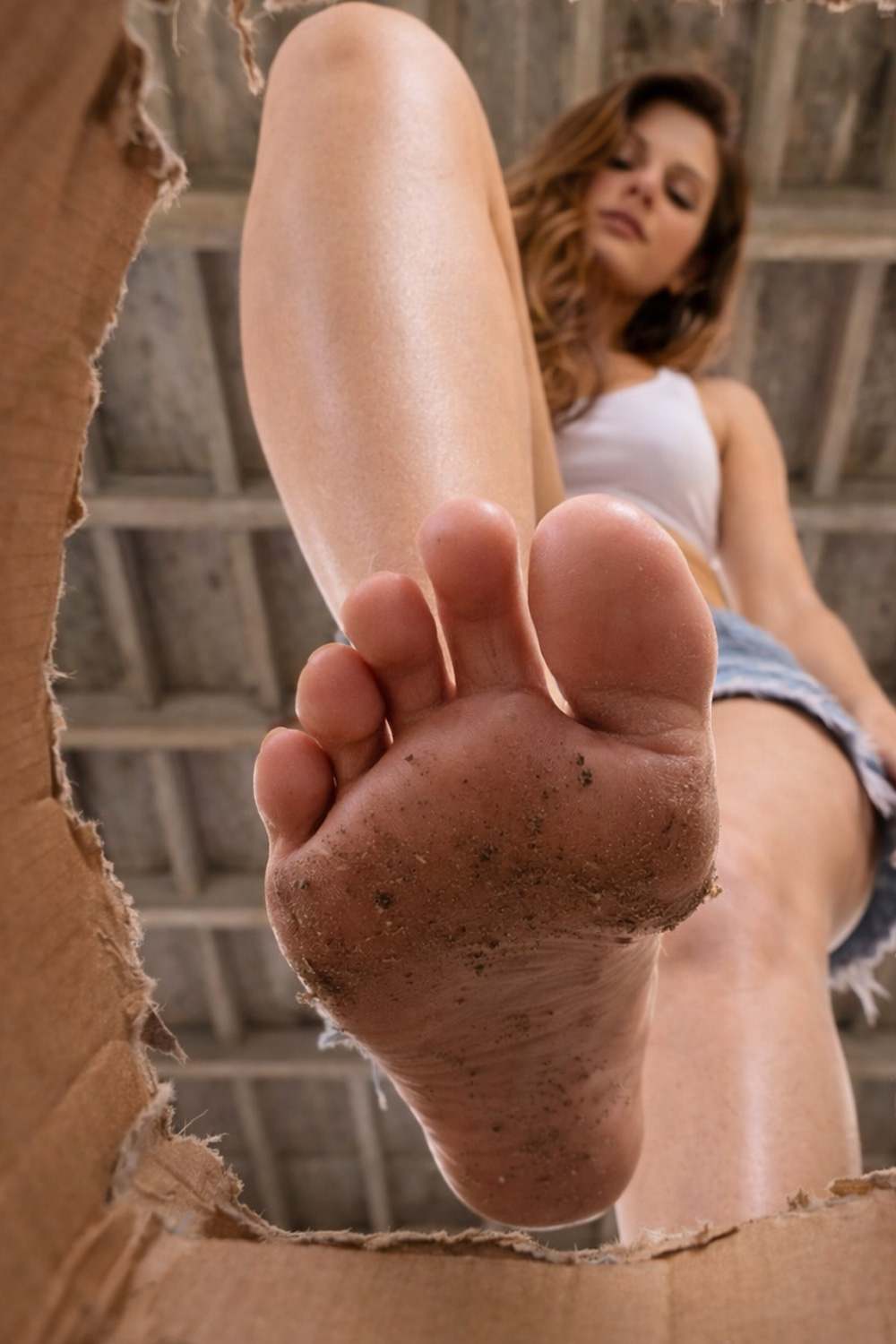
Cardboard is naturally inhospitable to most bacteria and common pathogens. It is dry, porous, and made from fibres that wick away moisture far too quickly for bacteria to thrive. Even if someone stands on it, presses it down or crushes it with bare feet, the contact is brief, the pressure is concentrated and the surface is still dry enough to prevent meaningful transfer.
The things people usually worry about during crushing are almost always harmless. A bit of garden dust, loose fibres and the imprint of whatever pressed into it have no real biological impact. On a Gold Coast lawn, especially under midday sun, the environment is even less conducive to microbial survival. The combination of heat, UV light and airflow means the exterior of a cardboard box is cleaner than the average household doorknob.
If someone crushes a box in shoes, it makes almost no difference. If they crush it barefoot, it still makes almost no difference. Clean, dry human skin is not a significant contamination source for something that is heading straight to recycling or the tip.
What Couples Actually Experience: A Clean, Everyday Chore
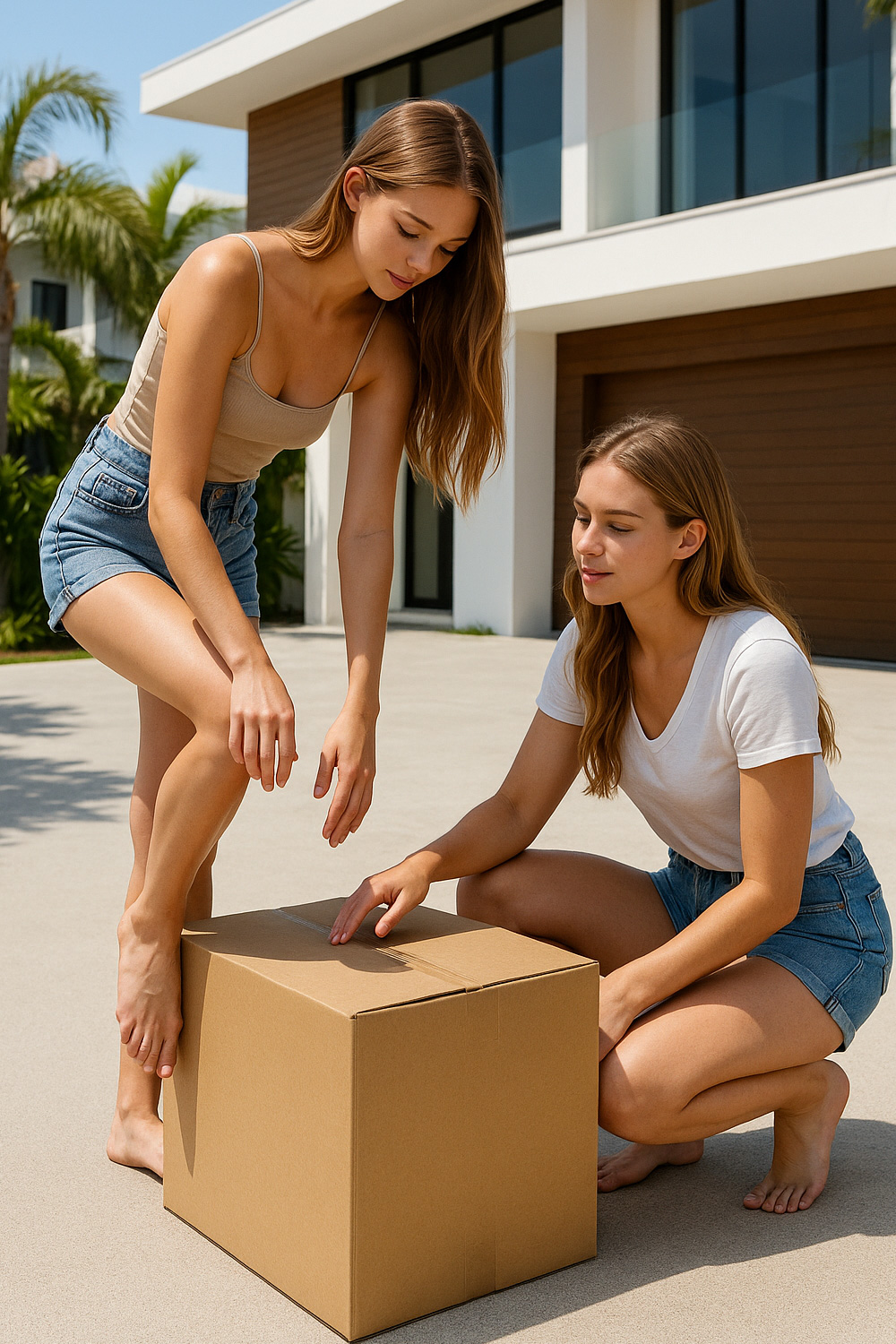
One of the clearest ways to understand the hygiene profile of a crushed box is to think about how couples actually handle them at home. It plays out the same way in thousands of Gold Coast households every week, and the example says more about the real cleanliness of the task than any laboratory breakdown.
She is on the lawn behind the house, barefoot as usual because that is just how she does chores in this climate. A stack of boxes sits beside her, the kind that pile up after online orders, new appliances, or a pantry clean-out. He is over by the trailer, one foot on the drawbar, tightening the last tie-down strap before they drive to the tip later that afternoon.
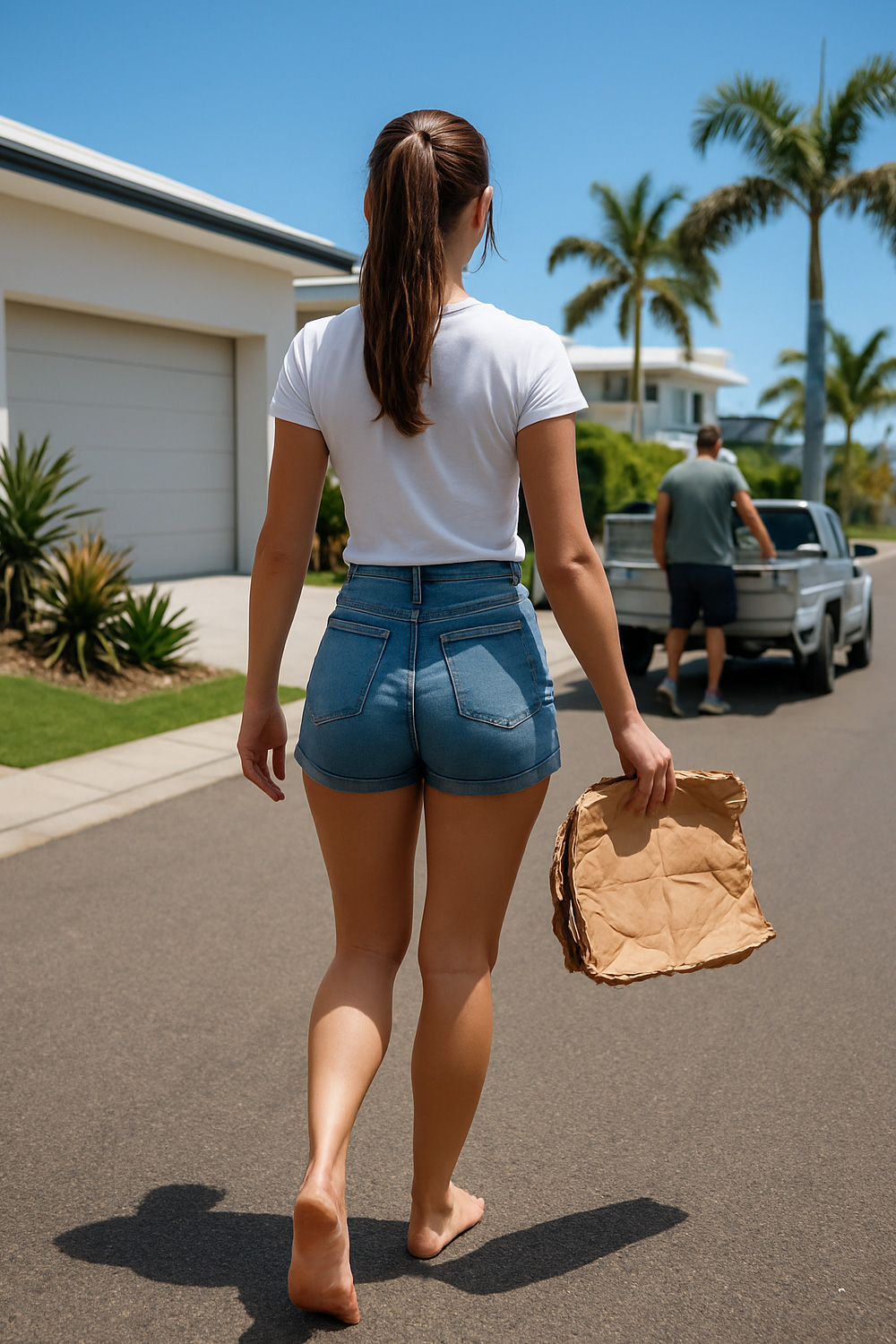
She drops the first box on the grass, presses her foot into it to gauge the stiffness, then gives it a sharp, confident tread right through the centre. The box collapses on itself with that familiar hollow puff. She walks her way around the frame, a few rapid presses on each side, breaking the ribs and leaving it soft and flat. She bends, picks it up by an edge and carries it across to him, passing it over without even thinking about hygiene.
He grabs it, loads it into the trailer with the others, brushes his hands off on his shorts and keeps going.
At no point does either of them hesitate. The lawn is clean. The box is dry. There is nothing on its surface that poses a risk. They are far more likely to encounter germs from the handle of the wheelie bin, the tap at the petrol station, a shared shopping trolley or the family dog's chew toy. In the real world, a crushed box barely registers as a hygiene consideration because, practically speaking, it isn't one.
Foot Contact vs Hand Contact: What Actually Transfers

Many people assume feet are automatically less hygienic than hands, but in a barefoot Gold Coast household that is almost never true. Bare soles are sanitised regularly simply because of showers, pool dips, beach rinses and the hot climate. They also have thicker skin, fewer oil glands and fewer places for bacteria to cling. When someone crushes a box barefoot, the odds of them transferring anything meaningful to the cardboard are incredibly low.
What transfers instead is pressure. Weight. Force distributed across a dry surface. A footprint mark on the fibres is cosmetic, not biological. When the boyfriend picks up the flattened box, he is touching compressed cardboard and microscopic plant fibres, not a microbial imprint of her foot.
Hands, by comparison, actually touch far more contaminated surfaces throughout the day. Phones, keys, taps, steering wheels, shopping baskets and door handles all carry more bacteria than the average lawn or the average clean human foot. So when he lifts the crushed box, the risk is not from what touched it earlier. The higher risk is what his own hands have touched before he got to the boxes.
Yet even then, the risk to him is minor. Cardboard does not easily retain viable bacteria, and whatever sits on the surface tends not to transfer well to skin. That is why so many families handle cardboard constantly without ever thinking about hygiene.
Outdoor Crushing Makes Boxes Cleaner, Not Dirtier
When a box is flattened on the lawn under sunlight, it actually becomes cleaner than it was when it first arrived. UV exposure is one of the strongest natural disinfectants available. Even a minute or two in the midday Gold Coast sun reduces viable bacteria dramatically. Any dust or particles from the yard are dry, natural and harmless. Compared to what cardboard picks up during shipping and warehouse storage, your own backyard is practically sterile.
This matters when you are loading boxes into a trailer for the tip. If she crushes them outside and passes them to him one by one, every flattened panel has already been exposed to fresh air and UV light. The contact is clean, the handling is clean and there is no meaningful hygiene risk for either of them.
So Is It Hygienic to Touch a Crushed Box?
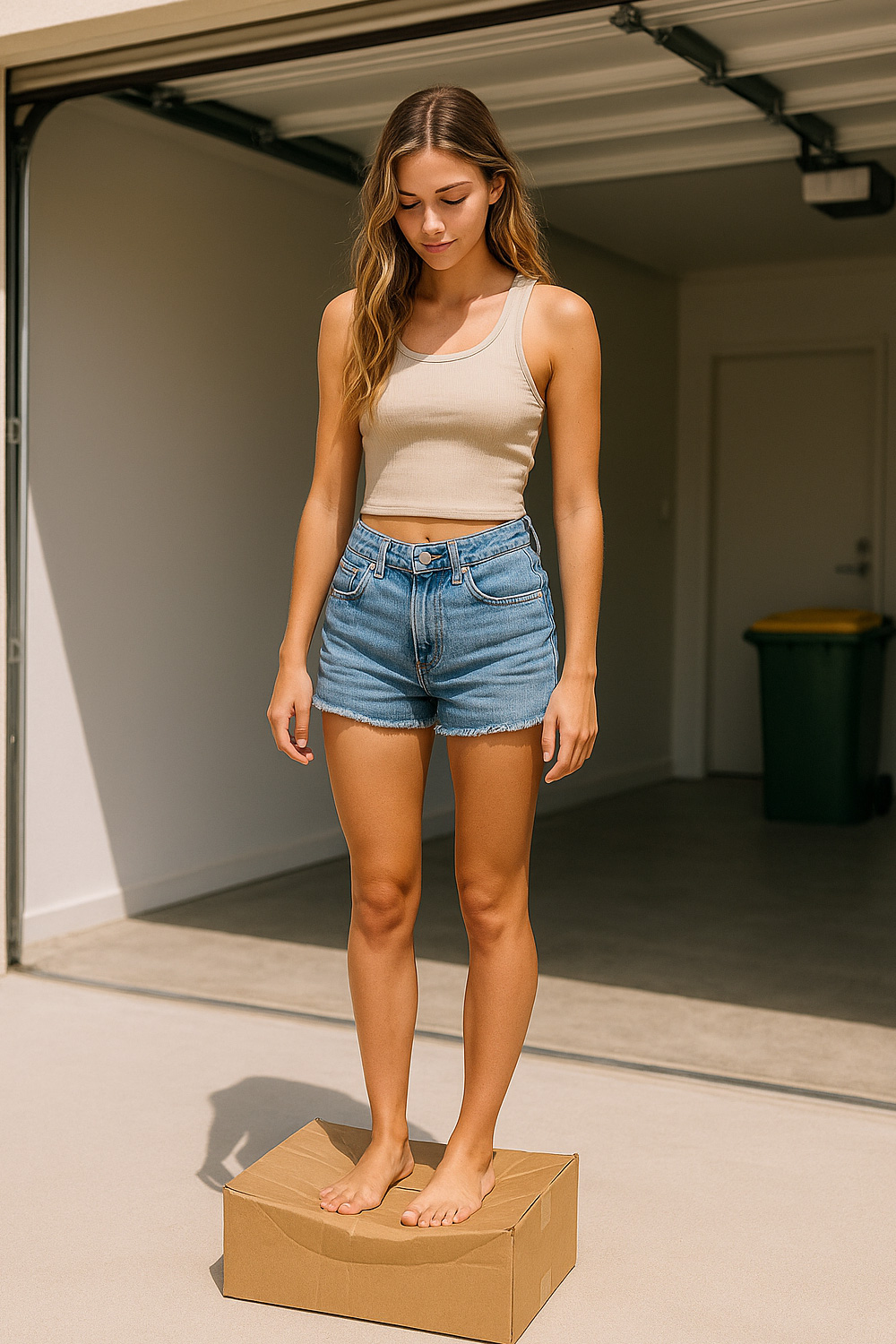
Absolutely. It is one of the cleanest household waste materials you will ever handle. Dry cardboard does not harbour much bacteria, crushing does not add significant contamination, foot contact is not a risk in normal household circumstances, and outdoor flattening actually improves the hygiene profile.
Touching a crushed box is far safer than touching the bin lid, the garden tap, the car boot, the trailer latch or the last parcel that came to your door.
On the Gold Coast, where boxes are crushed on lawns, patios and driveways and quickly moved to the trailer or wheelie bin, the process is not only efficient but hygienically uneventful. That is exactly why couples pass boxes back and forth without hesitation. They are handling something low-risk, dry, sun-lit and destined to leave the property anyway.
You might also like




Disclaimer: Every effort has been made to ensure the accuracy of the information provided, but we make no guarantees regarding its completeness or reliability. The data is presented for general informational purposes only and does not constitute financial, investment, or legal advice. We are not liable for any errors, omissions, or consequences arising from its use. Users should verify details with relevant sources and seek professional advice where appropriate for the most accurate and up-to-date guidance.