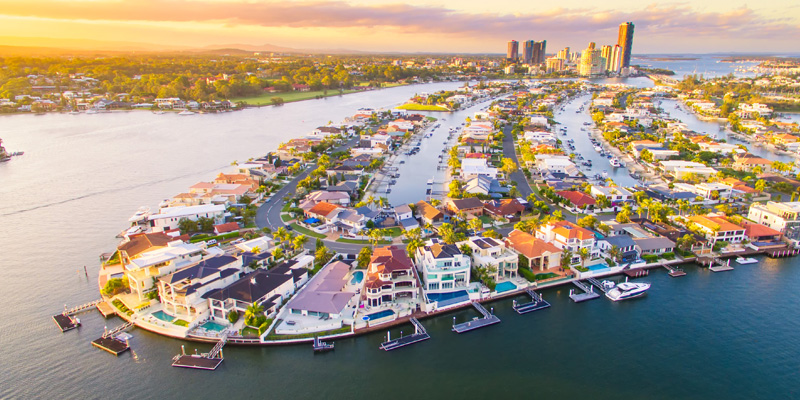
For many people, the idea of living by the water is not just an aspiration - it's the ultimate lifestyle goal. On the Gold Coast, it's a dream that feels within reach. With more than 400 kilometres of waterways, a network of canals larger than Venice, and some of the most famous beaches in the world, the city offers an unmatched opportunity to build life around the water's edge. Whether it's the surf rolling in at Burleigh, the stillness of a Broadbeach canal at dawn, or the golden sunset over the Broadwater, the appeal is universal. Life by the water isn't just about scenery - it's about identity, wellbeing, and community.
The Everyday Rewards of Waterfront Living
The greatest gift of living by the water is the way it changes your daily rhythm. Mornings begin with light dancing across the surface, birds weaving over the tides, and the gentle hush of waves or ripples in the canal. Instead of screens or alarms, nature sets the tone of the day.
Proximity to water also has proven psychological benefits. Studies across the world show that living near water reduces stress, improves mental health, and increases physical activity. On the Gold Coast, this plays out in obvious ways. Residents head out for early swims or surfs, paddleboard along calm stretches of river, or take evening walks with sand between their toes. It's exercise by stealth - staying active not out of obligation, but because the environment makes it irresistible.
For families, it means raising children with access to a natural playground. Kayaking after school, fishing on weekends, or learning to surf becomes second nature. For couples and professionals, waterfront living offers an antidote to busy schedules - the simple act of watching water shift and flow is grounding, a reminder to slow down.
A Social Hub by Nature
Water draws people together, and life on the water creates built-in opportunities for connection. Canal-front barbecues spill from the kitchen onto the deck, with boats and paddleboards tied up just metres away. Beachfront picnics with neighbours become effortless weekend rituals. Sunset viewing points turn into social gathering spots.
There's also the subtle way in which water-based activities foster friendships. Surf clubs, rowing teams, and community sailing groups offer not only fitness and fun but also a sense of belonging. Living near the water means sharing it - and those shared experiences often become the foundation of long-term community bonds.
The Design Factor
Waterfront homes on the Gold Coast are rarely ordinary. Developers and architects lean into the opportunity, crafting spaces that maximise the outlook and integrate inside with outside. Expansive glass panels, infinity pools, alfresco entertaining spaces, and open-plan living all play their part. The goal is not just to capture the view, but to create seamless transitions where the home feels like it extends directly into the waterway or beach.
Interior styling often takes cues from the surrounding environment. Coastal palettes, natural textures, and open, airy spaces reflect the breezy lifestyle. In many ways, the water dictates design choices - homes are shaped around orientation, breezes, and sightlines, creating a sense of place that inland properties can't replicate.
The Practical Considerations
Of course, living near the water comes with its practical side. Salt air is a silent force, gradually working its way into outdoor fittings, paintwork, and even electronics. Waterfront homeowners often invest in higher-grade materials, marine-quality finishes, and regular maintenance schedules to keep everything in top condition.
Insurance costs can be higher too, particularly for beachfront properties exposed to storms or erosion risks. For canal and riverfront homes, there are tidal influences to consider - boat moorings, retaining walls, and water quality all play into the maintenance equation.
Yet these challenges are rarely seen as drawbacks. For most residents, they are simply the fine print of waterfront living - a reasonable exchange for the rewards of the lifestyle. Modern design and building materials are continually evolving to handle these conditions, making the practical side less daunting than it once was.
An Investment That Holds Value
Beyond lifestyle, waterfront living is also an investment. Properties by the water consistently hold their value and often outperform the broader market. The demand is simple: there is only so much land with direct access to canals, beaches, or rivers, and as population grows, scarcity ensures desirability. For buyers, that means waterfront property is not just a place to live - it's a long-term asset that carries prestige and security.
Health and Wellbeing in Focus
One of the lesser-discussed benefits of living near the water is its impact on health. Natural light, fresh breezes, and easy access to outdoor activity all contribute to physical wellbeing. It's no coincidence that people retreat to the ocean, lakes, or rivers when they need to recharge. On the Gold Coast, that retreat can be part of everyday life.
Why It's Worth It
When weighing up the lifestyle, the benefits of waterfront living far outweigh the responsibilities. Yes, maintenance is higher, and yes, the environment requires care. But in return, residents enjoy a richness of life that few other settings can provide. Every sunrise feels brighter, every gathering feels more special, and every moment spent by the water is a reminder of why people are drawn here.
For those lucky enough to call the water's edge home, the rewards are constant. It's not just a backdrop - it's a way of life. The tides, breezes, and endless horizons shape how people live, connect, and thrive. On the Gold Coast, life by the water is not only worth it - it's unforgettable.
You might also like






Disclaimer: Every effort has been made to ensure the accuracy of the information provided, but we make no guarantees regarding its completeness or reliability. The data is presented for general informational purposes only and does not constitute financial, investment, or legal advice. We are not liable for any errors, omissions, or consequences arising from its use. Users should verify details with relevant sources and seek professional advice where appropriate for the most accurate and up-to-date guidance.