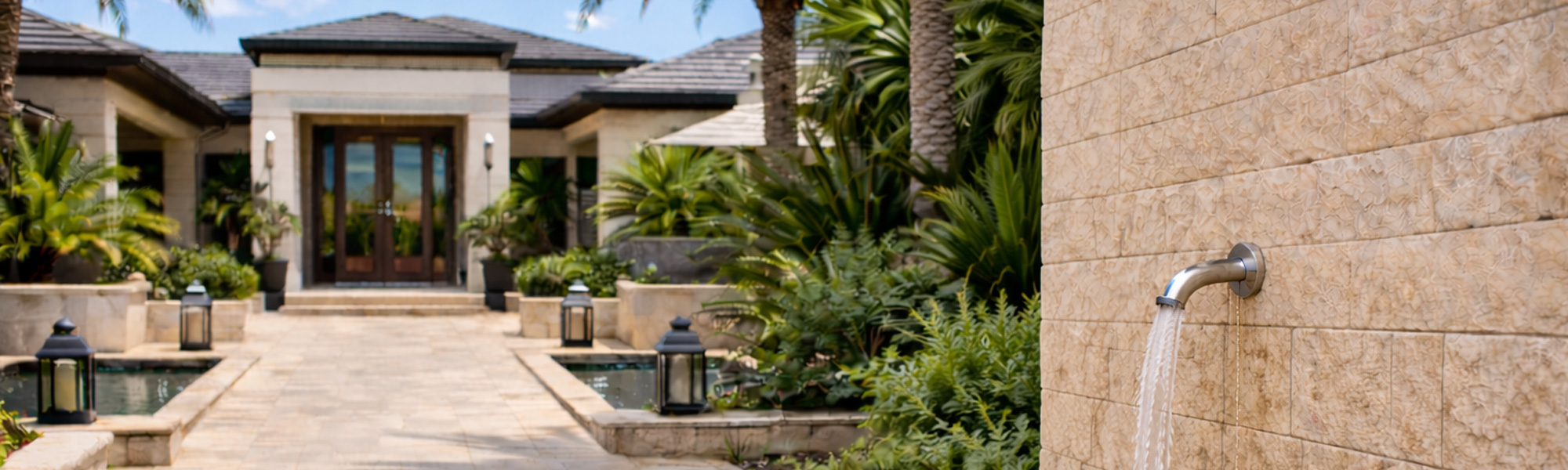
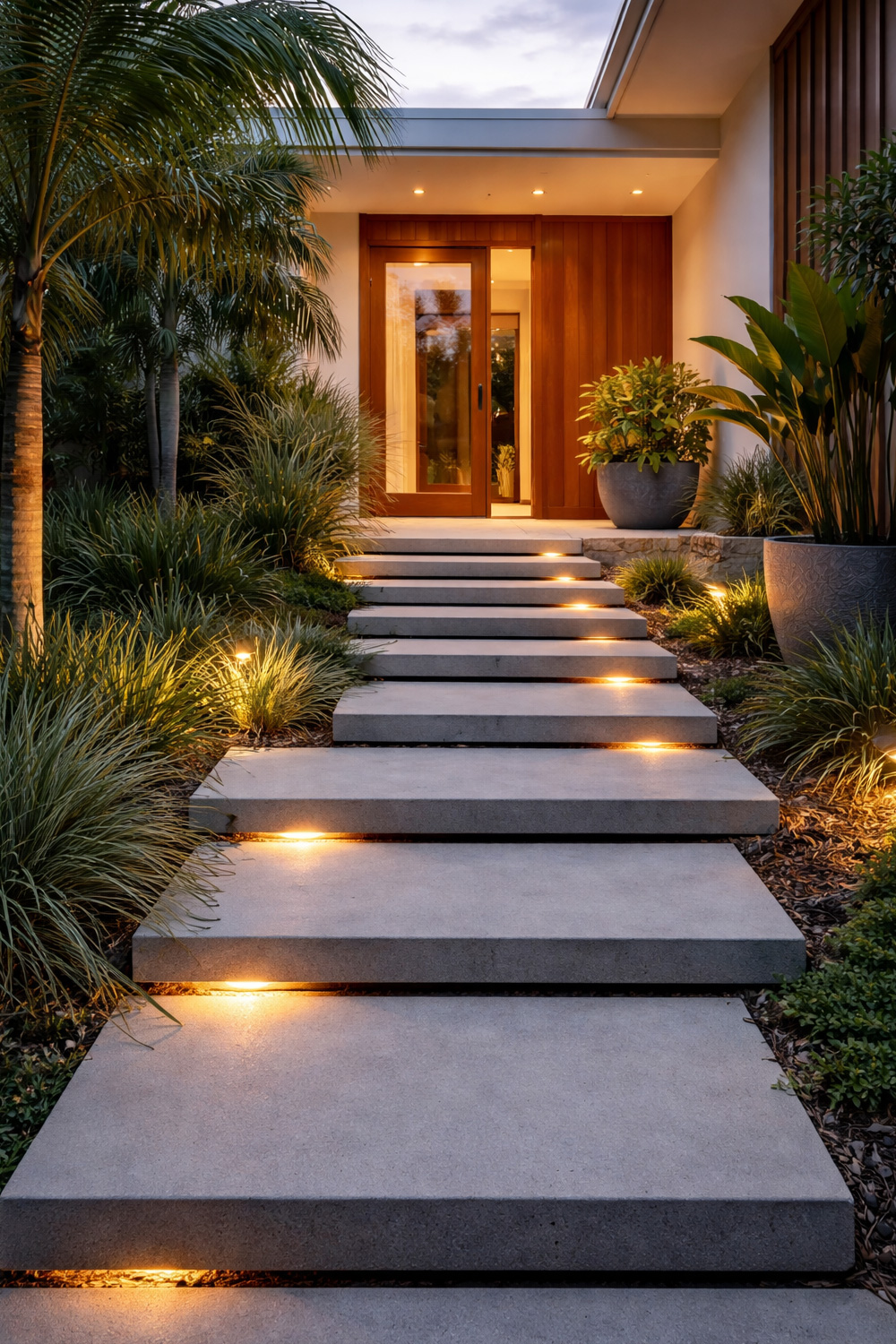
On the Gold Coast, the front of a house is not just a facade. It is an experience that starts at the street and unfolds step by step as someone approaches the door. Visitors do not take in the building all at once. They notice the driveway edge, the sound of gravel or concrete beneath them, the way planting frames the path, how light falls across the entry, and whether the house feels open, relaxed, and suited to the climate. For the people who live there, the approach is used every day. That daily interaction turns the entry into a functional zone, not a decorative afterthought.
Gold Coast lifestyles blur indoor and outdoor living more than most places, and that creates a huge opportunity for front entry design. Sand, salt air, humidity, sudden rain, and strong sun all inform material choices and layout in ways that can make an entry feel effortless and comfortable year round. When paths drain well, surfaces stay comfortable for barefoot use, and finishes are chosen with the climate in mind, the approach to the home becomes both practical and welcoming, presenting a relaxed, well considered face to the street that suits the way people actually live here.
Designing the approach is about guiding movement and expectations. It sets the tone for the house before anyone touches the handle. A good entry sequence makes sense intuitively. It feels easy to follow, comfortable to walk on, and calm rather than cluttered. This is especially important on the Gold Coast, where houses often sit close to the street, blocks vary widely in slope, and the climate encourages open, informal living rather than rigid formality.
Understanding the Gold Coast Climate
Designing an entryway here means accepting that shoes are optional most of the time. People come home from the beach, the park, the boat ramp, or the backyard with bare feet that carry sand, grass clippings, or dust. Pretending this does not happen leads to entries that constantly look dirty or feel awkward to use. Embracing it leads to smarter design choices that stay cleaner and feel more natural.
Heat plays a big role. Dark surfaces can become uncomfortable in summer sun, while some pale finishes show marks quickly. Humidity encourages mould and algae in shaded or damp areas, especially on smooth stone or sealed concrete. Sudden downpours can flood poorly planned paths, washing debris toward the door. Salt air accelerates corrosion of cheap fittings and light fixtures.
Barefoot movement also changes how people use space. Steps feel steeper without shoes. Rough textures can be uncomfortable. Sharp edges or decorative stones that look great in photos can be irritating in daily use. The best Gold Coast entryways strike a balance between visual texture and physical comfort, using materials that feel friendly to bare feet while still handling weather and wear.
This cultural context also affects social expectations. A relaxed entry signals that visitors do not need to stand awkwardly wiping feet or worrying about bringing the outside in. Thoughtful design can subtly tell people where to pause, where to leave sandy gear, or where to rinse off before heading inside, all without signs or instructions.
Shaping the Journey from the Street to the Door
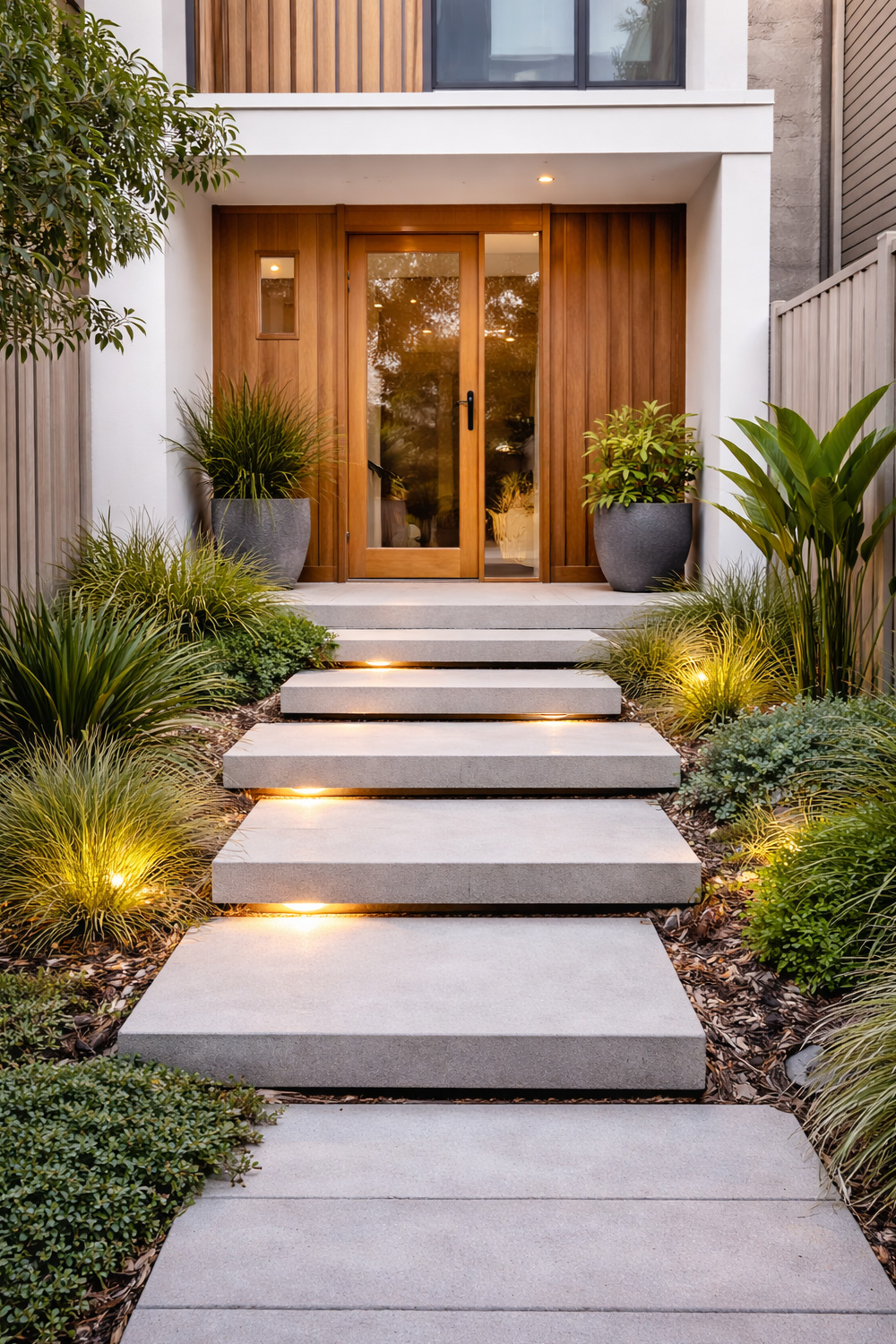
The approach should feel like a clear, intentional path rather than a scramble across leftover space. Even on small blocks, defining the walk to the door helps the house feel grounded and welcoming. This does not mean a straight line in every case. Gentle curves, offsets, or widening near the door can create interest and slow the pace, giving people time to take in the house.
On sloping sites, the approach becomes even more important. A path that subtly follows the land rather than fighting it feels easier to walk and visually calmer. Long, shallow rises are more comfortable than short, steep ramps, especially barefoot. Where steps are unavoidable, consistent riser heights and generous treads reduce the sense of effort and make the entry feel safer and more confident.
The width of the path matters more than many people realise. Narrow paths force people to walk single file and feel awkward when carrying items or walking alongside children. A slightly wider path allows a more relaxed gait and gives room for planting without crowding the walking surface. Near the door, a small landing or widened area gives people space to pause, turn, and manage keys or bags without feeling rushed.
Visual cues also guide movement. Changes in texture, subtle shifts in colour, or the way planting frames the path all help signal where to go. The goal is that a first time visitor never wonders which way to walk. The path should feel obvious without being literal.
Choosing Surfaces That Work in Heat, Rain, and Daily Use
Surface choice is one of the most critical decisions in entryway design. It affects comfort, safety, maintenance, and appearance. On the Gold Coast, surfaces need to handle intense sun, heavy rain, and frequent barefoot contact without becoming slippery or unpleasant.
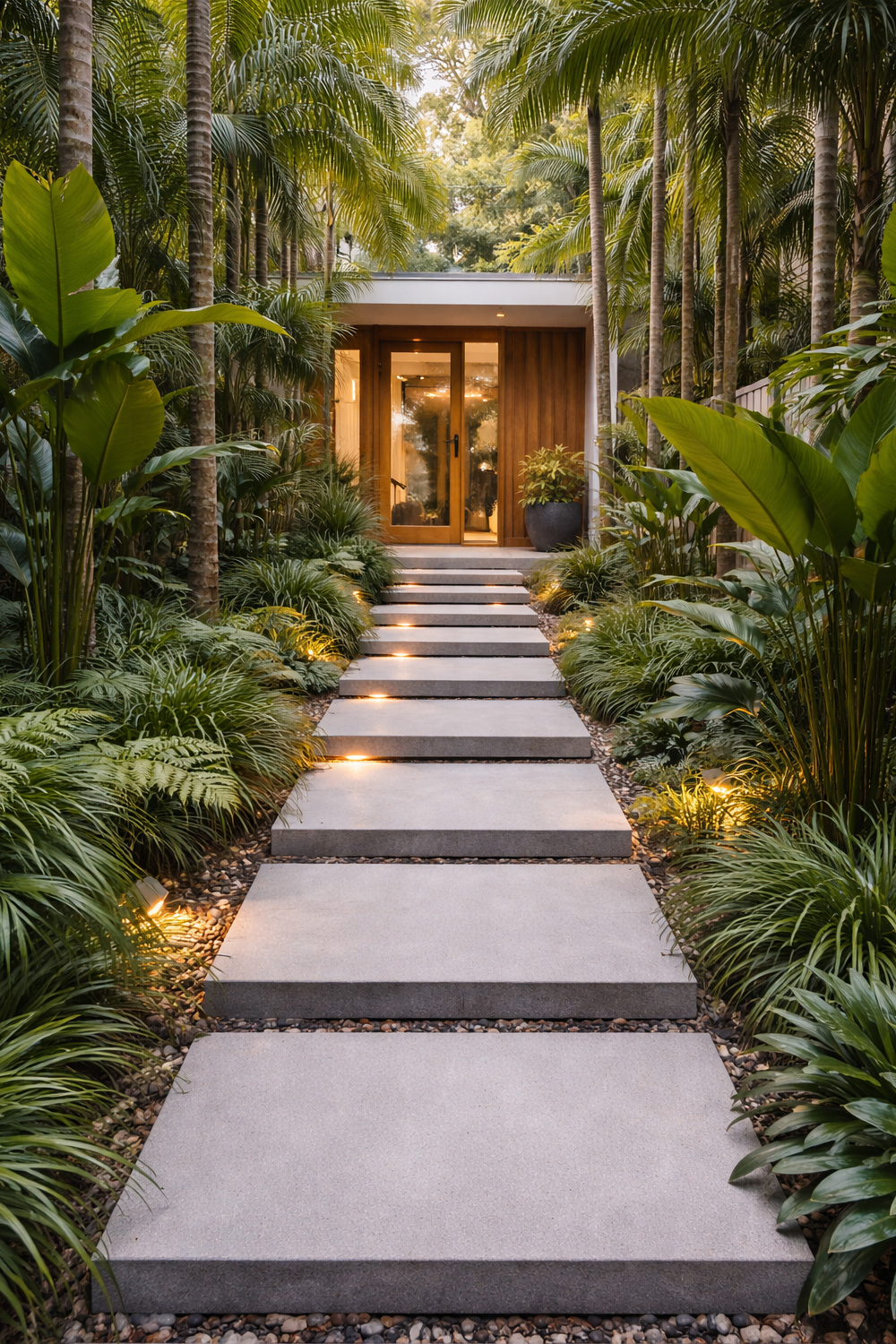
Concrete remains popular for good reason. When finished thoughtfully, it is durable, low maintenance, and adaptable. Exposed aggregate can provide grip and visual interest, but the size and type of stone matter. Very sharp aggregate can be uncomfortable for bare feet, while overly smooth finishes can become slick when wet. A balanced mix with rounded stones often works best.
Pavers offer flexibility and can soften the look of an entry. Clay pavers handle heat well and age gracefully, but they can grow algae in shaded areas if drainage is poor. Concrete pavers vary widely in quality and finish, so choosing products rated for outdoor use in coastal environments is important. Laying patterns that minimise long straight joints helps reduce visual rigidity and can make movement feel more natural.
Natural stone brings a sense of quality, but it needs careful selection. Some stones become slippery when wet, while others absorb moisture and stain easily. Honed or lightly textured finishes tend to perform better than polished ones. Stone also holds heat differently, so testing samples in the sun can reveal surprises.
Timber decking can work in covered entry areas, but it requires ongoing maintenance and careful detailing to avoid becoming slick. Composite decking offers lower maintenance, but some products heat up significantly in direct sun. Colour choice and ventilation underneath the deck play a big role in comfort.
Gravel is sometimes used for informal approaches, but it is rarely ideal for barefoot entry paths. Loose stones shift, trap debris, and feel unstable. If gravel is used, it is better confined to planting zones or used as a visual border rather than the main walking surface.
Designing for Water Movement and Drainage
Water is both a friend and a challenge in entryway design. Rain cools surfaces and keeps plants thriving, but it also exposes weaknesses in layout and drainage. Poorly designed entries funnel water toward the door, creating puddles, staining, and long-term damage.
The path should subtly shed water away from the house. This does not require obvious slopes, but it does require planning. Even a small fall across the width of a path can make a big difference. Drainage points should be discreet and easy to maintain, not hidden under decorative features that clog easily.
Where the path meets the house, detailing becomes critical. Thresholds should be protected from direct runoff, and materials should transition cleanly to avoid trapping moisture. Overhangs, awnings, or small porticos can dramatically improve how an entry performs in heavy rain, giving people a dry place to pause and reducing water reaching the door itself.
On blocks with poor soil drainage or clay, incorporating permeable sections can help manage runoff. Permeable pavers, gravel bands, or planted swales allow water to soak in rather than racing toward the house or the street. These elements can be integrated subtly into the design rather than standing out as engineering solutions.
Creating a Natural Place to Rinse Off Bare Feet
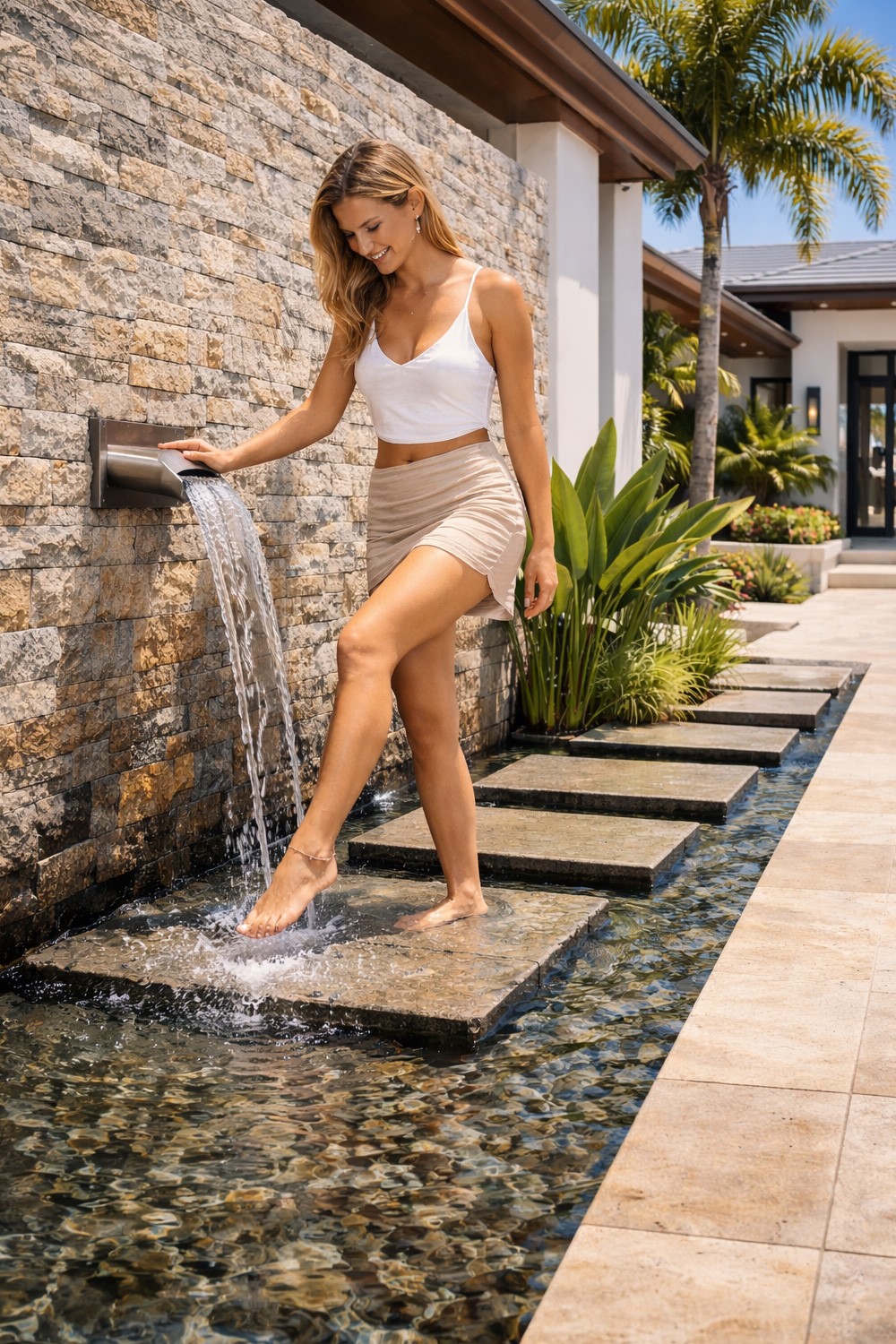
One of the most practical and overlooked features of a Gold Coast entry is somewhere to rinse feet. This does not need to look like an outdoor shower or a utility tap. When designed well, it feels like a natural part of the approach, quietly solving a daily problem.
A simple foot rinse can be integrated near the entry landing or along the side of the path. A low profile tap, a recessed grate, or a small stone basin can all work, depending on the style of the house. The key is placement. It should be easy to use without blocking the path or feeling exposed to the street.
Privacy matters. Even a small screen, planting cluster, or change in wall height can make the space feel comfortable. People are more likely to use a rinse point if it does not feel like a performance. At the same time, it should be visible enough that visitors intuitively understand its purpose.
Drainage is crucial here. Water from rinsing should disappear quickly without pooling or splashing onto adjacent surfaces. Non slip textures and thoughtful falls make the area safe and easy to clean. Materials should handle frequent wetting without staining or degrading.
Some homes integrate the foot rinse with a small bench or ledge, giving people somewhere to sit briefly while brushing sand away. Others combine it with storage for towels or a discreet hose reel. The best solutions feel intentional, not tacked on.
Landscaping That Frames the Entry Without Crowding It
Planting around the entry does more than soften the building. It shapes the approach, controls views, and influences how the space feels. On the Gold Coast, lush planting is part of the identity, but it needs to be managed carefully near walkways.
Plants should frame the path, not invade it. Overhanging branches, spiky leaves, or plants that drop fruit or flowers can quickly turn an entry into a maintenance headache. Choosing species with predictable growth habits and positioning them with mature size in mind reduces ongoing work.
Layering planting creates depth and interest. Low ground covers define edges without blocking sightlines. Mid height shrubs provide structure and privacy. Taller elements can anchor the entry visually or screen neighbouring properties. This layering helps the house feel settled into the landscape rather than sitting on top of it.
The relationship between planting and path width is important. A narrow path bordered by dense planting can feel enclosed and dark, especially in the evening. Allowing breathing room between hard surfaces and greenery keeps the entry feeling open and easy to navigate.
Maintenance should always be considered. An entry that looks amazing for the first year but requires constant trimming, sweeping, and cleaning soon becomes a chore. Designing for easy access to plants and choosing species suited to the local climate reduces long term effort.
Lighting the Approach for Safety and Atmosphere
Lighting transforms an entry after dark. It affects safety, comfort, and the way the house presents to the street. On the Gold Coast, evenings are often spent outdoors, and people come and go well after sunset, making good lighting essential.
Path lighting should guide rather than glare. Low level lights that wash the surface of the path help people see where they are walking without shining directly into eyes. Spacing and placement matter more than brightness. Too many lights create visual clutter, while too few leave gaps that feel uncertain.
Highlighting changes in level is critical. Steps, edges, and transitions should be clearly visible. Integrated step lights or subtle uplighting can achieve this without turning the entry into a runway. Consistency in colour temperature helps the space feel cohesive and calm.
Lighting can also be used to emphasise planting or architectural features near the entry. A well lit tree or textured wall draws attention away from the door itself, creating a sense of depth and interest. This layered lighting approach feels more considered than simply lighting the door.
Durability is key. Coastal conditions are tough on fittings. Choosing lights designed for outdoor and coastal use reduces failures and keeps the entry looking good over time. Concealing cables and drivers where possible also improves longevity and appearance.
Front Doors, Thresholds, and the Moment of Arrival
The door itself is only part of the entry experience, but it carries a lot of weight. The moment someone reaches the door should feel deliberate and comfortable, not cramped or exposed. Space around the door matters as much as the door design.
A small covered area can make a huge difference. It provides shelter from rain and sun, gives people time to find keys, and protects the door and hardware. Even a modest overhang or recess improves usability and extends the life of finishes.
Threshold design affects how dirt and moisture are managed. Slight recesses, mats integrated into the paving, or subtle changes in level help catch debris before it enters the house. These elements can be integrated seamlessly rather than relying on loose mats that shift and wear.
The visual relationship between the door and surrounding materials sets the tone. Bold doors can become a focal point, while more restrained designs let the approach and landscaping do the talking. Either way, proportions and alignment matter. A door that feels lost or oversized relative to the entry space can throw the whole composition off.
Managing Privacy and Openness at the Front of the House
Gold Coast homes often balance openness with privacy. Large windows, open fences, and minimal setbacks create a relaxed feel, but they also expose the entry. Thoughtful design can protect privacy without closing the house off.
Screens, partial walls, and planting can shield the approach from direct view while still allowing light and air to move through. These elements can be aligned with the path to create moments of reveal, where the door becomes visible only near the end of the approach.
Height and transparency matter. Solid walls can feel heavy and unwelcoming, while completely open approaches can feel exposed. Mixing materials and densities creates interest and flexibility. For example, a low wall combined with taller planting can block sightlines while still feeling light.
Sound also plays a role. Hard surfaces close to the street can amplify noise, while planting and textured materials absorb it. A calmer entry feels more inviting and reinforces the sense of retreat from the street.
Integrating Practical Storage Without Clutter
The front entry is often where everyday items accumulate. Hats, bags, beach toys, umbrellas, and deliveries all pass through this space. Designing discreet storage reduces clutter and keeps the approach looking intentional.
Built in benches with hidden storage, recessed niches, or integrated cupboards can all work if they are scaled appropriately. These elements should feel like part of the architecture rather than add ons. Materials and finishes that match the surrounding surfaces help them blend in.
Placement is critical. Storage should not block the path or create pinch points. It should be easy to access without stepping into planting or off the main walking surface. For barefoot households, avoiding sharp edges and rough finishes is especially important.
Deliveries are another consideration. A defined spot for parcels near the door reduces visual mess and protects items from weather. This can be as simple as a sheltered corner or a purpose designed recess that keeps boxes out of sight.
Entryways on Small Blocks and Townhouses
Not every home has a generous front yard. On small blocks or attached dwellings, the approach might be only a few metres long. Even so, the principles still apply. Clear definition, comfortable surfaces, and thoughtful detailing make a big difference.
In tight spaces, vertical elements become more important. Walls, screens, and planting can add interest without taking up valuable ground area. Lighting and material changes can signal the entry without requiring extra width.
Multi use solutions work well here. A foot rinse might double as a planter feature. A bench might also act as a low wall. Each element should earn its place, contributing both function and appearance.
Consistency is key. Using too many different materials or ideas in a small space creates visual noise. A restrained palette and clear hierarchy help the entry feel calm and intentional, even when space is limited.
Renovating Existing Entryways Without Rebuilding Everything
Many Gold Coast homes have entryways that feel tired or awkward, but full rebuilds are not always necessary. Targeted changes can dramatically improve function and appearance.
Surface upgrades often deliver the biggest impact. Replacing slippery tiles, resealing concrete, or adding textured overlays can improve safety and comfort. Adjusting falls or adding discreet drainage can solve persistent water issues.
Lighting upgrades are another high return improvement. Replacing outdated fittings with well placed, low glare lights changes how the entry feels at night and improves safety.
Adding a foot rinse, screen, or small planting bed can also shift how the space is used without major structural work. These changes can often be done in stages, spreading cost and disruption over time.
Making the Entry Feel Like Part of the Home, Not a Leftover Space
The most successful front entryways feel integrated with the rest of the house. They use similar materials, echo interior finishes, and reflect how the home is actually lived in. They do not feel like a display zone that must be kept perfect at all times.
On the Gold Coast, this integration often means blurring inside and outside. Sightlines from the entry into living spaces, consistent flooring materials, and aligned planting all help create a sense of continuity. When done well, the transition from street to interior feels natural and unforced.
This approach also supports everyday life. When the entry works with barefoot habits, beach routines, and outdoor living, it stays cleaner and more comfortable without constant effort. That ease is what defines good design here, more than any single feature or trend.
Designing for Long Term Use and Changing Needs
Finally, a good entryway is not just about today. It should adapt as households change. Kids grow up, mobility needs shift, and lifestyles evolve. Designing with flexibility in mind makes the space more resilient.
Gentle gradients instead of steps where possible, generous clearances, and durable materials all support long term use. Thoughtful lighting and clear paths improve safety for all ages. Features like foot rinses and covered areas remain useful regardless of who lives in the house.
The front entry is the handshake of the home. On the Gold Coast, it should feel relaxed, confident, and suited to the climate and culture. When designed with care, the walk to the front door becomes more than a transition. It becomes part of how the house lives and breathes every day.
You might also like





Disclaimer: Every effort has been made to ensure the accuracy of the information provided, but we make no guarantees regarding its completeness or reliability. The data is presented for general informational purposes only and does not constitute financial, investment, or legal advice. We are not liable for any errors, omissions, or consequences arising from its use. Users should verify details with relevant sources and seek professional advice where appropriate for the most accurate and up-to-date guidance.